



If you're looking around your house and wondering where to spend money before you sell, you're not alone. A lot of Portland-area homeowners know they need updates, but they don't want to sink cash into projects that look expensive and still feel unfinished when buyers walk through.
That's the part people miss. Buyers notice layouts, kitchens, and bathrooms, but they also notice bad seams, patched ceiling stains, wall cracks over doors, and texture repairs that don't match. In markets like Portland, Beaverton, Hillsboro, Tigard, Lake Oswego, Gresham, and Vancouver, WA, the finish quality changes how the whole house feels.
The best home improvements that increase home value usually do two things at once. They solve a real functional problem, and they present well in photos, showings, inspections, and appraisals. That's why drywall, paint prep, insulation, ceiling work, and clean remodeling transitions matter so much. A nice remodel can lose impact fast if the walls wave in the light or old damage was painted over instead of repaired correctly.
This guide keeps the list practical. It focuses on projects homeowners consider, where the value tends to come from, and where professional interior finishing makes the difference between "updated" and "done right." If you're preparing a home for market or improving a long-term property, start with the projects that buyers feel immediately.
Table of Contents
- 1. Kitchen Remodeling And Interior Finishing
- 2. Bathroom Remodeling And Moisture-Resistant Finishes
- 3. Structural And Water Damage Restoration
- 4. Master Bedroom And Ensuite Addition Renovation
- 5. Open-Concept Living Space Renovation
- 6. Basement Finishing And Recreation Rooms
- 7. Interior Painting And Wall Finishes With Professional Drywall Preparation
- 8. Crown Molding Trim Work And Architectural Details
- 9. Ceiling Repair Popcorn Removal And Professional Finishing
- 10. Tenant Improvement And Rental Property Turnovers
- 10 Home Improvements Compared by Value Impact
- The Foundation Of Home Value Is Quality
1. Kitchen Remodeling And Interior Finishing
A kitchen remodel gets attention because buyers spend real time judging it. They open cabinet doors, look along backsplash lines, and notice whether the ceiling patch over the old light fixture was blended or just painted over. That's why a kitchen upgrade isn't only about cabinets, counters, and appliances. The wall finish around them matters just as much.
In older Portland and Beaverton homes, kitchen projects often uncover more than homeowners expect. We regularly see uneven framing, old soffit repairs, patched plumbing openings, and wall damage hidden behind cabinets. If those surfaces aren't corrected before the new materials go in, the finished kitchen can still look pieced together.
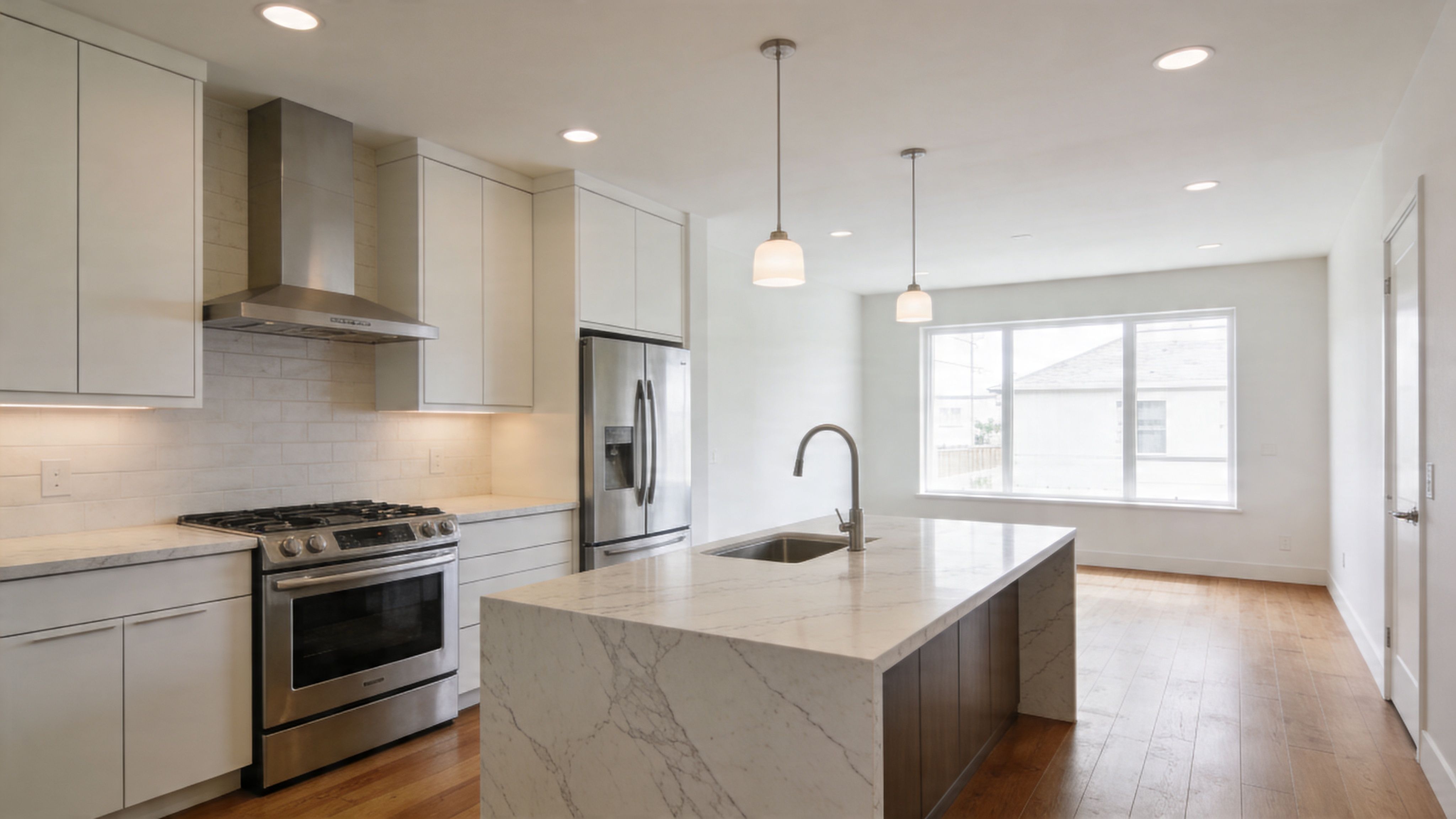
What actually adds value in a kitchen
A smart kitchen remodel usually improves function first. Better lighting, cleaner sight lines, durable surfaces, and smooth wall transitions do more for resale than highly personalized finishes.
Focus on wall condition early
- Check for hidden water damage: Sinks, dishwashers, and refrigerator lines often leave soft drywall, staining, or swelling behind the scenes.
- Finish before installation: Drywall should be repaired and finished cleanly before cabinets and trim go in, not treated as an afterthought.
- Choose smoother finishes where design is modern: Contemporary kitchens show flaws fast, especially under under-cabinet lights and daylight.
Practical rule: If your backsplash, cabinet lines, and ceiling transitions are crisp, the whole kitchen reads as higher-end.
For homeowners planning kitchen prep work, professional drywall repair services from CS1 Real Interiors can solve the cracks, holes, and surface problems that otherwise drag down the final result. That's especially important in open kitchen remodels where one bad wall patch is visible from multiple rooms.
2. Bathroom Remodeling And Moisture-Resistant Finishes
Bathrooms are small, but buyers inspect them hard. They notice soft corners, failed caulk lines, ceiling stains over showers, and swelling around plumbing penetrations. In a remodel, moisture management matters as much as tile selection.
The biggest mistake is cosmetic updating over a bad substrate. New vanity lights and fresh paint won't help if the drywall behind them has already been compromised by poor ventilation or a slow leak. In Portland-area homes, that shows up often around exhaust fans, tub surrounds, toilet flanges, and second-floor bath ceilings.
Where bathroom value gets lost
A bathroom can look fresh on day one and still feel risky to buyers if the finishing details suggest future moisture problems. That's why proper board selection, prep, and sealing matter.
Use the right materials in the right places
- Protect wet zones properly: Standard drywall doesn't belong where repeated moisture exposure is likely.
- Fix ventilation before closing walls: A fan that vents poorly or not at all keeps feeding the same problem.
- Treat stains as a diagnosis, not a paint issue: Discoloration often points to an active or past leak that needs to be addressed first.
Spa-style bathrooms in places like Lake Oswego often get the attention, but the same rule applies in a simple hall bath in Gresham or a rental update in Vancouver, WA. Buyers want clean, durable, low-maintenance finishes. They don't want to inherit hidden repairs.
A polished bathroom remodel also depends on the transitions outside the tile. Around mirrors, ceilings, door casings, and painted walls, smooth finishing is what makes the whole room feel intentional instead of patched together.
3. Structural And Water Damage Restoration
Water damage isn't a style issue. It's a value issue, an inspection issue, and sometimes a financing issue. If a buyer sees bubbling paint, sagging drywall, or staining on ceilings and lower walls, they assume there may be a larger hidden problem behind it.
This is one of the most important improvements because it protects the house before you even talk about upgrades. In Portland winters, pipe leaks, roof intrusions, overflow incidents, and crawl or basement moisture can all leave visible interior damage. If the source isn't fixed first, the cosmetic repair won't hold.
What a proper restoration looks like
Good restoration work starts with finding the cause. That might be a roof failure, plumbing leak, window intrusion, or an unsealed exterior transition.
Then the interior work has to be done in the right order:
- Remove damaged materials: Soft drywall, compromised insulation, and contaminated materials need to come out.
- Dry the area fully: Closing walls too early traps moisture and causes repeat failures.
- Rebuild with clean finishes: Once the structure is stable, new drywall, texture matching, primer, and paint can bring the space back.
Water stains that have been painted over without repair are easy to spot in daylight. Buyers notice, and inspectors do too.
This kind of project is common after winter leaks in Portland, roof damage in Lake Oswego, and plumbing failures in Beaverton rentals. It's not glamorous, but it protects value better than many decorative projects. If you're preparing a listing, fixing known damage before photos and showings is one of the smartest moves you can make.
4. Master Bedroom And Ensuite Addition Renovation
A strong primary suite changes how a house competes. Homes that feel tight, dated, or short on privacy often benefit from a better bedroom layout, a more functional closet, or an added ensuite that gives the house a more complete feel.
The value in this project comes from livability. Buyers respond to comfort, storage, privacy, and a layout that feels current. In higher-end neighborhoods like Lake Oswego, that expectation is even more obvious, but it matters in mid-range homes too.
Finish quality is what makes it feel high-end
Bedroom additions and ensuite renovations can look expensive without feeling refined. That's usually a finishing problem, not a fixture problem. Misaligned framing, visible corner bead issues, lumpy patches under side lighting, and poor transitions at new door openings all stand out in primary spaces.
For this kind of work, details matter:
- Sound control between rooms: Bedrooms next to living areas benefit from better insulation and thoughtful wall assembly.
- Smooth walls under natural light: Large windows expose drywall flaws quickly.
- Clean framing around new openings: Closet entries, bathroom doors, and recessed niches need precise installation to look custom.
In Hillsboro and Tigard homes, a bedroom rework often means converting awkward square footage into something more functional. In older Portland houses, it can mean correcting years of piecemeal remodeling so the suite finally feels cohesive.
The project doesn't have to be flashy. It has to feel comfortable, consistent, and professionally finished.
5. Open-Concept Living Space Renovation
Opening up a floor plan can make a dated home feel dramatically more usable. Done well, it improves sight lines, daylight, traffic flow, and the connection between kitchen, dining, and living spaces. Done poorly, it creates awkward beams, patchy ceilings, and walls that look like they were moved in a hurry.
That's why this project lives or dies on planning and finish work. Even when the structural part is handled properly, the visual success depends on how well the ceilings, corners, and repaired surfaces are rebuilt.
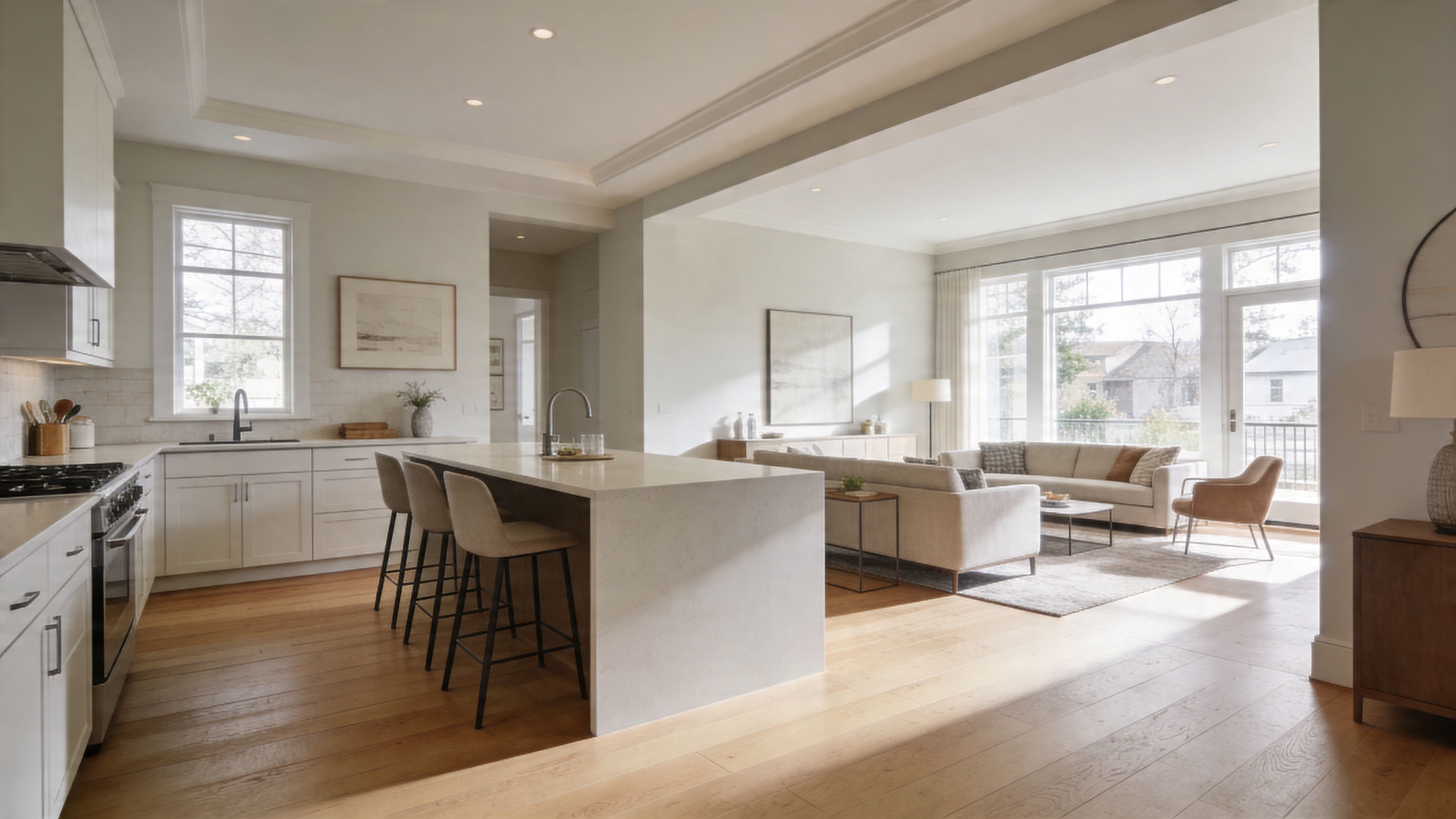
What homeowners often underestimate
When you remove a wall, you usually create new work in several places at once. Floors may need patching. Ceilings may need long seam repairs. HVAC, electrical, and lighting layouts often change too.
A few trade-offs are worth thinking through before demolition:
- Open isn't always better for every home: Some floor plans need separation to keep furniture placement and noise under control.
- Ceilings tell the truth: Even if a wall removal looks fine at eye level, the ceiling patch will reveal the quality of the work.
- Beams and soffits need design discipline: If they're necessary, they should look intentional, not like leftovers from construction.
In open-concept work, the ceiling is usually the hardest surface to get right. It's also the surface buyers notice without realizing why.
For homeowners comparing layout options in the Portland service area, it's smart to bring in a contractor early for drywall, framing, and finishing input, not just demolition pricing.
Here's a look at the kind of layout transformation many homeowners consider before starting.
6. Basement Finishing And Recreation Rooms
If you have an unfinished basement, you're sitting on space buyers may see as wasted unless it's dry, comfortable, and usable. Finishing that area can add real function, especially for families who want a second living zone, office, guest room, workout area, or flex space.
Among the few quantified interior projects in the available data, basement finishing stands out. HomeLight notes that Angi data shows a basement finish can return 70% ROI. That's a useful benchmark, but only if the work solves basement-specific problems instead of covering them up.
Basements need a different approach than upstairs rooms
Below-grade spaces have their own rules. Moisture control, insulation, ceiling planning, and wall assembly need more attention than they do in standard interior remodels.
For a basement that adds value, focus on these basics:
- Solve moisture first: Efflorescence, musty smells, previous flooding, or cold wall surfaces need to be addressed before framing and board go in.
- Plan code and safety items early: Egress, ceiling heights, mechanical access, and room layout affect whether the space feels like true living area.
- Build for durability: A basement finish should tolerate the environment, not just look good for listing photos.
In Gresham and Tigard, basement projects often become family rooms or home offices. In larger Lake Oswego homes, they may turn into media rooms or guest areas. Either way, clean drywall finishing, proper insulation, and careful trim transitions are what make the space feel like part of the house instead of an afterthought.
7. Interior Painting And Wall Finishes With Professional Drywall Preparation
Fresh paint helps, but paint alone doesn't create value when the wall underneath is cracked, dented, or poorly patched. Buyers may not know drywall terminology, but they know when a room looks tired. They also know when fresh paint seems to be hiding something.
Many Portland-area sellers leave money on the table. They repaint without fixing nail pops, stress cracks, prior water marks, bad texture patches, and uneven skim areas. The room photographs better from far away, but in person it still feels rough.
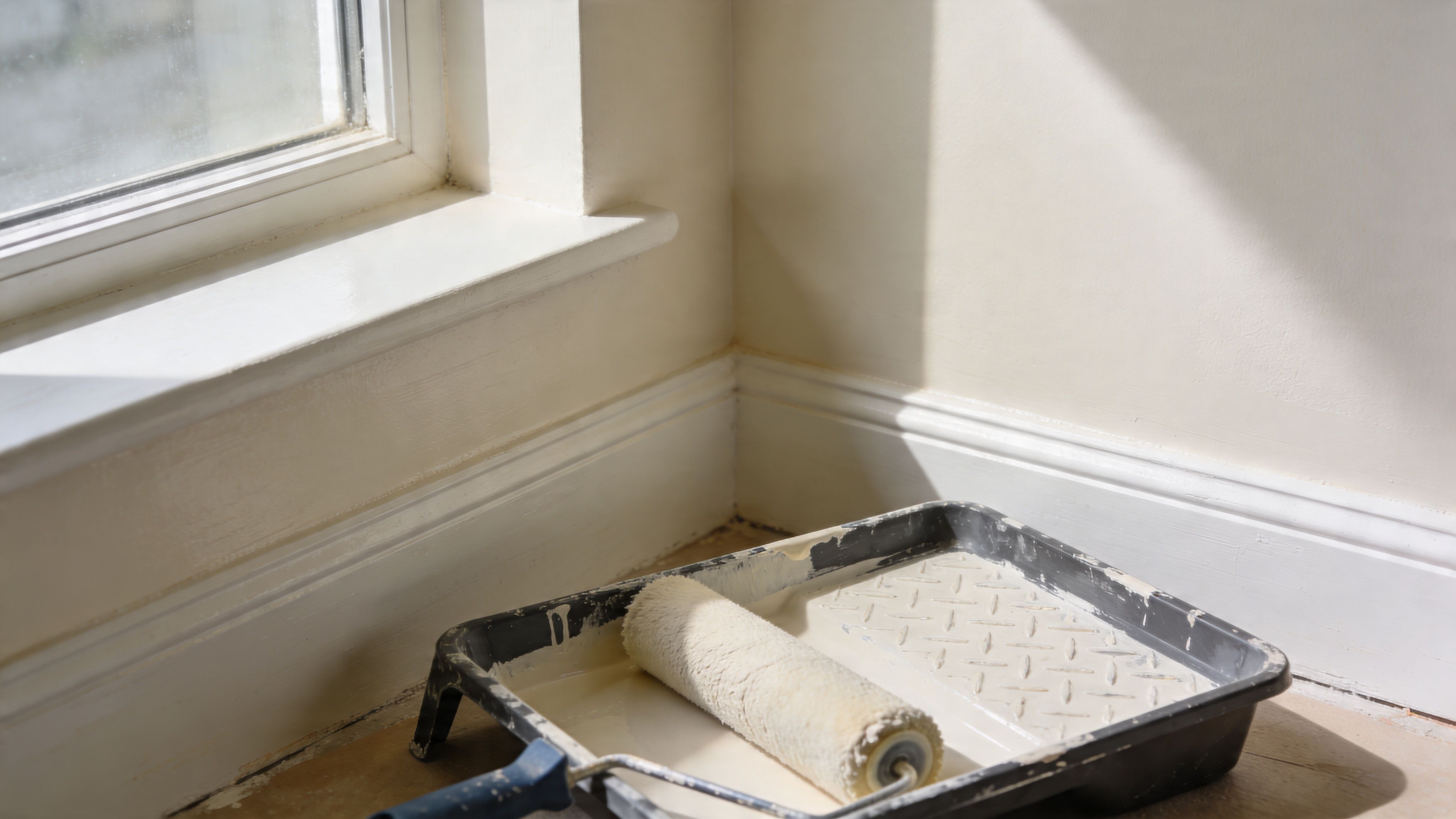
Paint works when prep is done right
One useful gap in the available research is also a practical reality on the job site. Opendoor's overview of value-adding home improvements highlights that major guides rarely quantify the value of drywall repair and finishing combined with interior painting, even though these updates strongly affect first impressions.
That matches what contractors and homeowners see in real homes. Good paint over bad walls still looks bad. Good paint over repaired, sanded, properly primed walls changes how buyers read the entire property.
What makes pre-sale painting worth it
- Repair first, then paint: Cracks above doors, corner damage, and old wall anchors should be fixed before any finish coat goes on.
- Use consistent color flow: Neutral, cohesive color choices help rooms connect visually.
- Address ceilings too: Fresh walls with stained or patched ceilings still feel unfinished.
In Portland, Beaverton, and Hillsboro, this is one of the most cost-effective ways to improve presentation without a full remodel. CS1 Real Interiors handles both drywall preparation and interior painting, which keeps the finish consistent and avoids the common handoff problems between separate trades.
8. Crown Molding Trim Work And Architectural Details
Trim doesn't fix a bad room, but it can sharpen a good one. Clean baseboards, well-scaled crown molding, wrapped window openings, and crisp door casings give a house a more complete and intentional look.
The catch is that trim exposes bad walls. If corners are out, ceilings wave, or wall surfaces aren't flat, the trim won't hide it. It often makes the flaws more obvious.
Where trim adds value and where it doesn't
Architectural detail works best when it fits the house. A simple Portland bungalow, a traditional Beaverton two-story, and a more upscale Lake Oswego home don't all need the same molding profile.
A few rules keep trim upgrades from looking forced:
- Match the home's style: Oversized ornate profiles can feel out of place in simpler homes.
- Prep walls before installation: Caulk can hide small gaps, but it won't fix poor drywall alignment.
- Use trim to finish transitions: Around doors, windows, ceiling lines, and built-ins, detail work can make remodeling look complete.
This is a good project when the home already has strong basics and just needs a more polished presentation. It's less effective when major wall repairs, ceiling damage, or layout issues still need attention. In other words, trim is a finisher, not a rescue plan.
9. Ceiling Repair Popcorn Removal And Professional Finishing
Ceilings affect the feel of a room more than most homeowners realize. A dated texture, visible patching, old leak staining, or sagging tape line pulls attention upward fast. That's one reason popcorn removal and ceiling refinishing remain popular before listing.
The work has to be approached carefully, especially in older homes. If there's any chance the material is from an era that requires caution, testing comes first. After that, the main challenge is getting the ceiling flat, consistent, and clean under broad light.
Why ceiling work pays off visually
Smooth or well-finished ceilings make rooms feel newer and more open. They also help updated lighting, wall color, and trim look better. In 1980s and 1990s homes around Portland and Beaverton, ceiling updates often do more for perceived freshness than another round of cosmetic decorating.
Ceiling projects often involve more than simple scraping:
- Repairing prior water damage: Stains and soft spots need proper repair, not cover-up.
- Fixing tape failures and cracks: Ceiling seams can reopen if they're not rebuilt correctly.
- Blending old and new textures: When full smoothing isn't the goal, matching the existing finish matters.
A ceiling doesn't need to call attention to itself. It should disappear. That's when the room feels finished.
This is one of the clearest examples of a project where professional drywall finishing matters. Ceiling flaws are hard to hide, hard to sand well overhead, and easy to see once the lights are on.
10. Tenant Improvement And Rental Property Turnovers
For rental owners and property managers, value isn't only about resale. It's also about keeping units rentable, limiting downtime, and avoiding the compounding cost of deferred interior damage. Turnovers are where a lot of small drywall problems become expensive because they get ignored for too long.
In Portland, Tigard, Beaverton, and Vancouver, WA, a make-ready project often includes door knob holes, corner bead damage, stress cracks, stained ceilings, bad patches from prior tenants, and walls that were repainted repeatedly without proper prep. Those issues make a unit feel older than it is.
What helps rentals hold value
The best turnover work balances durability with appearance. You don't need luxury finishes in every unit, but you do need walls and ceilings that look clean, solid, and professionally maintained.
Property owners usually get the best long-term result when they:
- Standardize repair quality: Patch jobs should be consistent from unit to unit.
- Fix leaks immediately: Repeated water damage is far more expensive than fast intervention.
- Bundle trades when possible: Drywall, painting, insulation, and framing coordination helps units get back online faster.
This is also where experienced interior contractors save owners time. Instead of hiring one crew for patches, another for paint, and someone else for framing or insulation, it's often more efficient to work with a contractor who can handle the whole interior scope cleanly.
10 Home Improvements Compared by Value Impact
A Portland homeowner can spend heavily on a remodel and still come up short at resale if the finish work looks rushed. Buyers notice layout changes and new fixtures, but they also notice uneven walls, patched ceilings, bad texture matching, soft trim lines, and signs of past moisture problems. That part gets missed in a lot of value discussions.
Here is the practical comparison I give homeowners. It avoids unsupported ROI claims and focuses on what usually drives value in the real world: buyer appeal, durability, code concerns, and how much the finish quality affects the final result.
| Project | Implementation Complexity | Resource Requirements | Value Impact | Ideal Use Cases | Key Advantages |
|---|---|---|---|---|---|
| Kitchen Remodeling & Interior Finishing | High, multi-trade coordination | Cabinets, countertops, appliances, plumbing, electrical, drywall repair and finishing | Strong impact when the layout works and walls, ceilings, and cabinet lines are finished cleanly | Outdated kitchens, pre-sale remodels, long-term owner upgrades | High buyer visibility, better function, strong first impression |
| Bathroom Remodeling & Moisture-Resistant Finishes | High, moisture-sensitive work | Moisture-resistant board, tile backer, ventilation, plumbing, waterproofing, finish work | Strong impact, especially when moisture control and surface prep are handled correctly | Worn bathrooms, leak-prone spaces, primary bath upgrades | Better durability, better resale appeal, fewer moisture-related callbacks |
| Structural & Water Damage Restoration | Very high, technical and compliance-heavy | Demolition, drying, repair framing, insulation, drywall replacement, documentation, specialty trades | Protects value more than it creates new value, but often determines whether a home shows well or passes inspection | Leak damage, rot, mold-related repairs, insurance work | Restores safety, prevents further loss, supports financing and inspections |
| Master Bedroom & Ensuite Addition/Renovation | Very high, often requires design, permitting, and multiple trades | Framing, plumbing, HVAC, electrical, insulation, drywall, trim, painting | High impact when square footage is added efficiently and new work ties into the existing house cleanly | Growing households, higher-end resale prep, homes missing a primary suite | Adds function, privacy, and stronger market appeal |
| Open-Concept Living Space Renovation | Very high, structural review often required | Engineering, beam work, framing changes, HVAC and electrical relocation, drywall refinishing | Strong impact in the right floor plan, but poor finish transitions can make the whole job look pieced together | Older compartmentalized homes, main-floor updates, family gathering spaces | Better flow, more light, improved sightlines |
| Basement Finishing & Recreation Rooms | High, moisture and code considerations | Moisture control, insulation, egress, framing, electrical, HVAC, drywall, flooring | Moderate to strong impact when the space feels dry, legal, and consistent with the rest of the home | Unfinished basements, flex space needs, added guest or family areas | Adds usable living area without changing the footprint |
| Interior Painting & Wall Finishes with Pro Drywall Prep | Low to moderate, skill-dependent | Wall repair, skim coating where needed, sanding, primer, paint | Often one of the best value plays because buyers immediately see the difference | Pre-sale prep, dated interiors, post-repair refreshes, rental turns | Lower cost, fast visual improvement, helps every other finish look better |
| Crown Molding, Trim Work & Architectural Details | Moderate, detail-sensitive | Trim materials, carpentry, drywall touch-up, caulking, painting | Best used as a finishing layer after walls and ceilings are already straight and clean | Character upgrades, older homes, higher-end finish packages | Adds detail and polish when matched to the home style |
| Ceiling Repair, Popcorn Removal & Professional Finishing | Moderate, may involve testing and abatement | Surface testing if needed, ceiling repair or replacement, skim coating, texture matching, paint | Moderate impact because ceilings affect how clean and updated the whole interior feels | Dated ceilings, stained areas, visible patchwork, pre-sale updates | Cleaner appearance, better light reflection, resolves obvious defects overhead |
| Tenant Improvement & Rental Property Turnovers | Low to moderate, speed-focused | Drywall repair, corner repair, paint, trim touch-up, scheduling coordination | Protects income and property condition by reducing visible wear and shortening vacancy periods | Rental maintenance, make-ready work, multi-unit ownership | Faster turns, more consistent presentation, lower long-term repair costs |
The pattern is simple. Big projects get the attention, but finish quality decides whether buyers read the work as professional or expensive-looking for the wrong reasons.
In Portland-area homes, that matters even more because many properties have a mix of old framing, past patch jobs, moisture history, and partial remodels from different eras. A new kitchen next to wavy walls or a beautiful bath under a stained, poorly repaired ceiling loses impact fast. Clean drywall, straight transitions, proper texture matching, and good paint prep are what tie the investment together.
The Foundation Of Home Value Is Quality
Every project on this list, from a kitchen remodel to a rental turnover, depends on one thing in the end. The finish has to look right, hold up, and make the house feel cared for. Buyers may talk about countertops, layouts, and square footage, but they make decisions based on what they see in the walls, ceilings, corners, and transitions.
That's especially true with home improvements that increase home value in the Portland area. Homes here range from older properties with settling cracks and patch history to newer homes that still need better texture matching, repainting, or water damage repair before they show well. A remodel that looks clean, solid, and professionally finished has a better chance of creating confidence with buyers, appraisers, tenants, and inspectors.
The numbers we do have support the idea that practical, visible improvements matter. Garage door replacement consistently posts standout returns in national reports. Zillow cites the 2025 Cost vs. Value Report showing an average cost of $4,317 with a resale value of $15,081, or 349.3% ROI for a garage door replacement. Interior conversion work can also perform well when executed properly. HomeLight notes basement finishing at a strong return, as mentioned earlier. And flooring-related interior updates can be worthwhile too. First Citizens Bank references 2023 Cost vs. Value findings showing garage door replacement at just over full cost recovery, while the same verified data set also notes the Remodeling Impact Report figure that refinishing hardwood floors can deliver 147% ROI with a $3,400 cost and $5,000 value gain.
But raw ROI figures don't tell the whole story. A project only reaches its potential when the execution is clean. That's where drywall repair, ceiling repair, texture matching, insulation, metal stud framing, and interior painting stop being background trades and start becoming the foundation of value.
At CS1 Real Interiors, that's the work we focus on every day. We help homeowners, builders, property managers, and sellers in Portland, Beaverton, Hillsboro, Tigard, Lake Oswego, Gresham, and Vancouver, WA solve the problems that make interiors look worn, unfinished, or risky. Whether you're dealing with cracks, holes, water damage, popcorn ceilings, remodeling prep, or a full repaint, the goal is the same. Make the house look right, and make it feel ready.
If you're planning updates and want honest guidance on what to fix first, request a free estimate from CS1 Real Interiors. We'll help you prioritize the work that improves appearance, protects your investment, and supports real resale or rental value.
Need help with drywall repair, interior painting, ceiling repairs, insulation, or metal stud framing before you sell or remodel? CS1 Real Interiors serves Portland, Beaverton, Hillsboro, Tigard, Lake Oswego, Gresham, and Vancouver, WA with professional interior finishing and free estimates.
Crafted with Outrank


