



You’re probably here because your wall problem stopped being simple.
Maybe you pulled off old trim in a Portland Craftsman and found thick, uneven plaster around a doorway. Maybe a leak stained a bedroom ceiling in Beaverton, and once the damaged area opened up, half the house turned out to be drywall and the other half wasn’t. Or maybe you tapped one wall and it felt hard and solid, then tapped the next room and got that lighter hollow sound.
That’s common across the Portland metro. Older homes often have original plaster, while later remodels, additions, and repairs use drywall. The result is a lot of mixed-wall homes in Portland, Hillsboro, Tigard, Lake Oswego, Gresham, and Vancouver, WA. And that’s where homeowners get stuck. The material affects how the wall sounds, how it breaks, how it gets repaired, how smooth it finishes, and how much the project will cost.
If you’ve been asking what is the difference between drywall and plaster, the short answer is this. Drywall is faster, cheaper, and standard for modern construction. Plaster is denser, harder, and usually found in older homes or specialty work. The better answer depends on your house, your budget, and whether you’re repairing damage, remodeling, or trying to blend old and new walls without obvious patch lines.
Table of Contents
- Drywall and Plaster A Tale of Two Walls in Your Portland Home
- What Is Drywall and What Is Plaster
- Comparing Installation and Finishing Processes
- The Mid-Project Check-In Is Your Project on the Right Track
- Durability Soundproofing and Repair Differences
- Cost Analysis Drywall vs Plaster in the Portland Metro
- Making the Right Choice for Your Home Renovation
- Your Questions About Plaster and Drywall Answered
Drywall and Plaster A Tale of Two Walls in Your Portland Home
Walk through an older Portland home and you can usually feel the difference before anyone explains it. A plaster wall feels harder under your knuckles. Corners often look a little more built-up. Window returns may have more depth. The house can have subtle waves and hand-worked character that newer walls usually don’t.
Then you step into a newer addition in Tigard or Lake Oswego and the wall feels different. The surfaces are flatter, the corners sharper, and repairs tend to follow cleaner seams. That’s drywall doing what it was designed to do. It creates straight, efficient wall systems that can be hung, taped, sanded, and painted on a modern schedule.
In real remodels, the challenge usually isn’t choosing one material in a vacuum. It’s dealing with both. In the Portland metro, many pre-1950s homes feature original plaster, while later additions or remodels use drywall. Improperly repairing these mixed walls can lead to visible seams and texture mismatches, increasing costs. In seismic zones like the Pacific Northwest, plaster often handles minor settling with hairline cracks while drywall tends to fail at seams, as noted in this discussion of mixed plaster and drywall conditions in Portland-area homes.
A wall repair fails visually long before it fails structurally. Most homeowners notice the seam, texture change, or flashing under paint first.
That’s why this topic matters. If you’re patching water damage, opening walls for a remodel, fixing cracks before selling, or trying to get a smooth finish that looks consistent room to room, you need to know what you’re working with first.
A plaster repair handled like drywall often looks wrong. A drywall repair treated like old plaster can waste time and money. The right approach starts with knowing the material, then matching the repair to the house.
What Is Drywall and What Is Plaster
Walk into a Portland bungalow after one remodel too many, and you’ll often find plaster in the original rooms and drywall in the addition or repaired areas. That mix matters because the wall tells you how it was built, how it will fail, and how it should be repaired.
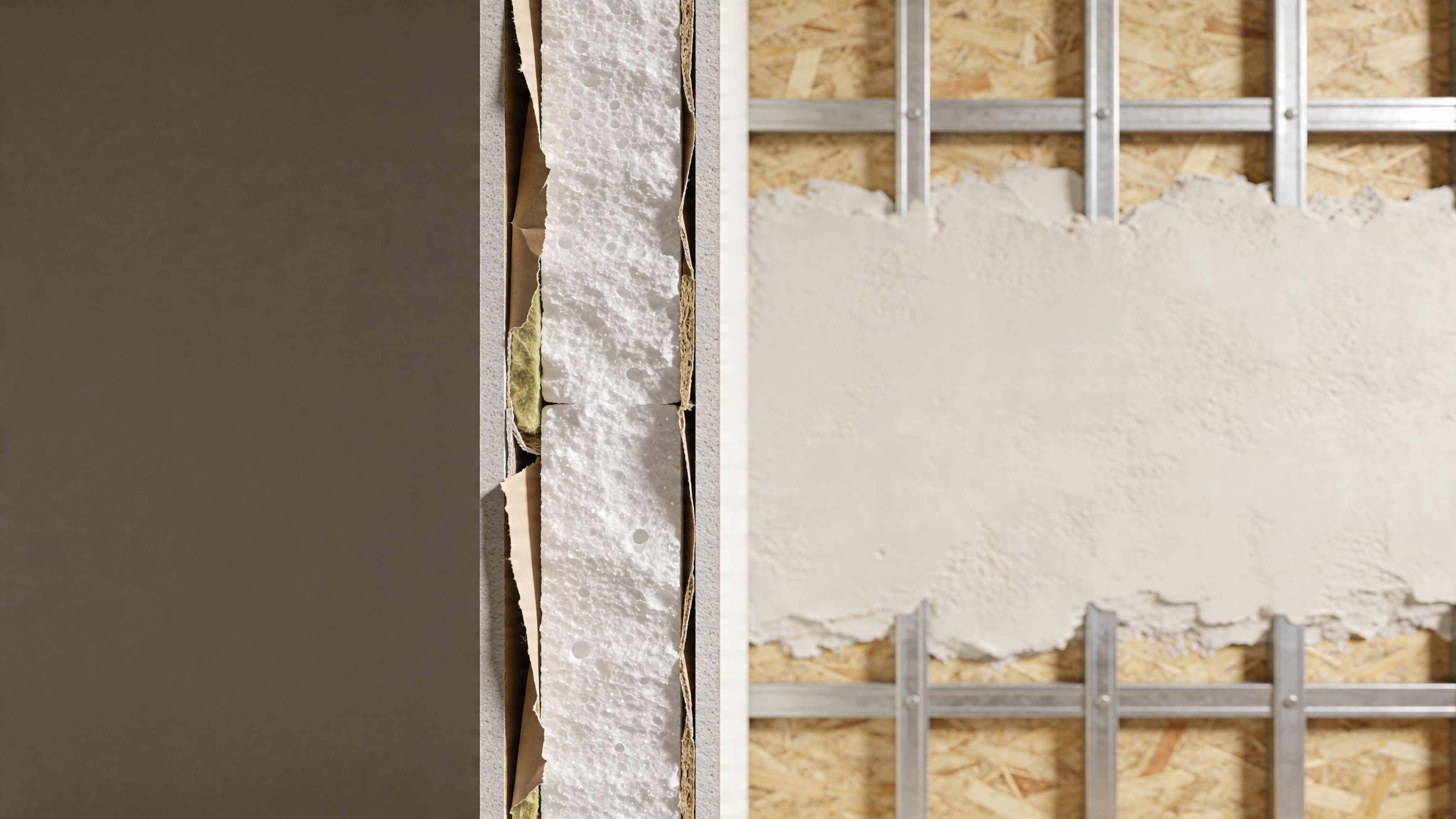
Drywall is a manufactured wall panel
Drywall is a sheet product with a gypsum core and paper faces. It gets fastened to framing, then the joints, corners, and fasteners are finished with tape and joint compound until the surface is ready for texture or paint.
In practical terms, drywall is predictable. The board thickness is consistent, the framing layout usually controls the plane of the wall, and repairs tend to follow panel lines or cut openings. That makes drywall the standard choice in newer homes, additions, basement finishes, and a lot of remodel work where schedule and cost need to stay under control.
Homeowners usually run into drywall in:
- Newer houses and condos: Drywall is the standard wall surface in modern residential construction.
- Additions and partial remodels: New work is often tied into older plaster rooms, which is common in Portland.
- Fast-turn repairs: Drywall is usually the practical option after plumbing cuts, electrical upgrades, or water damage demolition.
- Commercial interiors: Offices and retail spaces rely on drywall because it fits standard framing and production schedules.
A good drywall wall can look excellent, but the quality lives in the finish work. Bad taping, over-sanded joints, proud patches, and poor texture matching show up fast under paint.
Plaster is a site-built wall system
Plaster is applied wet and built up on the wall, traditionally over wood lath, metal lath, or a plaster base. Instead of hanging finished panels, the installer creates the wall surface by hand in coats. In older Portland homes, that often means a thicker wall with more variation, more mass, and corners or transitions that do not follow modern drywall logic.
That is why plaster often feels harder and more solid when you knock on it. It is also why repairs take judgment. You are not just filling a seam between factory-made sheets. You are matching a hand-built surface that may have small waves, layered thickness, old patching, or decades of movement behind it.
Field rule: If you see irregular corner build-outs, deeper window returns, subtle surface variation, or no repeating panel seams, you are probably dealing with plaster or a plaster-based finish.
For a homeowner, the important distinction is not just material science. It is decision-making on the job. A wall built with drywall usually rewards clean cuts and standard patch methods. A plaster wall often needs a slower approach, especially if the house already contains both materials and the goal is to make the repair disappear instead of just closing the hole.
At that point, it helps to stop thinking only about patching the damaged spot and start looking at the whole wall surface. In older homes around Portland, that is often the difference between a repair that blends in and one that stays visible every time the light hits it.
Comparing Installation and Finishing Processes
Drywall won the modern market for one main reason. It moves fast. Plaster stays relevant because it creates a different kind of wall and takes a different level of hand work.
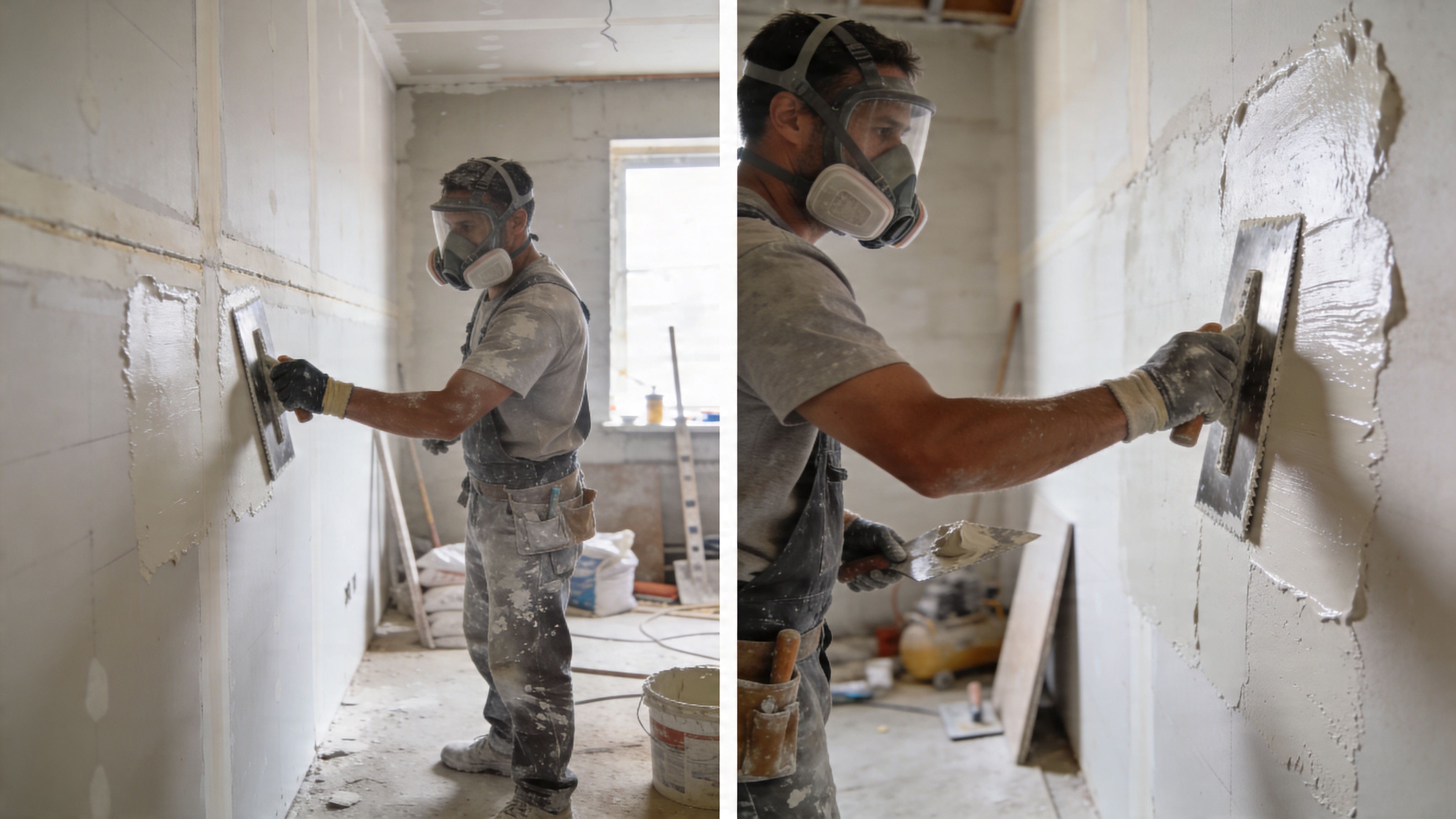
How drywall gets finished
With drywall, the process usually starts with hanging full sheets over wood or metal framing. After that, seams get taped, fasteners get covered, corners get built out, and the whole surface is sanded and checked before primer and paint.
For homeowners, that speed matters. The same source cited above notes drywall became dominant in modern construction after mass-produced gypsum board took off in the 1940s, and that shift was tied to faster labor and simpler installation. On a real remodel in Hillsboro or Beaverton, that speed can make the difference between a short disruption and a drawn-out project.
Drywall finishing also scales well. A basic repair might only need a clean patch and texture match. A higher-end remodel may call for a Level 4 or Level 5 finish so the walls stay smooth under direct light from large windows or recessed lighting.
A good drywall finish depends on restraint as much as skill. Overbuilding a patch, rushing dry time, or sanding unevenly creates visible ridges once paint hits the wall.
Here’s a helpful visual if you want to see the hands-on side of wall finishing work:
How plaster gets built
Plaster takes more time because it isn’t just covered and finished. It’s layered and shaped. Traditional work usually involves a scratch coat, a brown coat, and a finish coat, with drying time between stages.
That creates a denser wall, but it also means more labor, more waiting, and less room for error. If a contractor is trying to match old plaster in a Portland bungalow or a historic room with irregular transitions, the job is part repair and part finish carpentry mindset. Everything has to blend.
A side-by-side comparison makes the process difference clearer:
| Material | How it goes on | Drying and finishing pace | What usually matters most |
|---|---|---|---|
| Drywall | Hung in sheets, then taped and finished | Faster. Often fits modern remodel timelines | Speed, clean flat surfaces, easier patching |
| Plaster | Applied wet over lath in multiple coats | Slower. Dry time between coats affects schedule | Craftsmanship, surface character, dense finish |
For most new construction and many remodels, drywall is the practical answer. For restoration work, selective repairs, or homes where preserving the original wall character matters, plaster still has a place. The mistake is assuming one finishing process can be substituted for the other without a visible difference at the end.
The Mid-Project Check-In Is Your Project on the Right Track
A lot of Portland wall projects look simple on day one. Then the cut opens up and the house tells the truth.
A ceiling stain leads to damaged drywall. A crack by a door casing turns out to be old plaster over wood lath. A hallway patch runs into a smooth section, a patched texture from an older repair, and trim that has drifted out of square over the years. In this kind of house, drywall and plaster often live side by side, and the repair plan needs to account for both.
That is the point where it helps to stop thinking only about filling the hole and start looking at the finished wall as a whole. Will the patch flash after paint. Will the old and new surfaces telegraph at the seam. Will the repair stay tight next to a door that gets slammed every day, or in a stair hall that takes regular bumps and scuffs.
I see homeowners lose money when the first plan is too narrow. The opening gets patched, but the wall still looks repaired in normal daylight. Then the job gets revisited for skim coating, texture correction, or repainting that should have been discussed from the start.
Don’t judge a wall project by the opening alone. Judge it by how invisible the repair will look after primer, paint, and normal daylight hit it.
A solid estimate should spell out the wall type, the repair method, the expected finish level, and whether blending into adjacent surfaces is part of the scope. It should also address the practical reality in older Portland homes: one room may need drywall repair, plaster patching, and trim adjustments before the final paint ever goes on.
That kind of mid-project check keeps a small repair from turning into a visible callback later.
Durability Soundproofing and Repair Differences
Homeowners usually notice the performance gap between drywall and plaster after the walls have been lived with for a while. One takes abuse differently. One sounds quieter. One is easier to patch. One asks for more skill when it breaks.
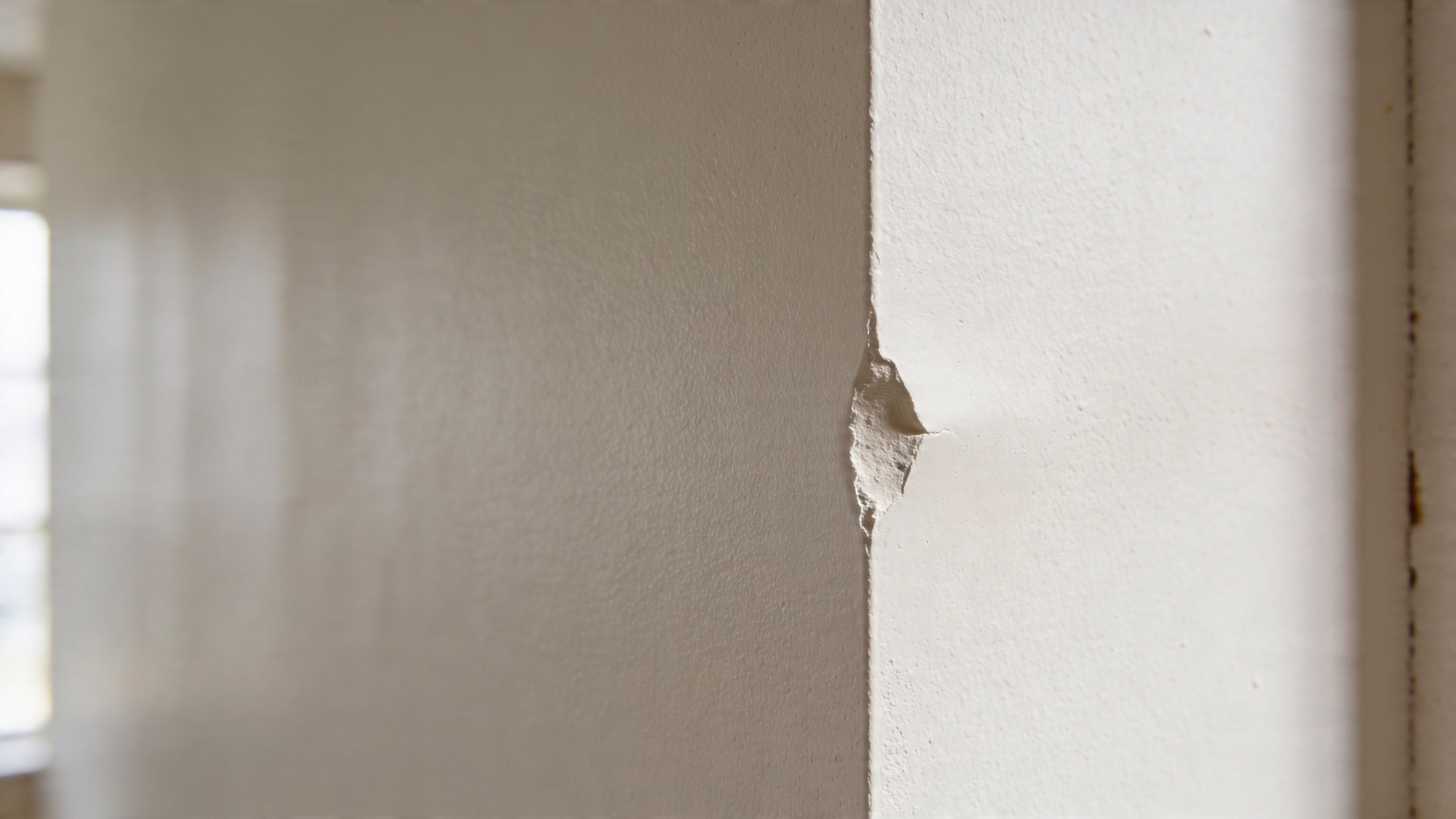
How they hold up in daily use
Plaster is usually the harder wall. It has more mass and a denser feel, so it tends to resist small dents, scratches, and everyday knocks better than drywall. That’s one reason older homes with original plaster can still feel solid long after the finish paint has aged.
According to this detailed look at plaster durability compared with drywall, plaster walls can last centuries, while drywall typically lasts 30 to 70 years. The same source states that plaster requires 50 to 70 percent fewer repairs over decades in high-traffic areas and can reduce lifecycle maintenance costs by up to 40 percent. It also notes that drywall repairs are faster.
Plaster also helps with sound. Because it has more mass, it naturally blocks more room-to-room noise than a standard drywall wall. Drywall can still perform well when the wall assembly is built correctly, especially with insulation and good finishing, but plaster starts with a denser base.
Why repair methods are not interchangeable
Drywall repair is usually straightforward. A hole or damaged area gets cut clean, patched, taped, mudded, sanded, and finished to match the surrounding wall. If you’re dealing with punctures, stress cracks, water damage, or damaged corners, this is the kind of work covered on a drywall repair service page.
Plaster repair is another category. The damaged area may include loose keys behind the lath, brittle edges, layered finish coats, or older textures that don’t respond like modern joint compound. A repair can hold structurally and still look wrong if the patch sits too flat, too sharp, or too smooth compared with the original surface.
Common situations where repair method matters:
- Door knob or furniture impact: Drywall dents or punctures more easily. Plaster may chip or crack at the surface.
- Ceiling cracks: Drywall often shows seam-related failures. Plaster may show settlement cracks that need a different stabilization approach.
- Water damage: Both materials can be affected, but the repair scope depends on how much of the wall system softened, detached, or stained.
- Mixed transitions: Patching plaster next to drywall without skim work or finish correction usually leaves a visible line.
One practical option for homeowners with mixed surfaces is selective repair rather than full replacement. For example, in some projects it makes sense to patch damaged areas with drywall and then skim and finish them to blend into adjacent plaster. That only works if the finish work is planned around the final surface, not just the opening in the wall.
Cost Analysis Drywall vs Plaster in the Portland Metro
A Portland homeowner opens a wall during a remodel expecting a simple patch and finds old plaster in one room, drywall from a past update in the next, and uneven transitions between the two. That is where cost estimates start to drift. The essential question is rarely just drywall versus plaster. It is how much labor it takes to get mixed wall surfaces to look right when the job is done.
Upfront cost and schedule
Drywall usually costs less to install and less to finish. It goes up faster, it fits current framing and remodel workflows, and it keeps projects moving. For additions, basement work, straightforward room updates, and many repair jobs, that matters.
Plaster costs more because the labor is slower and the finish work is more specialized. In older Portland homes, that higher price is often tied to matching what is already there, not just covering a wall surface. If the house has original plaster in visible areas, a cheap material choice can create an expensive visual mismatch.
Here is the practical difference:
| Material | Typical installed cost range | Schedule impact | Best fit |
|---|---|---|---|
| Drywall | $1.50 to $3 per sq. ft. | Faster | New walls, standard remodels, simple repairs |
| Plaster | $5 to $10+ per sq. ft. | Slower | Restoration work, older homes, specialty finish matching |
Those ranges are useful for budgeting. They are not the whole story.
What drives the final bill
In the field, the expensive part is often not the wall board or plaster itself. It is the prep, correction, and finish work around it.
Costs climb when a project includes:
- Demolition and discovery: Opening older walls can reveal loose plaster, damaged lath, out-of-plane framing, or layers of previous repairs.
- Finish level: A patch that looks acceptable in flat light is different from a patch that disappears under smooth paint and afternoon window light.
- Blending old and new surfaces: Tying fresh drywall into existing plaster often takes skim work, feathering, and extra sanding to keep the transition from showing.
- Paint scope: A small repair may still require priming and repainting a full wall or ceiling plane for the result to look consistent.
- Ceiling work: Costs rise fast overhead, especially if the existing surface has waviness, stress cracks, or a texture that needs to be matched.
I see this often in Portland bungalows and mid-century remodels. Homeowners budget for a patch and end up paying for correction work that should have been identified at the estimate stage.
A low repair number is not a bargain if the wall still shows the patch after paint.
Mixed-material homes change the math
Many homes in the Portland metro are not all plaster or all drywall. They are a mix. Original rooms may still have plaster, while kitchens, basements, and past additions were redone with drywall years later. That combination changes how a contractor should price the work.
A drywall patch installed in a plaster house can be perfectly sound and still look wrong if the surface depth, corner shape, or finish texture does not match the surrounding room. The added labor is in making different wall systems read as one finished surface. That is where homeowners often underestimate cost.
For budgeting, ask for pricing tied to the final result. Ask whether the number includes demolition, substrate correction, finish blending, primer-ready prep, and the repainting needed to make the repair disappear. In Portland-area remodels, that conversation usually matters more than the base material price alone.
Making the Right Choice for Your Home Renovation
Choosing the right wall system depends less on theory and more on the house in front of you. New construction, a historic restoration, a rental turnover, and a kitchen remodel all ask for different decisions.
Drywall vs. Plaster Which is Best for Your Project
| Project Type | Recommended Material | Primary Reason |
|---|---|---|
| New home or new addition | Drywall | Faster installation and more practical cost |
| Small wall or ceiling repair in a newer home | Drywall | Easier patching and finish matching |
| Historic room with original wall character | Plaster repair or plaster-matched finish | Preserves the look and depth of the existing home |
| Mixed-wall remodel in an older Portland house | Case-by-case mix | The goal is blending surfaces, not forcing one material everywhere |
| High-end smooth wall remodel | Drywall with high-level finish | Better control of flatness and paint-ready finish |
| Areas where dense feel and traditional detail matter most | Plaster or plaster-matched approach | Stronger visual continuity with older construction |
What usually makes sense in Portland area homes
For a newer home in Hillsboro, Beaverton, Tigard, or Tualatin, drywall is usually the right answer. It’s practical, it finishes cleanly, and it fits today’s framing and remodel workflows. If your goal is straight walls, repaired ceilings, fresh paint, and a fast path to move back into the room, drywall is often the simplest path.
For an older home in Portland with original plaster, the decision gets more careful. Tearing out good plaster just because it’s older doesn’t always make sense. If the wall is largely stable, targeted repair and surface correction can preserve the feel of the home without forcing every room into a modern finish system.
The hardest jobs are mixed-wall jobs. Those are common in older homes where one part of the house still has plaster and another part was remodeled with drywall decades later. In those cases, the wrong repair approach creates a visual line that keeps showing up through paint.
That’s where finish work matters more than material loyalty. A contractor may need to patch with drywall in one area, skim adjacent surfaces, rebuild a corner profile, or prep the wall for a uniform paint finish so the transition disappears. CS1 Real Interiors handles this kind of scope as part of its drywall installation, repair, painting, insulation, and metal stud framing work across the metro, including projects in Portland.
A few practical decision points help:
- Choose drywall when: You need speed, budget control, modern flat walls, or straightforward repairability.
- Keep or match plaster when: The house has historic character, thick wall returns, original detailing, or room-to-room consistency worth preserving.
- Call for a site-specific recommendation when: The home has both materials, there’s water damage, cracks keep returning, or the final painted appearance matters more than the patch itself.
The right material is the one that matches the house, the scope, and the finish standard you expect after paint.
If you’re remodeling to sell, this matters even more. Buyers won’t tap the walls and analyze the assembly. They’ll notice cracks, ridges, uneven light reflection, patched ceilings, and bad transitions around trim. Good wall work looks like nothing happened. That’s the standard worth aiming for.
Your Questions About Plaster and Drywall Answered
Can I tell the difference without opening the wall
Sometimes. In Portland homes, outlet openings, chipped corners, attic access cuts, and old repair spots usually tell the story faster than tapping on the wall. Plaster tends to show thickness, layered coats, or wood lath behind it. Drywall usually shows a single panel with a paper face and a cleaner edge.
Guessing is where repairs start to go sideways. In houses that have been remodeled more than once, one room may be plaster, the next may be drywall, and a single wall can include both.
Is drywall always better for repairs
Drywall is usually faster to patch and easier to price. That does not make it the right answer for every wall.
If the surrounding surface is plaster, the repair still has to match the plane, corner shape, texture, and paint reflection of the original area. A fast patch that looks obvious six feet away is still a bad repair. In older Portland homes, that is a common problem.
What about water damage
Water damage changes the scope first, then the material choice. Drywall often comes out cleanly and can be replaced in a controlled area. Plaster needs closer inspection because the finish coat, base coat, keys, and lath may all respond differently once moisture gets in.
The stain you see is only part of the job.
A proper repair starts with finding out what stayed sound, what lost bond, and whether the framing cavity needs drying before any finish work begins.
Can I paint plaster and drywall the same way
Yes, if the prep is handled correctly. No, if the wall was patched without enough skim work, sanding, priming, or surface correction.
That difference shows up fast under Portland daylight. Window light will catch flashing, dull spots, ridges, and patch outlines that looked fine during the repair. In mixed-material remodels, getting both surfaces to read as one finished wall takes more attention than homeowners expect.
Is this a DIY job
Small dings and simple drywall patches can be DIY work. Ceiling cracks, failed plaster sections, water-damaged areas, and mixed plaster-drywall transitions usually are not good trial-and-error projects.
The hard part is not filling the opening. The hard part is making the repair disappear after primer and paint.
If you are still sorting out what is the difference between drywall and plaster in your house, get the wall type, repair method, and finish standard evaluated together. That is the practical way to avoid paying for the same wall twice.
Need help with a wall or ceiling project in Portland, Beaverton, Hillsboro, Tigard, Lake Oswego, Gresham, or Vancouver, WA? Contact CS1 Real Interiors for professional drywall repair, installation, finishing, painting, insulation, and interior build-out support. If you want a clear plan for plaster repair, drywall replacement, texture matching, or a remodel that has both wall types, ask for an estimate.


