



A lot of Portland-area projects start the same way. A homeowner opens up a wall after water damage and finds framing that isn’t straight, isn’t clean, or isn’t worth saving. A business owner in Tigard takes over a tenant space and needs new partitions for offices, treatment rooms, or a back-of-house area. A builder in Hillsboro wants walls that stay straight enough for a smooth finish and fewer callbacks.
That’s where metal framing comes in. For small residential remodels and light commercial build-outs, it solves problems people usually notice only after the drywall is up. Crooked walls, cracked joints, uneven finishes, and avoidable delays often trace back to the framing.
Homeowners and property managers don’t need a lecture on steel systems. They need walls that are straight, durable, and ready for drywall, paint, insulation, and daily use. In Portland, Beaverton, Lake Oswego, Gresham, and Vancouver, WA, that practical side matters more than buzzwords.
Table of Contents
- Your Project Deserves a Modern Framework
- What Is Metal Stud Framing and Why Choose It Over Wood
- Where Metal Framing Excels in Portland Metro Projects
- Need a Professional Framing and Drywall Team Get a Free Estimate
- Understanding Project Costs Timelines and Permits
- The Link Between Quality Framing and a Flawless Wall Finish
- How to Hire the Right Metal Framing Contractor in Portland
- Start Your Portland Interior Project with Confidence
Your Project Deserves a Modern Framework
If you're finishing a basement in Beaverton, updating a rental in Portland, or building out a clinic in Hillsboro, the framing choice shapes everything that follows. It affects how straight the walls look, how clean the drywall finish turns out, and how the space holds up over time.
Metal stud framing is ideal for the projects people call about in the Portland metro. Non-load-bearing interior walls, room reconfigurations, retail partitions, soffits, ceiling drops, repair work after leaks, and fast-turn tenant improvements all benefit from a framing system that stays consistent from one stud to the next.
In practical terms, that means fewer surprises. The wall layout is cleaner. Openings are easier to keep square. Drywall crews have a more predictable surface to work with. Painters and finishers aren't trying to hide framing mistakes later.
Metal framing makes the most sense when the goal is a straight, durable interior and a smoother path to drywall, insulation, and paint.
This matters even more in remodel work. Existing homes and commercial spaces are rarely perfect. Floors slope, old framing wanders, and patchwork repairs from past owners show up fast once demolition starts. A skilled metal framing contractor doesn’t just install studs. They use the system to correct the room, line up finishes, and prepare the space for the trades that come next.
That’s why metal framing contractors are worth understanding before you hire anyone. The hidden structure behind the wall often decides whether the finished room looks sharp or looks like a compromise.
What Is Metal Stud Framing and Why Choose It Over Wood
Metal stud framing usually means light-gauge steel studs and track used to build interior non-load-bearing walls, soffits, chases, and framed details. In small remodels and commercial tenant improvements, it’s often the modern alternative to wood when you want straight lines, cleaner assembly, and better resistance to moisture-related headaches.
In the Pacific Northwest, that last point gets attention for a reason. As of early 2026, U.S. construction reports indicate a 15% uptick in light-gauge metal stud adoption for resilient residential framing, partly due to its non-combustible, termite-proof properties, which are ideal for wet climates like the Pacific Northwest (light-gauge metal stud adoption for resilient residential framing).
Metal studs vs wood framing a quick comparison
| Feature | Metal Stud Framing | Traditional Wood Framing |
|---|---|---|
| Moisture response | Won't rot and isn't a food source for pests | More vulnerable to moisture-related movement and deterioration |
| Dimensional stability | Stays straight and consistent | Can shrink, twist, bow, or crown |
| Fire characteristics | Non-combustible material | Combustible |
| Weight and handling | Light and uniform for interior partitions | Familiar to many crews, but less uniform |
| Finish quality support | Strong choice when straight walls matter | Can work well, but inconsistency shows up faster in finish work |
| Sustainability | Recyclable steel is a practical consideration for some projects | Common material, but not chosen for the same reason |
Wood still has its place. In some remodels, tying into existing wood framing is the simpler route. For certain carpentry-heavy layouts, wood may also be the more familiar material for the broader crew on site.
When metal is the better call
Metal usually wins when the project needs accuracy and repeatability. Think office partitions, clinic rooms, restaurant walls, basement remodels, and any room where smooth drywall and crisp corners matter.
It also works well when you want one interior system to support multiple trades without the usual friction. Framing, insulation, drywall, and painting go better when the wall plane is controlled from the start.
Practical rule: If the wall needs to stay straight, finish clean, and hold up in a damp or high-use environment, metal framing should be part of the conversation.
For homeowners, the biggest shift is simple. You’re not choosing between “old school” and “modern” just for the sake of it. You’re choosing the substrate behind the finished wall. If that substrate is stable, the visible finish has a much better chance of staying that way.
Where Metal Framing Excels in Portland Metro Projects
Some of the best uses for metal framing aren’t huge commercial buildings. They’re the everyday interior projects people in Portland need finished well and finished on schedule.
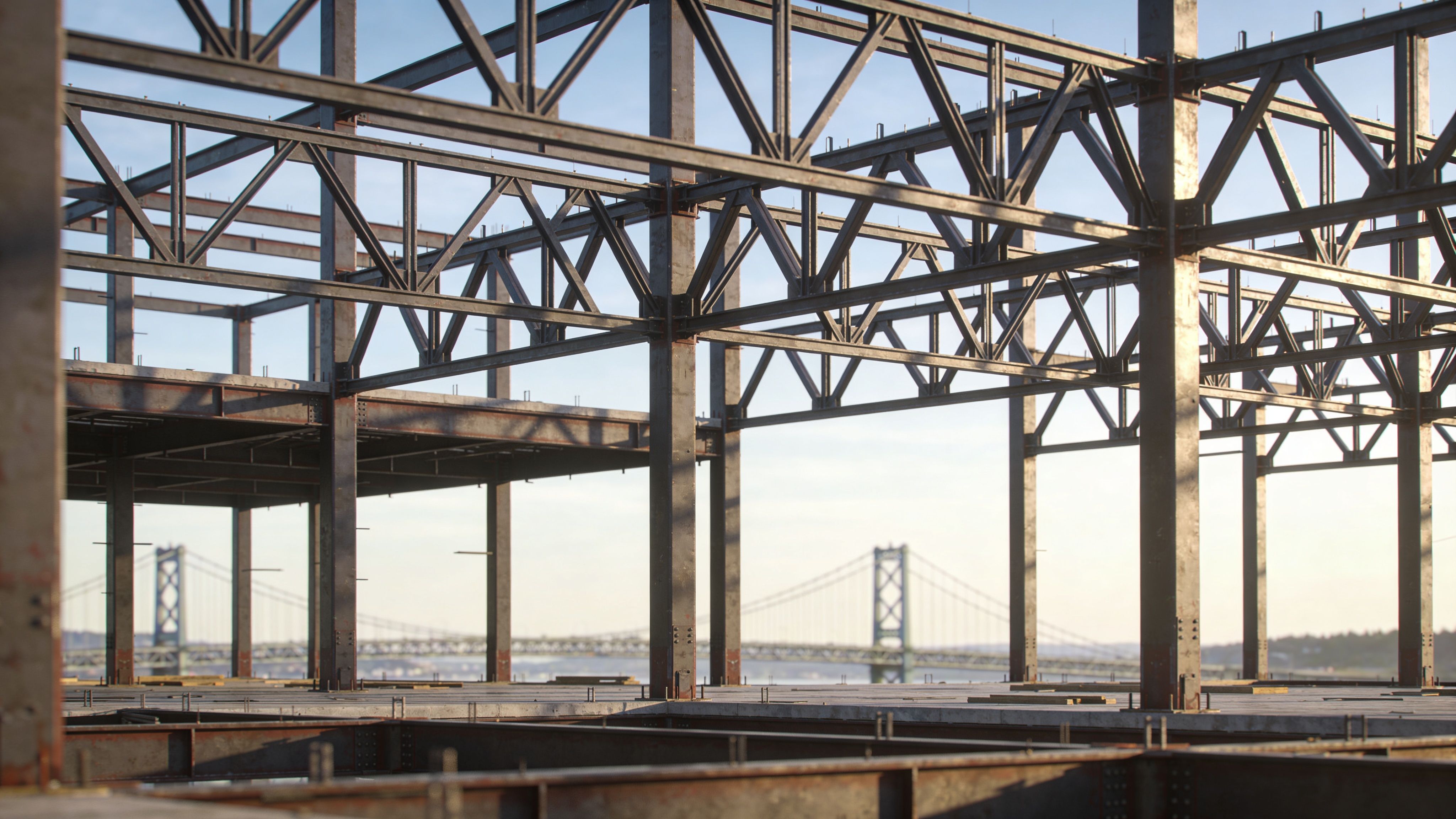
A basement remodel in Beaverton is a good example. The owner wants a home office, media room, or guest area, but the lower level has the usual Northwest concerns. Slight moisture history, uneven existing conditions, and a need for walls that won’t telegraph imperfections through paint later. Metal studs give the room a cleaner starting point.
In Tigard or Tualatin, tenant improvements often move fast. A small office suite may need new partitions, break-room walls, or a reworked layout for a growing team. In those jobs, straight framing helps keep doors, drywall, trim, and paint moving in the same direction instead of forcing each trade to compensate for the last one.
Common local uses that make sense
- Residential remodels: Basement finishes, bonus rooms, garage conversions, and interior reconfiguration.
- Commercial interiors: Retail partitions, office build-outs, clinics, treatment rooms, and reception areas.
- Repair-driven work: Rebuilding sections after leaks, plumbing repairs, or partial demolition.
- High-finish spaces: Modern homes in Lake Oswego or Vancouver, WA where smooth walls and crisp lines matter.
Restaurants and clinics are another strong fit. Those spaces need durable interiors, organized mechanical chases, and a clean build process. When the layout includes multiple rooms, soffits, and utility coordination, metal framing keeps the geometry under control.
For property owners looking at a broader interior upgrade, it helps to work with a contractor who can connect framing to the full finish sequence. If your project is in the city core or nearby neighborhoods, Portland interior services are often easiest to manage when one team understands how framing decisions affect drywall, texture, paint, and punch-list work.
Need a Professional Framing and Drywall Team Get a Free Estimate
The right time to bring in a framing and drywall team is before the layout is locked and materials are ordered.
On small Portland-area projects, a short site walk often clears up the questions that cost owners time later. A homeowner may be deciding whether a damaged wall can be repaired or needs to be reframed. A restaurant owner may need to know if a new partition will interfere with plumbing, electrical, or hood-related work. A clinic owner may be trying to keep part of the space open during construction and needs a plan that limits disruption.
That early review matters because framing choices affect more than the studs. They influence backing, drywall tolerance, insulation, door alignment, and the finish you can realistically expect at the end. Good contractors catch those issues before they show up as change orders, delays, or walls that never look quite right.
CS1 handles framing and drywall as connected parts of the same interior build, which helps keep the work coordinated and the finish consistent.
Understanding Project Costs Timelines and Permits
Those asking about metal framing often want the same three answers. What affects the price, how long will it take, and will permits be involved.
The honest answer is that interior framing costs depend on the room, not just the material. Stud gauge, wall height, layout complexity, backing requirements, framing around existing mechanicals, and the finish expectation all change the labor. A simple office partition is different from a clinic with multiple rooms, soffits, and backing for equipment.
What drives cost on a real job
- Layout complexity: Straight runs cost less to frame than rooms with many corners, niches, soffits, and door openings.
- Coordination needs: Plumbing, electrical, HVAC, and backing for cabinets or wall-mounted fixtures add labor.
- Finish expectation: A wall built for a basic utility area isn't framed to the same tolerance as a wall intended for a premium smooth finish.
- Existing conditions: Remodel work often means correcting out-of-plumb surfaces, tying into older framing, or replacing damaged material.
That’s one reason this work shouldn’t be treated like a DIY shortcut. The U.S. Steel Framing industry is a $27.4 billion market with over 15,000 businesses, which reflects a skilled trade with established professional demand (U.S. Steel Framing industry market size and business count).
Why timelines improve when framing is done right
Metal framing can help the schedule because the material is consistent. Crews spend less time sorting through warped members or fighting irregularity from piece to piece. That consistency matters later too, because drywall hangs cleaner on a wall plane that was set correctly in the first place.
A lot of delays on small projects don’t come from the framing itself. They come from change orders, hidden damage, slow decisions on layout, and trade stacking in tight spaces. Good planning prevents more problems than fast labor ever will.
A fast framing start doesn’t help if the wall is wrong and every trade after it has to fix the result.
Permits in Portland area remodels
Permits depend on the scope. If you’re changing structural elements, altering use, adding rooms, changing fire-rated assemblies, or doing larger commercial tenant improvements, permit review may be required. Simple non-structural interior work may be more straightforward, but homeowners shouldn’t guess.
In Portland, Beaverton, Hillsboro, and surrounding cities, local jurisdiction matters. The safest approach is to review the work scope at the start and confirm what the city or county will require before framing begins. That avoids stop-work issues and keeps inspections from becoming a last-minute problem.
The Link Between Quality Framing and a Flawless Wall Finish
People notice the drywall finish. They don’t notice the framing until it causes a problem.
That’s why experienced metal framing contractors think beyond studs and track. The wall has to support the finish system, not just stand in place. If the framing moves too much, the drywall joints, corners, and skim coat show it.
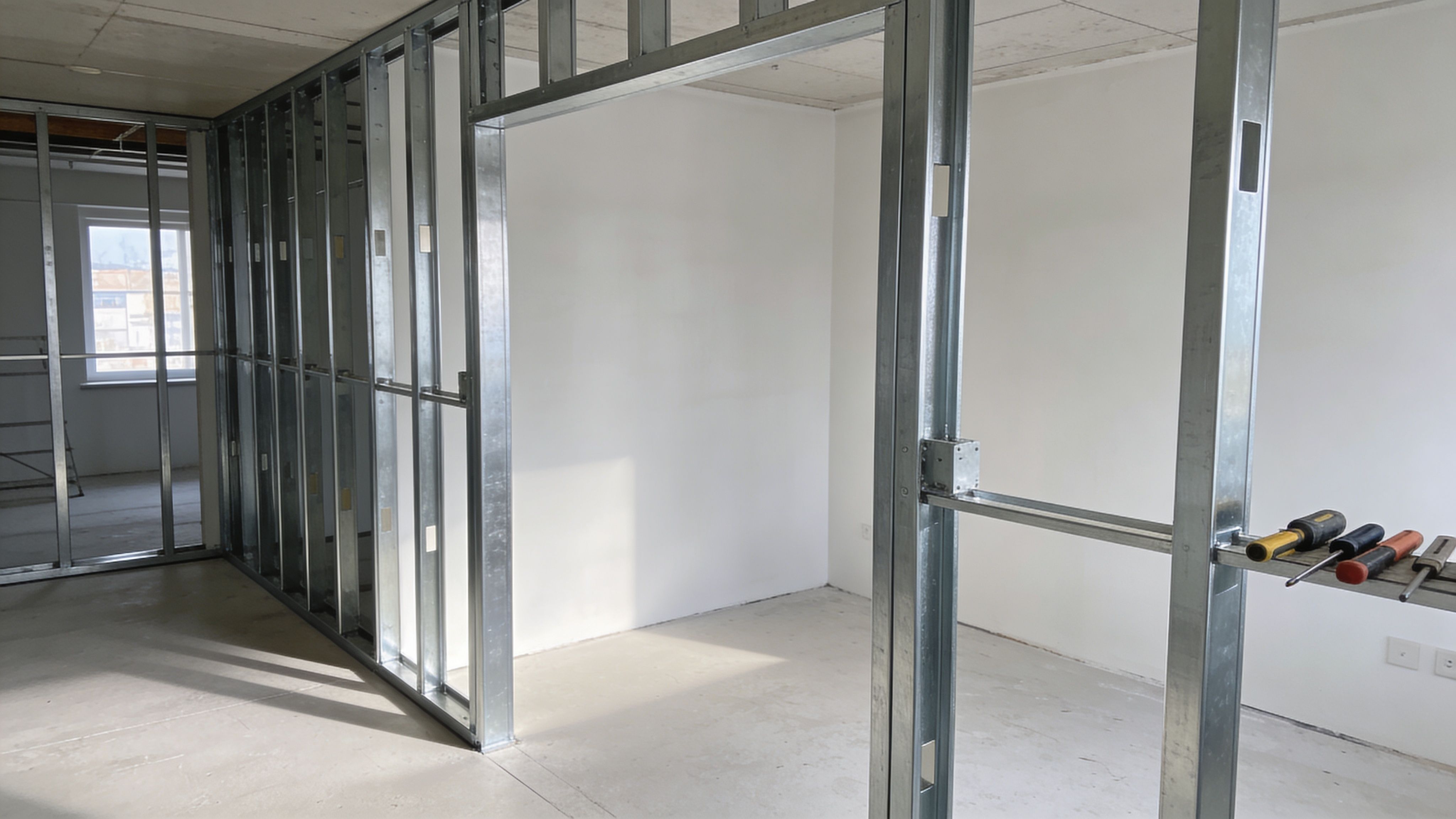
Why stud deflection matters
For high-end smooth walls, framing tolerance is not optional. For high-end Level 5 finishes, stud deflection must be tightly controlled, typically L/240 or better. Excessive deflection causes stress on the drywall, leading to visible joint cracking and waviness, which turns a premium finish into a callback (stud deflection guidance for high-end Level 5 finishes).
That sounds technical, but the jobsite version is simple. If the stud is undersized, spaced poorly, or installed carelessly, the wall face won’t stay stable enough for a premium finish. You can tape it perfectly and still end up with cracking or movement lines later.
What Level 5 really means
A Level 5 drywall finish is the highest standardized finish level established in GA-214 and ASTM C840. It requires multiple coats of joint compound and a skim coat over the entire wall surface, not just the joints, to help hide minor surface variation and create a uniform appearance under critical lighting (Level 5 drywall finish requirements and use cases).
That’s why Level 5 belongs in spaces like:
- Modern living areas: Smooth walls with large windows and angled daylight
- Commercial interiors: Reception areas, clinics, offices, and showrooms
- High-visibility remodels: Kitchens, stair walls, hallways, and open-plan spaces
If you want a wall to look flat after the paint dries, the framing crew and drywall crew need to be solving the same problem.
A lot of homeowners think of drywall and framing as separate scopes. On paper, they are. In the finished room, they’re one system. A contractor who understands both can frame for the finish you want, not just for the inspection.
If your project includes cracked walls, water-damaged sections, new partitions, or a full remodel, drywall repair and finishing services need to be considered alongside the framing, not after it.
How to Hire the Right Metal Framing Contractor in Portland
Hiring the right contractor has less to do with who talks the most about steel and more to do with who understands interior work from framing through final finish.

In Portland-area remodels, a framing mistake rarely stays isolated. It affects drywall alignment, trim fit, door function, texture matching, paint appearance, and cleanup time. That’s why the hiring process should focus on how a contractor handles the whole interior sequence.
Questions that reveal real experience
Ask direct questions. Good contractors answer them clearly.
- What kinds of projects do you frame most often? You want someone who regularly handles residential remodels, tenant improvements, clinics, restaurants, and repair-driven interiors, not only large-shell construction.
- How do you coordinate framing with drywall and finish level requirements? If the answer stops at stud layout, that’s incomplete. The contractor should understand how framing affects smooth walls and final appearance.
- How do you keep the site clean and safe? This matters in occupied homes, active businesses, and multi-tenant properties.
- Who handles patching, texture, insulation, and paint sequencing? Gaps between trades often create the delays clients remember most.
- How do you deal with uneven existing conditions? Remodel framing requires adjustment, not just installation.
One practical option for homeowners and small commercial clients is CS1 Real Interiors, which provides metal stud framing along with drywall, insulation, and interior painting for Portland-area interior projects. That kind of combined scope can simplify scheduling when the project needs more than one trade.
Hiring cue: If a contractor talks only about framing speed and not about finish quality, ask more questions.
Common questions from homeowners and property managers
Can I hang heavy items on a metal stud wall?
Yes, but backing and attachment method should be planned before the wall is closed. TVs, cabinets, shelving, grab bars, and commercial accessories often need proper blocking or reinforcement.
Is metal framing noisier than wood?
It can be if the wall assembly is designed poorly. Noise control depends on the full assembly, including insulation, drywall layers, sealing, and how penetrations are handled.
How does insulation work with metal studs?
Very well, when the assembly is planned correctly. Interior sound control is often a major reason to insulate partition walls in offices, bedrooms, clinics, and tenant spaces.
Is metal framing only for commercial work?
No. It’s common in commercial interiors, but it also makes sense for basements, remodels, ADUs, repairs, and modern residential rooms where straight walls matter.
A quick visual overview can also help if you’re comparing framing methods and trying to understand how interior steel systems go together.
Start Your Portland Interior Project with Confidence
A lot of Portland-area interior projects start the same way. A homeowner wants to rework a basement or ADU. A restaurant owner needs a cleaner layout before reopening. A clinic tenant has to fix water-damaged walls without turning a small repair into a long, messy remodel. In those jobs, the framing choice affects cost, schedule, and how good the finished space looks when the paint dries.
Metal framing makes sense when you need straight walls, predictable drywall backing, and a system that holds up well in everyday commercial or residential use. It is not the right answer for every room, and good contractors should say that plainly. The right call depends on the existing structure, the finish level you expect, what needs to go inside the walls, and how much disruption the site can handle.
For small projects, that judgment matters as much as the materials. A well-planned framing package can prevent callbacks, reduce drywall corrections, and make the rest of the job run cleaner.
For homeowners, builders, and property managers in Portland, Beaverton, Hillsboro, Tigard, Lake Oswego, Gresham, and Vancouver, WA, learn more about CS1 Real Interiors. If you need help with metal stud framing, drywall repair, installation, insulation, or interior painting, CS1 can review the scope, point out likely problem areas early, and help you start with a clear plan.


