


Replacing drywall typically costs $5.38 to $6.52 per square foot, and a typical 500 square foot room runs $2,690 to $3,260 for full replacement. If your problem is a small hole or a small damaged section, though, that pricing usually doesn’t apply because patch work is often priced by a contractor’s minimum service charge instead.
If you’re staring at a stained ceiling after a leak, a torn-up wall from plumbing access, or a few ugly patches left behind by a remodel, the hardest part is often figuring out what the job should really cost. A lot of online estimates make drywall sound simple. In the field, it usually isn’t.
In Portland, Beaverton, Hillsboro, Tigard, Lake Oswego, Gresham, and Vancouver, WA, the final price depends on more than square footage. Removal, disposal, finish level, texture matching, access, moisture damage, and whether the wall is repairable all matter. Homeowners often search “how much does it cost to replace drywall” expecting one clean number. Real estimates come from the condition of the surface and the finish you want when the job is done.
Table of Contents
- Understanding the Anatomy of Drywall Replacement Costs
- Key Factors That Will Change Your Final Price
- Is It Just a Patch or a Full Replacement
- DIY vs Hiring a Professional Drywall Contractor
- Drywall Replacement Costs in the Portland Metro Area
- What to Expect During Your Drywall Project
- Frequently Asked Questions About Drywall Costs
Understanding the Anatomy of Drywall Replacement Costs
A homeowner sees a hole in the wall and finds a per-square-foot price online. Then the estimate comes in higher than expected. In Portland, that usually comes down to scope, labor time, and minimum service charges, not overpriced drywall.
Full replacement includes more than hanging new board. The job often involves demolition, debris haul-off, new panels, fastening, taping, multiple coats of mud, sanding, and prep for primer and paint. That is why replacement costs more than new installation in open framing. Crews have to remove damaged material, protect the space, and clean up what comes out.
The national baseline for full drywall replacement is $5.38 to $6.52 per square foot, with a 500 square foot room costing $2,690 to $3,260, based on 2026 drywall replacement pricing.
What that estimate usually includes
A replacement quote usually covers these core parts:
| Cost Component | Average Price Range |
|---|---|
| Full drywall replacement | $5.38 to $6.52 per sq ft |
| Typical 500 sq ft room | $2,690 to $3,260 |
| New drywall installation only | $1.50 to $3.50 per sq ft |
| Old drywall removal in replacement scenarios | $0.50 to $2.50 per sq ft |
| Standard 4×8 drywall sheets | $10 to $20 each |
Those numbers help with broad budgeting. They can also mislead homeowners on smaller jobs.
Here is the part online calculators miss. A contractor is not pricing only the damaged square footage. They are pricing a trip to your home, dust protection, setup, demolition, disposal, material pickup, finish work, drying time across multiple visits, and cleanup. For a small or medium repair, that means the minimum charge often matters more than the square foot math.
Why labor drives the price
Drywall replacement is finish work. Materials are the cheap part on many jobs. The cost comes from getting the wall or ceiling flat, stable, and ready to disappear under paint.
That is especially true on repairs that interrupt an existing surface. A patch can be physically small and still take careful cutting, backing, seam treatment, corner rebuilding, texture blending, and sanding between coats. If the finish is visible in daylight or sits in the middle of a main living area, the labor standard goes up.
Practical rule: If one bid is far lower than the others, ask what prep, finish level, texture matching, and cleanup are excluded.
I see this often in Portland-area estimates. Homeowners compare a 12-square-foot ceiling cutout to an online per-square-foot number and expect a very low total. In the field, that same job may still take most of a day across multiple stages. The board itself is not what sets the price.
Why two similar jobs can price out differently
Two rooms with the same measurements can land in different price ranges. One may have easy access, standard ceiling height, and clean demolition. The other may involve insulation replacement, tight stair access, older framing that is out of plane, or a texture that takes extra time to match.
That is why online pricing works best as a rough baseline, not a final answer. For full-room replacement, square-foot pricing is useful. For the small-to-medium drywall jobs many Portland homeowners need, the more accurate question is not just cost per square foot. It is what it takes to get a pro out, complete the work properly, and leave the surface ready for paint.
Key Factors That Will Change Your Final Price
Online price ranges can point you in the right direction. The final number changes based on what is behind the wall, how visible the repair will be, and how hard the area is to work in.

Damage type changes the scope fast
Hairline cracking, a soft spot from moisture, and a section opened for plumbing all price differently because they call for different work.
For water-damaged drywall replacement, extensive sections of 20 to 50 square feet average $1,000 to $1,550, and that work can cost 2 to 3 times more than a simple patch because moisture damage may require mold-related removal and structural checks, based on water-damaged drywall cost guidance. That same source notes standard drywall can fail at 15% to 20% moisture content, which is why wet drywall often needs removal rather than cosmetic repair.
In real houses, the drywall is often only part of the repair. A ceiling leak can mean wet insulation, stained framing, or damaged corner bead. A bathroom wall opened after a plumbing issue may need drying time before new board goes in. Those details affect labor, scheduling, and the final bill.
Finish level matters more than homeowners expect
The finish standard has a big effect on labor. A garage wall, a rental turnover, and a main living room wall with afternoon sun do not get priced the same.
Smooth walls in bright rooms take more care because every seam, edge, and sanding scratch can show after paint. Texture matching can also take longer than homeowners expect, especially in older Portland homes where the existing pattern has been painted over for years. A patch can be structurally sound and still look bad if the finish work is rushed.
A drywall estimate covers the surface you will see every day, not just the sheet that gets screwed to the framing.
Project coordination can save money or add it
Drywall work gets more efficient when it is coordinated with the other work happening in the same area.
If the wall is already open for electrical, plumbing, insulation, or framing changes, it makes sense to handle those items before the board goes back up. Reopening a finished wall costs more than taking care of the full scope once. On the other hand, if multiple trades are overlapping in a tight space, scheduling can slow things down and add protection or return-trip costs.
CS1 Real Interiors handles drywall repair, drywall installation, interior painting, insulation, and metal stud framing for residential and small commercial projects in the Portland area. That can simplify planning for homeowners who want fewer handoffs between trades.
Access can turn a simple repair into a half-day or full-day job
Access is one of the biggest reasons an online square-foot number falls apart on a real estimate.
A small patch over a stair landing may need extra setup, taller ladders, more masking, and slower sanding and cleanup. The same goes for high ceilings, narrow hallways, furnished rooms, and occupied spaces where dust control matters. Older Portland homes add their own complications, including out-of-plane framing, plaster tie-ins, tight staircases, and layers of previous repairs that have to be corrected before the new surface will finish properly.
For many small-to-medium jobs, this is the part that catches homeowners off guard. The damaged area may be modest. The time to protect the space, complete the repair properly, and leave it ready for paint is what moves the price.
Is It Just a Patch or a Full Replacement
A lot of homeowners start with the wrong question. They search for drywall replacement cost when the actual decision is whether the damaged area should be patched, cut out and reworked, or replaced more broadly.
Why square foot pricing breaks down on small repairs
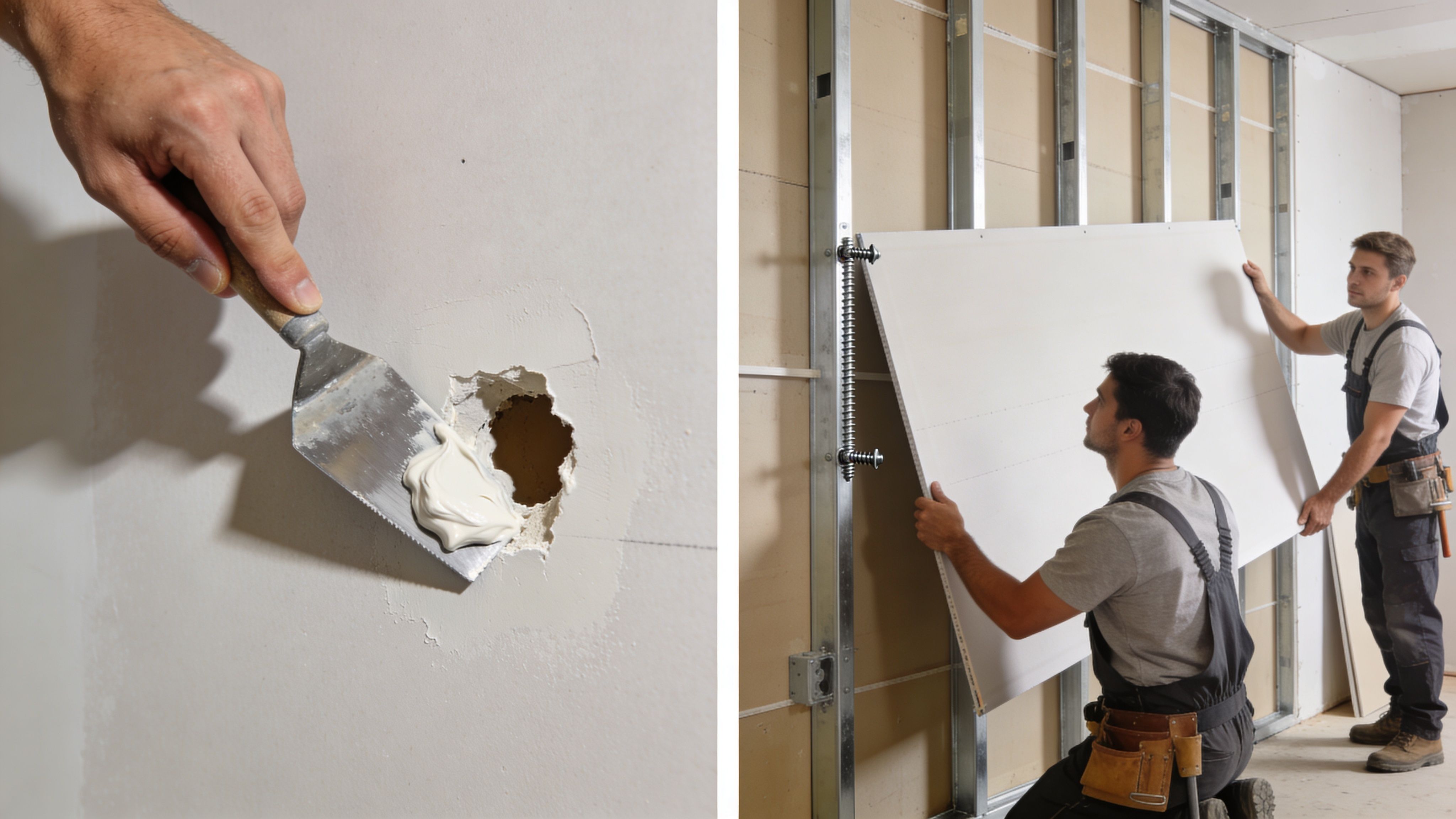
This is one of the biggest disconnects I see in Portland-area estimates. Online pricing makes a small repair sound cheap because the damaged area is small. Professional pricing is usually built around minimum service charges, labor time, and the number of visits it takes to get a patch ready for paint.
Even a minor hole can involve cutting back to solid material, adding backing, fastening new board, taping, applying multiple coats of mud, sanding, texture work, and cleanup. If the repair is in a visible wall or ceiling, the finish work matters more than the size of the opening.
That is why small drywall patches under 2 square feet often carry minimum charges of $350 to $500, even when online calculators suggest far less, according to small drywall patch pricing guidance. While the material cost is low, the labor process is what drives the final price.
Homeowners in Beaverton, Tigard, and Lake Oswego run into this all the time. A doorknob hole, plumbing access cut, or busted corner may look simple, but a clean, invisible repair takes time. On small-to-medium jobs, that minimum charge is often more relevant than any per-square-foot number you find online.
When replacement is the better decision
A patch makes sense when the drywall around the damage is still solid, dry, and well attached. Full replacement makes more sense when the surrounding area has already started to fail or when several problem spots are close enough together that piecemeal repairs cost more and look worse.
Replacement is usually the better call when:
- Moisture has spread and the drywall has softened, stained through, or lost strength.
- Several damaged sections are clustered on the same wall or ceiling.
- Old repairs are failing and the surface is no longer flat enough to blend cleanly.
- The room is already being updated and a larger cutout will leave a better finished result.
Sometimes the least expensive option on paper is not the least expensive outcome. Three separate patches in one room can take more labor than removing and replacing one larger section, especially if the goal is a uniform surface that will look right after primer and paint.
For repair-only projects, finish quality is usually the deciding factor. A dedicated drywall repair service in Portland is often a better fit than relying on rough square-foot guesses meant for larger installation work.
If you are not sure which category your project falls into, get an on-site opinion before you commit. Wet drywall, ceiling movement, and failed older patches are cases where a quick visual estimate online can send you in the wrong direction.
DIY vs Hiring a Professional Drywall Contractor
A lot of Portland homeowners start in the same place. They see a hole from plumbing work or water damage, look up a per-square-foot drywall price online, and assume the repair will be cheap enough to handle on a weekend. Then they price out tools, primer, plastic, texture materials, and paint, or call a contractor and find out small jobs are usually priced by minimum service time, not by a neat square-foot formula.
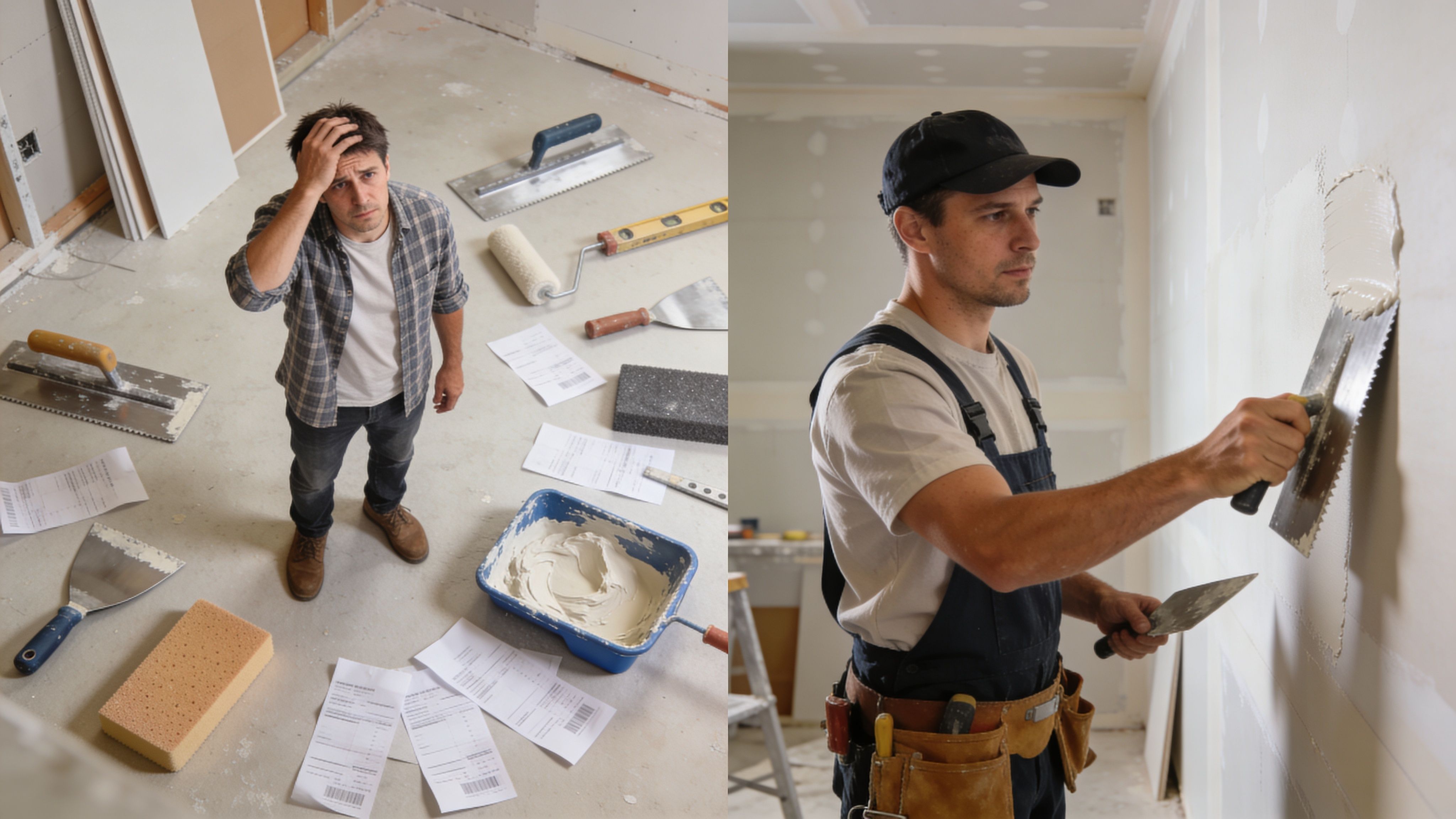
That gap between online estimates and actual repair pricing is where DIY often starts to look appealing.
What DIY usually leaves out
Drywall is simple to hang badly. It is much harder to finish well enough that the repair disappears after primer and paint.
Small cosmetic fixes in a closet or utility area can be a reasonable DIY project if the drywall is dry, stable, and easy to reach. Visible walls, ceilings, outside corners, and patched areas in bright natural light are less forgiving. Water-damaged areas add another layer of risk because the visible stain is not always the full extent of the problem.
The missed steps are usually the expensive part later. Surface protection, clean cut lines, backing support, screw placement, tape setting, drying time between coats, sanding without scuffing the paper face, and texture blending all affect the final result.
Common DIY problems include:
- Tape lines and ridges that show through once paint dries
- A patch that flashes in sunlight because the surface was not feathered wide enough
- Over-sanded drywall face paper that leaves a fuzzy or weak surface
- Texture that does not match the surrounding wall or ceiling
- Missed hidden damage from moisture, movement, or a loose cutout
What you’re paying for with a pro
For most homeowners, the value of hiring a drywall contractor is finish quality, speed, and fewer surprises.
A professional is not just there to screw up a new piece of board and spread mud. The job includes judging how far the damaged area should be opened, adding support where needed, keeping the patch flat to the existing plane of the wall, and finishing it so it looks right after paint. That judgment matters most on repairs, because repairs have to blend into old work.
Here’s a good visual example of why the finish stage matters:
There is also a pricing reality homeowners run into all the time. A contractor cannot usually send a skilled finisher out for a one-hour patch at a one-hour price. Travel, setup, dust protection, return visits for additional coats, sanding, and cleanup create a minimum charge on small-to-medium repairs. That is why a generic online price per square foot often feels disconnected from the quote you get for a bathroom ceiling patch, a few plumbing access holes, or one damaged wall section.
DIY can still make sense in a few cases. The area is small, out of sight, and you are comfortable accepting an imperfect finish. Hiring a pro makes more sense when the repair sits in a main living area, needs texture matching, involves a ceiling, or has to look clean enough that no one notices it was ever opened.
A failed DIY repair usually costs more than doing it right the first time. The contractor still has to fix the original damage, and now they may also need to remove loose tape, sand down heavy buildup, or cut out a patch that was not supported properly.
Drywall Replacement Costs in the Portland Metro Area
A Portland homeowner sees online pricing that says drywall runs by the square foot, then gets a quote that feels much higher for one ceiling cut or a few wall openings. That disconnect is common here. In the Portland metro, small and mid-sized drywall replacement jobs are often priced around labor minimums, site conditions, and finish work, not just raw square footage.
Older Portland homes
Older Portland houses create a pricing problem that online averages usually miss. A plumber opens a wall in Irvington or Sellwood, but the drywall crew still has to protect finished floors, work around lived-in rooms, deal with uneven framing, and make new work blend into surfaces that have already been repaired once or twice.
That kind of job is rarely a simple cut-and-replace. The opening may be small. The work is not.
Access matters too. Street parking, stairs, tight hallways, and occupied spaces add time before the first sheet is even cut. On paper, the square footage looks minor. On site, it can still be a half-day or multi-visit repair.
Why small Portland jobs often price higher than expected
This is the part many homeowners do not hear until they ask for bids. A professional drywall repair in Portland usually comes with a minimum charge because the contractor is selling skilled labor time, trip time, setup, dust protection, material pickup, multiple finish coats, sanding, and cleanup.
That is why a bathroom ceiling repair, a few electrical access holes, or one damaged wall section can price out higher than a generic online calculator suggests. The calculator assumes open, efficient production work. Real homes in Portland rarely work that way.
I tell homeowners to judge small-job pricing by the visit and the finish standard, not by the square foot alone.
Suburban remodel and turnover jobs
In Beaverton, Hillsboro, Tigard, and Gresham, the pattern shifts a little. A lot of drywall replacement comes up during kitchen and bath remodels, basement projects, and rental turnover work. Costs tend to make more sense when several openings are grouped into one visit, because the setup and return-trip labor gets spread across more work.
That is why five plumbing cuts repaired at once usually price better than five separate service calls over two weeks.
Homeowners getting a house ready for sale also run into this. One wall patch may not seem urgent, but once dents, old cracks, and bad past repairs show up under fresh paint, it often makes sense to combine drywall replacement with broader surface prep.
Whole room and larger replacements
Larger replacements are the jobs where square-foot pricing becomes more useful. If a basement room, addition, or heavily damaged area needs full replacement, the scope is more consistent and easier to estimate. The crew can remove, hang, tape, finish, and prep the space as one system instead of trying to make isolated patches disappear across different surfaces.
That usually brings the per-square-foot cost back closer to what homeowners expect from online research.
For Portland-area homeowners comparing bids, the better question is not just, “What is the rate per square foot?” It is, “Is this a small repair with minimum labor pricing, or a larger replacement where production pricing applies?” That answer changes the quote more than many people expect. For examples of the kind of local work commonly handled across the metro, homeowners can review CS1's Portland drywall services.
What to Expect During Your Drywall Project
Most homeowners feel better once they know the sequence. Drywall replacement is messy work, but it shouldn’t feel chaotic.
From estimate to demo
It starts with an on-site assessment. The contractor looks at the size of the damaged area, checks whether the drywall is dry and stable, and determines whether repair or replacement makes more sense. If there’s water damage, the cause needs to be addressed first.
Once the scope is approved, the work area gets protected. Floors are covered, nearby furniture is shielded or moved, and the crew prepares for dust and debris control. Then the damaged drywall is cut out and removed.
A good estimate should be clear about what’s included. Homeowners should know whether the quote covers demo, disposal, hanging, finishing, texture matching, and paint prep.
Installation through final cleanup
After removal, new drywall is fitted and secured. The finishing phase comes next, which is where the wall gets built into a smooth surface. Seams are taped, compound is applied in stages, and the area is sanded between coats as needed.
Typical steps look like this:
- Assessment and measuring so the damaged area is properly scoped.
- Protection and prep to reduce dust spread and protect finished surfaces.
- Removal of damaged drywall and disposal of debris.
- New board installation with proper fastening and backing.
- Taping and mudding over multiple stages.
- Sanding, blending, and inspection before primer and paint.
Good drywall work is often quiet work. The patch disappears, the room gets cleaned up, and the homeowner doesn’t have to think about it again.
Drying time, access, texture, and paint coordination affect the schedule. That’s normal. What matters is that the process is organized and the expectations are clear before work starts.
Frequently Asked Questions About Drywall Costs
How do I know if drywall can be repaired instead of replaced
Look at the condition, not just the size. If the drywall is dry, firm, and only damaged in one isolated spot, repair is often possible. If it’s soft, sagging, stained through, crumbling, or affected by moisture over a wider area, replacement is usually the safer long-term choice.
Why does a small drywall repair cost more than I expected
Because the size of the hole isn’t the only labor involved. Small repairs still require travel, setup, protection, cutting, fastening, taping, mudding, sanding, and cleanup. The contractor is pricing the process, not just the square inches.
Does drywall replacement include painting
Sometimes yes, sometimes no. Some contractors stop at a paint-ready finish, while others can include priming and painting as part of a broader interior package. Ask that question early so you’re comparing bids fairly and not assuming finish paint is included when it isn’t.
Is ceiling drywall more expensive than wall drywall
Often, yes. Ceilings are harder to access, slower to work on, and more demanding to finish cleanly. Even when the damaged area isn’t large, overhead work typically takes more control and more prep.
What should I ask before hiring a drywall contractor
Ask practical questions:
- What exactly is included in the written estimate
- Will the finish be smooth or matched to existing texture
- Who handles debris removal and cleanup
- Will the repaired area be ready for primer and paint
- Is the scope repair only, or do you recommend replacement
The right contractor should answer those questions clearly, without hiding the process behind vague line items.
If you need a real number for your home or rental property, the fastest next step is to request a free estimate from CS1 Real Interiors. CS1 helps homeowners and property managers across Portland, Beaverton, Hillsboro, Tigard, Lake Oswego, Gresham, and Vancouver, WA with drywall repair, drywall replacement, interior painting, insulation, and metal stud framing. You can also contact CS1 Real Interiors to get professional help for your drywall or interior project.


