



A ceiling stain after a winter leak. A crack above the hallway door that keeps coming back. A dented wall in a rental turnover that has to be ready fast. That's usually when people open a browser and type drywall contractor near me.
In Portland, Beaverton, Hillsboro, Tigard, Lake Oswego, Gresham, and Vancouver, WA, that search brings up a long list of names. The hard part isn't finding someone who says they do drywall. The hard part is finding someone who can patch, match, finish, and leave the space clean without creating a second problem for you to fix later.
Homeowners want walls that disappear into the room, not patches that flash under paint. Property managers want make-readies that stay on schedule. Builders want smooth, paint-ready surfaces and crews who communicate clearly. This guide is built for those real situations.
Table of Contents
- Your Guide to Finding the Right Portland Drywall Pro
- Understanding Your Drywall Needs and Finish Options
- How to Vet Portland Contractors and Key Questions to Ask
- Comparing Estimates and Spotting Contractor Red Flags
- The Drywall Process From Start to Finish
- FAQ Your Portland Drywall Questions Answered
Your Guide to Finding the Right Portland Drywall Pro
Most drywall jobs look simple from across the room. Up close, they tell a different story. A repair might involve moisture checks, insulation inspection, texture matching, multiple coats of compound, sanding, priming, and repaint coordination. If any one of those steps gets rushed, the wall often looks worse after paint than it did before.
That matters in the Portland metro area because homes here see a lot of remodel activity, rental turnover, and moisture-related repairs. A patch in a dry guest room is one thing. A ceiling repair after a roof leak in a Portland bungalow or a wall repair in a Hillsboro rental is another.
Practical rule: Hire for the finish you want to see in six months, not the speed of the first visit.
A good drywall pro usually stands out in a few ways:
- They diagnose the cause, not just the surface. If the crack comes from movement or moisture, they'll say so.
- They describe the finish level clearly. “Smooth wall” should mean something specific.
- They talk about dust control and protection. Clean work is part of professional work.
- They write detailed estimates. A one-line quote doesn't tell you much.
- They understand local expectations. Portland sellers, remodel clients, and property managers often need paint-ready results, not rough patchwork.
The right contractor isn't always the fastest to answer the phone or the cheapest to quote. The right one is the crew that understands the room, the substrate, the finish, and the schedule.
Understanding Your Drywall Needs and Finish Options
A lot of bad drywall hires start with a vague request. “I need some drywall work” can describe a small patch in a Beaverton bedroom, a ceiling cutout after a plumbing leak in Hillsboro, or a full smooth-wall finish in a Portland remodel. Those are different scopes, different labor, and different finish expectations.
Getting specific before you ask for bids helps you compare contractors on the right basis.
Start by defining the job
Drywall work usually falls into five buckets, and each one has its own risks.
- Small cosmetic damage. Nail pops, dents, corner bead scuffs, and isolated holes usually need patching, feathering, sanding, primer prep, and paint-ready finishing.
- Recurring cracks. A crack that keeps coming back often points to movement, joint failure, or a weak previous repair. Fresh mud alone usually does not hold for long.
- Texture mismatch. Matching old wall texture takes judgment and repetition. In many Portland-area homes, the repair itself is easy. Making it disappear is the hard part.
- Water-damaged drywall. The source of the moisture has to be fixed first. In our area, that matters more than homeowners expect because roof leaks, window issues, and seasonal dampness can leave hidden damage inside the cavity.
- Remodel or full installation. New board, taping, corner bead, sanding, and finish work often need coordination with framing, insulation, electrical, and painting.
If your issue is damage, repairs, or texture mismatch, it helps to look at a dedicated drywall repair service before asking for bids.
A repair counts as finished when it disappears after primer and paint, not when the patch feels hard to the touch.
Drywall finish levels compared
Homeowners hear Level 4 and Level 5 all the time, but many estimates never explain what those terms mean in plain language. In the Portland metro area, that gap matters. Large windows, gray skies followed by strong summer sun, and newer LED lighting can all expose flaws that looked fine during the job.
Level 4 is the standard finish for many residential interiors. It works well in a lot of rooms, especially where lighting is forgiving and the wall will not be scrutinized at every angle. Level 5 adds a skim coat or equivalent surface treatment across the board face to create a more uniform surface. That extra labor helps in spaces where side light, smooth paint, or higher-end finishes make joints and surface variation easier to see.
| Feature | Level 4 Finish (Industry Standard) | Level 5 Finish (Premium Smooth Wall) |
|---|---|---|
| Best use | Standard residential walls and many everyday rooms | High-visibility walls, upscale interiors, strong natural light, critical paint finishes |
| Surface look | Smooth, with some minor surface variation possible under certain lighting | More uniform appearance across the full wall surface |
| Lighting sensitivity | Can show joints or surface changes under side lighting or LEDs | Better choice where light exposes imperfections |
| Typical project fit | Rental refreshes, standard remodels, many bedrooms and hallways | Sales prep, custom homes, open-plan remodels, feature walls |
| Cost and labor | Lower finishing demand | More labor and tighter finish expectations |
Level 5 is not automatically the right choice. It costs more, takes more time, and only pays off when the room calls for it. In a rental turn or a secondary bedroom, Level 4 is often the practical decision. In an entry, kitchen, stairwell, or living room with long sightlines and a lot of natural light, Level 5 can be money well spent.
That trade-off is especially relevant in Portland-area homes where finish quality affects how a remodel photographs, how a wall looks at sunset, and how quickly a buyer notices flaws during a showing.
How to Vet Portland Contractors and Key Questions to Ask
A Portland homeowner notices a ceiling patch at 7:00 p.m. By the next morning, three bids are in the inbox. One is cheap, one is vague, and one asks better questions than the others. That difference usually matters more than the price spread.
Drywall work shows every shortcut. In older Portland homes, small mistakes stand out fast because walls are rarely flat, framing has moved over time, and moisture history can complicate what looks like a simple repair. In Beaverton, Hillsboro, and across the west side, homeowners and property managers do better when they screen for process, not just availability.

What to check before you book
Start with local proof of work. A contractor who regularly works in the Portland metro is more likely to understand texture matching in older neighborhoods, humidity-related repairs, and the finish standards buyers and renters expect in this market.
Check these basics before scheduling:
- Oregon licensing and insurance. Verify both. If something goes wrong on site, paperwork matters.
- Recent local jobs. Ask for examples from Portland, Beaverton, Hillsboro, Gresham, or Vancouver projects similar to yours.
- Scope awareness. Good contractors ask where the damage started, whether there was a leak, how long the issue has been there, and what the final painted surface needs to look like.
- Dust and jobsite control. Occupied homes need floor protection, plastic containment, and a cleanup plan.
- Finish experience. Hanging drywall and finishing drywall are different skills. A crew can install board quickly and still leave visible joints, flat spots, or poor texture blend.
One more point matters in this area. Portland buyers notice wall quality. So do property managers turning units on tight schedules. A low bid loses its appeal if the patch flashes under window light or the repair needs to be redone before paint.
Questions that expose experience fast
Ask questions that force specific answers.
- Who is doing the work? Ask whether the same crew handles hanging, taping, sanding, and texture, or whether parts are subcontracted out.
- How will you match the existing finish? A qualified contractor should describe the texture, patch boundaries, and how they will keep the repair from standing out after paint.
- What happens if moisture caused the damage? The right answer includes fixing or confirming the source before the wall is closed up.
- How do you protect occupied areas? Listen for details like masking, floor protection, dust control, and daily cleanup.
- What finish level are you pricing? If the answer is fuzzy, the proposal usually will be too.
The way a contractor answers tells you a lot. Clear answers usually come from crews with a repeatable process. Evasive answers often show up later as change orders, delays, or visible repairs.
For homeowners and small commercial clients who want one contractor for drywall, paint-ready finishes, insulation, or metal stud framing, CS1 Real Interiors provides those interior services across the Portland metro area.
A short walkthrough on what good drywall work should look like can help you ask better questions before signing:
Comparing Estimates and Spotting Contractor Red Flags
A drywall estimate should read like a work plan, not a guess. If two bids look very different, don't assume the cheaper one is efficient. It may just be incomplete.

What a real estimate should include
You want enough detail to compare one contractor to another on equal terms. If one proposal includes texture match, dust containment, and final sanding while another does not, those prices are not actually competing.
A solid estimate usually includes:
- Exact scope. Examples include ceiling crack repair, wall patching, moisture-damaged drywall replacement, or full-room installation.
- Finish expectation. Level 4 and Level 5 should not be treated as the same product.
- Material notes. Standard board, moisture-resistant board, sound control assemblies, insulation, or framing details should appear where relevant.
- Timeline. Not just start date, but expected sequence and return visits.
- Cleanup responsibility. Dust control and debris removal matter in occupied homes.
For pricing context, comparable market drywall cost data shows installation averaging $1.65 per square foot and repair work at about $33 per hour plus materials. Portland pricing varies, but that gives homeowners and property managers a useful baseline when a bid seems unusually low or unusually high.
If you're in the west side suburbs, a local service page like drywall services in Beaverton can also help you compare scope against the kind of projects common in your area.
Cheap drywall work often gets expensive after primer goes on.
Red flags that usually lead to bad finishes
A few estimate problems show up again and again on jobs that end badly.
- One-line pricing. “Repair drywall and paint” doesn't tell you what's included.
- No mention of finish level. That often leads to mismatched expectations.
- No moisture discussion on a leak repair. Replacing board without solving the cause is wasted money.
- Pressure to commit immediately. Good contractors don't need panic to close a job.
- Large cash demands up front. That's a common warning sign on residential work.
Another red flag is a contractor who doesn't ask about occupancy. Working in an empty unit is different from working in a furnished home, a dental clinic, or a restaurant renovation. The estimate should reflect that reality.
The Drywall Process From Start to Finish
Once you hire a pro, the project should feel organized. You should know what happens first, what happens next, and why there may be pauses between visits.
What happens before any board goes up
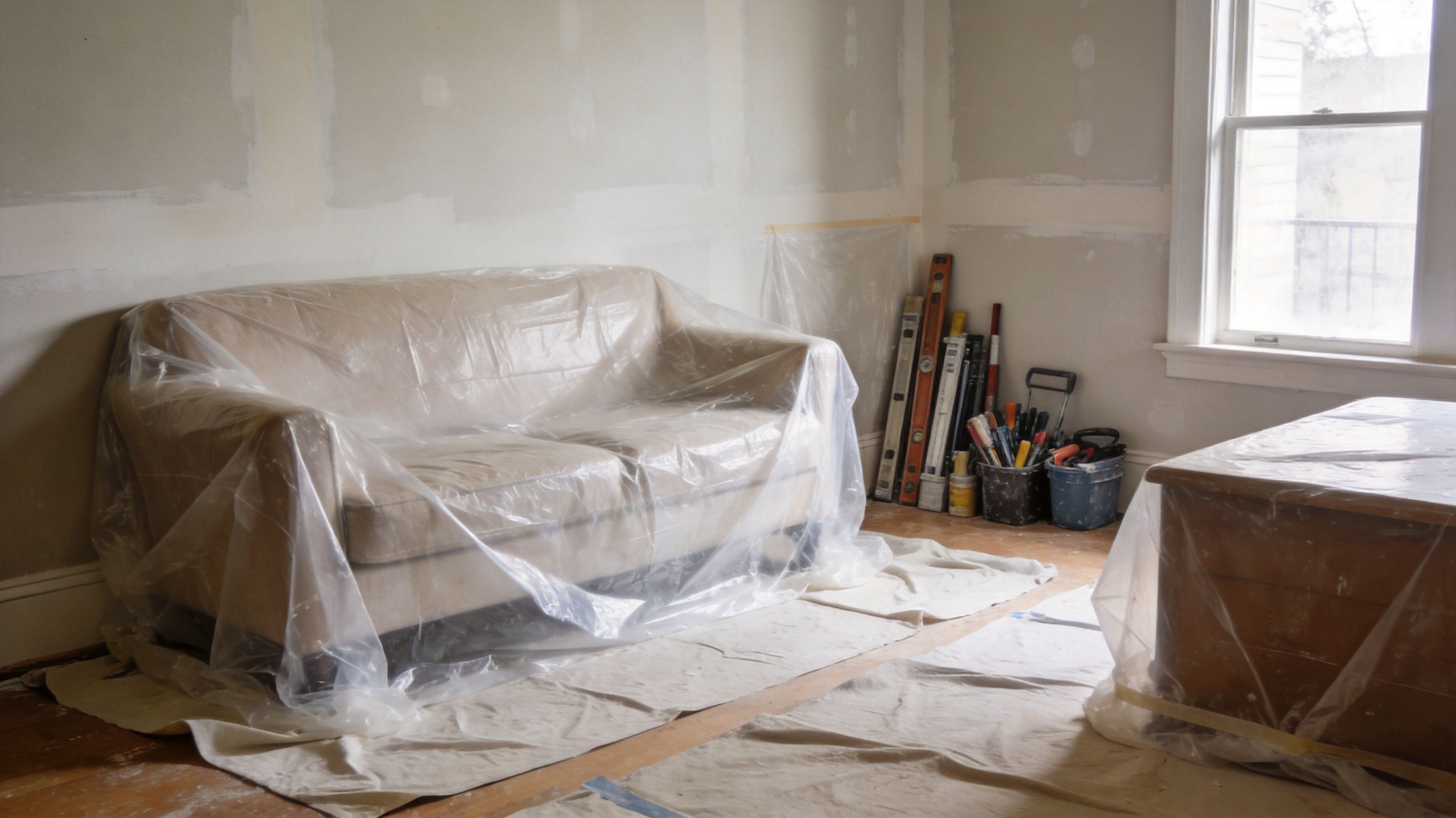
The first sign of a professional crew is usually preparation. Floors get covered. Nearby furniture gets protected. Dust-sensitive areas get isolated as much as possible. If the project involves a repair, the crew should inspect the damaged area before closing anything up.
This is also where communication matters. If the wall has hidden issues, such as wet insulation, framing movement, or damage beyond the visible spot, you want that identified early.
A clean setup usually includes:
- Surface protection. Plastic, paper, and controlled work zones.
- Material staging. Board, compound, fasteners, and tools placed to reduce mess and delays.
- Repair-specific checks. Moisture source, backing condition, and edge stability.
- Access planning. Especially important in occupied homes and small commercial interiors.
The quality of the final wall usually starts with how carefully the room was protected on day one.
What the timeline usually looks like
Drywall finishing takes time because drying time is part of the work. A standard residential installation typically spans 7-12 days, including drying time between 3-4 coats of mudding compound, based on this professional drywall installation process overview.
That doesn't mean every patch takes that long. It does mean good finishing isn't a rush job. On a typical project, the sequence often looks like this:
- Prep and layout. Protection, measurements, and material setup.
- Hanging or patch installation. New board gets fitted and secured, or damaged areas get cut out and replaced.
- Tape and first coat. Joints are embedded and the base layer is established.
- Return coats. Compound is built in layers so the repair or seam blends into the wall plane.
- Sanding and detail work. Flatness and visibility are checked.
- Texture match or smooth finish completion. The wall has to match the room, not just look good by itself.
- Final cleanup and walkthrough. The area should be left ready for primer and paint, or handed off with a clear next step.
For Portland-area homes, humidity and seasonal conditions can affect drying and scheduling. A crew that explains that up front is usually the crew taking the finish seriously.
FAQ Your Portland Drywall Questions Answered
What should I do after a water leak damages drywall
Stop the leak first. Then dry the area thoroughly before anyone closes the wall. Insurance data from 2025 shows the average water damage claim was over $12,000, with a significant number involving mold remediation, according to this water damage claim reference. A proper drywall contractor should look beyond the stained surface and consider hidden moisture, damaged insulation, and whether the repair area is ready to finish.
When should I hire a drywall contractor instead of a handyman
Hire a drywall contractor when the job involves water damage, ceiling work, recurring cracks, texture matching, full-room finishing, or a finish level that needs to hold up under strong light. Small cosmetic dings may be manageable for general repair work. Finish-sensitive projects usually are not.
Can one contractor handle drywall plus painting and framing
Yes, and that often makes scheduling easier on remodels, tenant improvements, and make-ready work. It reduces handoff problems between trades and helps keep finish expectations consistent from board installation through paint prep.
If you're dealing with cracks, holes, ceiling damage, water issues, or a remodel in Portland, Beaverton, Hillsboro, Tigard, Lake Oswego, Gresham, or Vancouver, WA, the next step is simple. Get a detailed scope, ask direct questions, and choose the contractor who treats finish quality, cleanup, and communication as part of the job.
If you want help with drywall repair, new drywall installation, paint-ready finishing, insulation, or metal stud framing, contact CS1 Real Interiors and request a free estimate.


