


A lot of people start looking for a drywall contractor after the problem has already been staring at them for weeks. It might be a crack above a doorway that keeps coming back, a ceiling stain after a Portland rain, or a patch job that looked fine until the afternoon light hit it. At that point, you’re not shopping for “drywall” in the abstract. You’re trying to get your wall, ceiling, or room back to normal without making a bigger mess or wasting money on a repair that fails.
That’s especially true in Portland, Beaverton, Hillsboro, Tigard, Lake Oswego, Gresham, and Vancouver, WA, where homes range from older settled structures to newer remodels with sharp lighting, open layouts, and paint finishes that show every defect. Good drywall work isn’t just filling holes. It’s knowing what caused the damage, what needs to come out, what can stay, and how to leave a surface that looks right after primer and paint.
Table of Contents
- That Unsettling Crack in Your Wall is a Sign
- Core Services of a Professional Drywall Contractor
- When to Call a Pro Instead of DIY
- How to Vet and Hire the Right Contractor in Portland
- Ready to Fix Your Walls? Get a Clear Estimate First
- What to Expect for Project Costs and Timelines
- The CS1 Real Interiors Difference for Your Home
- Frequently Asked Questions About Drywall Projects
That Unsettling Crack in Your Wall is a Sign
A hairline crack over a hallway door often looks minor at first. Then the seasons change, the house moves a little, and the crack opens again right through fresh paint. A homeowner patches it once, maybe twice, then starts wondering if the underlying issue is behind the surface.
Ceiling spots create a different kind of stress. You notice a faint brown ring after a leak or heavy moisture event, and now the question isn’t just how to cover it. It’s whether the drywall is still sound, whether the joint tape has loosened, and whether the stain will come back through the new paint.
Then there’s the DIY patch that didn’t quite blend. The wall may feel flat by hand, but side lighting from a window or recessed can lights shows every ridge, every rough edge, every spot where the texture changed.
A drywall problem usually has two parts. The visible damage, and the reason it keeps showing up.
That’s where a drywall contractor becomes more than someone who spreads mud. Their work involves diagnosis first, repair second, finish last. If the board is soft from water, it needs replacement, not just filler. If a crack keeps returning, the repair has to address movement and joint treatment, not just cosmetics.
In Portland-area homes, these issues show up all the time during remodel prep, pre-sale touchups, rental turnovers, and post-leak repairs. What homeowners usually want is simple. They want the repaired area to stop drawing attention and hold up over time. Good drywall work does exactly that, but only when the repair matches the cause.
Core Services of a Professional Drywall Contractor
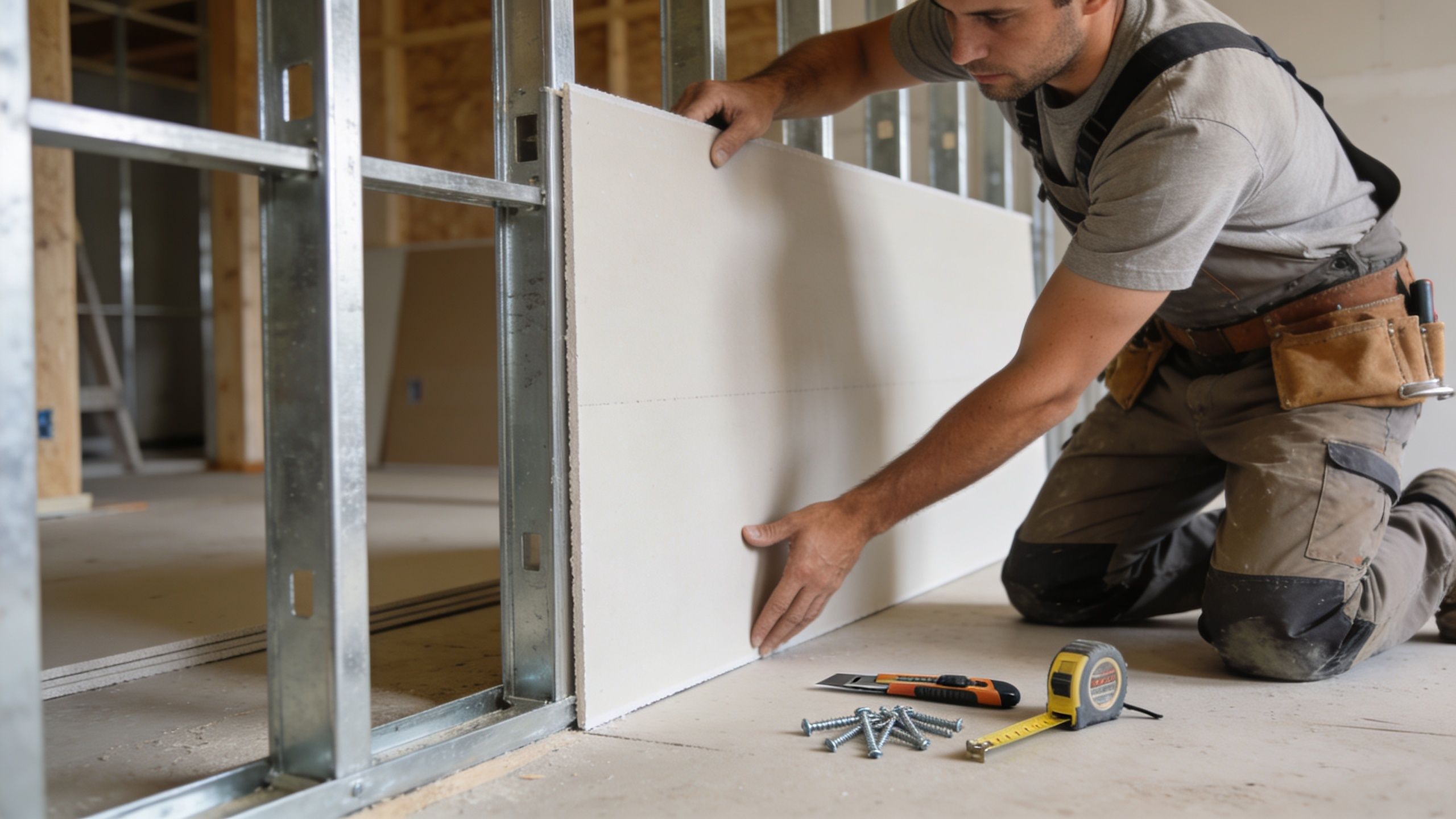
A professional drywall contractor handles more than hanging sheets on framing. The work usually falls into a few categories. Repair, installation, finishing, and the related interior tasks that affect the final result.
Repair work that actually lasts
Most homeowners call for repair, not new construction. That includes:
- Holes and impact damage from furniture, door handles, plumbing access, or kids and pets
- Recurring cracks at seams, corners, and over doors or windows
- Water-damaged drywall after roof leaks, plumbing issues, or ventilation problems
- Ceiling repairs where sagging tape, stains, or broken sections need a clean rebuild
- Texture matching so a patch doesn’t look like a patch
Small damage can be straightforward. Bigger repairs are usually about blending. The contractor has to cut back to sound material, secure the patch properly, tape and coat it correctly, then match the surrounding surface so the repair disappears after painting.
For homeowners dealing with cosmetic or damage-related issues, targeted drywall repair in Portland is often the most cost-effective path because it fixes the problem area without turning the whole room into a renovation.
Installation and finishing for remodels and build-outs
Drywall contractors also handle full installation for remodels, additions, basement finishes, tenant improvements, and small commercial interiors. That work often includes layout, board hanging, corner treatment, taping, finishing, and prep for paint.
In many projects, drywall ties directly into other interior scopes. Insulation has to be in before board goes up. Metal stud framing has to be straight or the finished wall won’t look straight. Painting depends on how clean the finish work is. That’s why many homeowners and property managers prefer one contractor who can coordinate drywall, insulation, framing, and interior paint rather than piecing the job out.
Why finish level matters more than most homeowners think
Not every wall needs the same finish. The industry uses a standardized 0 to 5 scale, and choosing the right one matters for both appearance and budget. The Gypsum Association finish-level guidance summarized here makes the practical point clear. Lower finish levels work in concealed or utility areas, while higher levels are for surfaces people scrutinize.
The top end is Level 5. That finish adds an all-over skim coat over a fully prepared Level 4 surface. The result is a uniformly smooth wall that helps prevent visible seams and surface defects under glossy paint or critical lighting, as explained in this Level 5 finishing reference.
Here’s the practical version:
| Area | Usually appropriate finish |
|---|---|
| Garage or utility area | Lower finish level if appearance isn’t critical |
| Wall behind cabinets | Lower finish level can make sense |
| Standard bedroom or hallway | Often Level 4 |
| Large open living area with strong window light | Often worth discussing Level 5 |
| Dark paint, sheen paint, or upscale finish work | Level 5 is often the right call |
Practical rule: If light rakes across the wall, the wall has to be better than “pretty good.”
That matters a lot in Portland remodels with bigger windows, smooth-wall preferences, and open-plan rooms. A wall can be technically finished and still look wrong once sunlight hits it. The right drywall contractor knows when a standard finish is enough and when it isn’t.
When to Call a Pro Instead of DIY
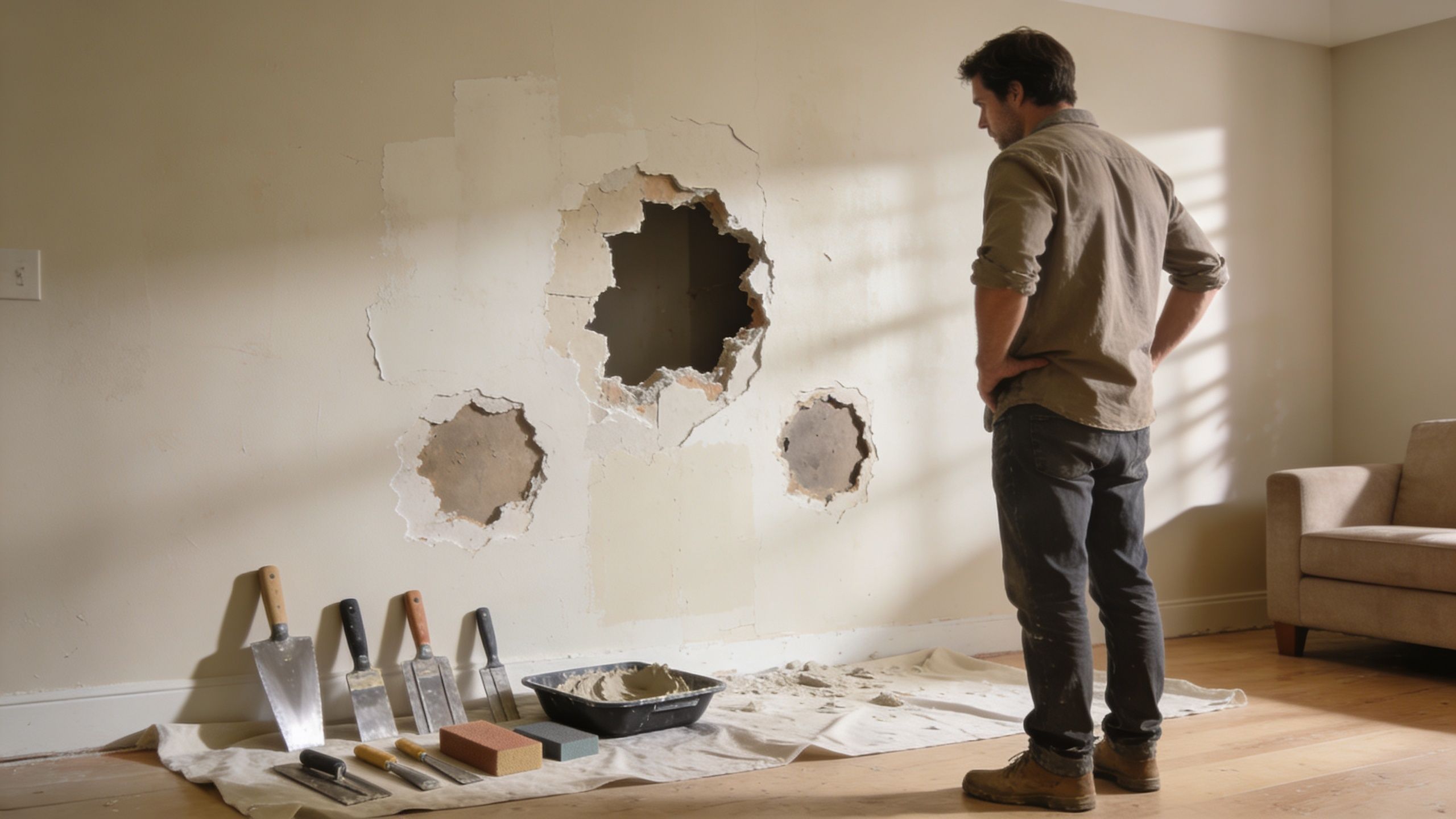
Some drywall jobs are good weekend projects. A tiny nail pop or a very small ding in a low-visibility area can be manageable if you’re patient. A lot of homeowners get into trouble when they assume every drywall problem is just mud, tape, and sanding.
Jobs that usually go sideways
The projects below are where DIY repairs often cost more in the end:
- Ceiling damage: Gravity works against every step. Poor patch support, weak taping, or uneven finishing shows fast overhead.
- Water-damaged drywall: If the source of moisture isn’t handled and the damaged material isn’t removed properly, the repair won’t last.
- Large holes: Once the repair goes beyond a simple surface fill, backing, patch sizing, taping, and feathering matter.
- Recurring cracks: If the same crack keeps returning, the issue usually isn’t the paint.
- Pre-sale or high-visibility repairs: If you need the repair to disappear under fresh paint, the finish quality matters more than the patch itself.
A common mistake is over-sanding. Homeowners often sand too early, too aggressively, or too wide, which creates a larger repair area and damages the surrounding paper face. That makes the wall harder to finish cleanly.
Why odd corners and ceilings are different
Older homes and custom layouts around Portland often have bay windows, angled walls, and exterior corners that aren’t standard. Those off-angles are a known pain point. Specialized trade guidance notes that non-standard off-angles and obtuse exterior corners are common sources of cracking and visible defects, and they require specific techniques that amateur repairs often miss, as discussed in this off-angle drywall tutorial reference.
If the corner isn’t standard, the repair method can’t be standard either.
That’s especially true when the repair sits in bright natural light. A patch may look acceptable at night and fail visually the next morning.
If you’re standing in a room wondering whether to keep trying, use a simple test. If the job is overhead, moisture-related, larger than a basic cosmetic patch, or requires a flawless finish, call a pro. You’ll usually save time, avoid repainting twice, and get a surface that holds up.
How to Vet and Hire the Right Contractor in Portland
A Portland homeowner usually calls after the same moment. They’ve had one repair done before, the patch flashed under paint, dust got into the next room, and now they want to avoid paying twice for the same wall.
That is the right mindset.
Hiring a drywall contractor is less about finding the lowest bid and more about finding a crew that can protect your home, keep a realistic schedule, and leave behind a finish that disappears once the room is painted. In occupied homes around Portland, Beaverton, Hillsboro, and Lake Oswego, those details matter as much as the patch itself.

Start with the basics that protect you
Before talking about texture or pricing, confirm that the contractor is legitimate and set up to work in your home responsibly.
- License status: In Oregon, ask for the contractor’s CCB number and verify it.
- Insurance: Confirm liability insurance and workers’ compensation if employees or a crew will be onsite.
- Written scope: Get the repair area, finish level, protection plan, and cleanup terms in writing.
- Recent local work: Ask about jobs like yours in older Portland homes, newer suburban homes, or occupied remodels.
Local experience matters for practical reasons. Portland-area houses often come with tight work areas, active households, moisture history, and walls that are less straight than they look. A contractor who works in these conditions regularly is usually better at setting expectations before the job starts.
Questions that reveal how a contractor works
A short conversation can tell you more than a polished estimate sheet.
Ask direct questions and listen for direct answers:
- Who is doing the work? Some companies send an estimator first, then a different crew shows up with limited job details.
- How will you protect floors, furniture, and nearby rooms? Good answers include plastic containment, floor protection, and a plan for traffic paths.
- What is your dust-control process? Drywall dust travels. If the answer is vague, cleanup will probably be your problem later.
- How do you handle texture matching or smooth-wall blending? Small patches are easy to spot when the finisher is not strong.
- What happens if you open a wall or ceiling and find hidden damage? A clear change-order process prevents arguments and surprise charges.
- How many visits will this take? A one-day promise can sound great, but many repairs need drying time between coats.
This short video is a useful prompt for what to discuss before signing anything.
Good contractors are clear about process, limitations, and cleanup. Vague answers usually turn into vague results.
What a solid estimate should include
A good drywall estimate is specific enough that both sides know what “done” means. That matters because homeowners and contractors often picture different finish standards unless they spell them out.
| Item | Why it matters |
|---|---|
| Defined repair area | Prevents confusion about what is included and what is outside the quoted scope |
| Finish expectation | States whether the result is texture-matched, smooth-wall blended, or ready for primer and paint |
| Prep and protection | Shows how floors, furniture, and adjacent spaces will be protected |
| Cleanup responsibility | Clarifies whether debris, dust, and masking materials are removed by the contractor |
| Timeline and visit sequence | Sets expectations for drying time, return trips, and when the room can be used again |
Price still matters, of course. But a lower bid that skips containment, glosses over finish expectations, or ignores return visits often costs more once repainting, extra cleaning, or rework gets involved.
The best hire is usually the contractor who gives a clear scope, answers hard questions without getting defensive, and treats your home like a lived-in space instead of a blank job site.
Ready to Fix Your Walls? Get a Clear Estimate First
You notice the crack every time you walk past the hallway. Then a stain shows up on the ceiling, or an old patch starts flashing through the paint in afternoon light. At that point, guessing usually costs more than getting the area looked at.
A clear estimate gives you something useful right away. You find out whether you are dealing with a simple drywall repair, a moisture-related issue that needs to be addressed first, or a larger scope that makes more sense to handle with other interior work at the same time. For homeowners around Portland, that matters because scheduling, access, and cleanup affect daily life as much as the repair itself.
Good estimates also help you compare contractors on more than price. One contractor may allow for dust protection, texture matching, and return visits after drying. Another may quote a lower number and leave those details vague. On paper, those bids can look similar. In your home, they are not.
If you are in Portland, Tigard, Lake Oswego, Beaverton, Hillsboro, or nearby communities, start by asking for a straightforward assessment of the problem and the expected result.
A drywall estimate should leave you with a clear scope, a realistic finish expectation, and a sense of how the crew will treat your home while the work is underway.
That is the point. Homeowners do not need more guesswork. They need enough detail to decide whether to fix one wall now, bundle several repairs together, or hold off until a remodel makes better financial sense.
What to Expect for Project Costs and Timelines
Drywall pricing frustrates homeowners when two jobs look similar from across the room but aren’t similar at all once the work starts. A small visible hole may be simple. Another hole in the same place could involve loose surrounding board, damaged corner bead, texture blending, stain blocking, and repainting.
What changes the price
A few things drive most of the difference in cost:
- Type of work: Repair work is different from full installation. Repairs often take more finesse because the new work has to disappear into old surfaces.
- Finish level: The more refined the finish, the more labor goes into coating, drying, touch-up, and sanding control.
- Access: High ceilings, stairwells, tight hallways, and occupied rooms slow the process.
- Prep needs: Water damage, loose material, furniture protection, and demolition all add scope.
- Paint-readiness: Some clients want a repaired wall. Others want a surface ready for final paint with no visible transitions.
The finish level is one of the biggest levers for cost control. The industry’s standardized 0 to 5 scale is useful because it helps match the finish to the room. Lower levels can be appropriate behind cabinets, in garages, or other concealed areas, while premium visible spaces may justify the extra labor of a higher finish. Used correctly, that keeps homeowners from paying for an expensive finish where they don’t need it.
Why drywall jobs take longer than they look
Drywall work has built-in waiting time. Compound has to dry. Repairs often need multiple visits. Texture has to be matched and allowed to settle. Rushing the process usually shows up later as flashing, shrinkage, or visible joints.
A small patch may only require a short amount of hands-on work each visit, but it can still stretch over multiple trips because each coat needs time before the next one. A larger room or remodel takes longer not only because there’s more area, but because the finish has to stay consistent from wall to wall and corner to corner.
Fast drywall isn’t the same as finished drywall.
If a quote promises a perfect result on a timeline that sounds too short, ask what is being skipped. Drying time, prep, protection, and final detail work all matter. The cleaner and smoother you want the result, the more the schedule needs to reflect the actual process.
The CS1 Real Interiors Difference for Your Home
You come home, dinner is on the stove, and a repair crew is sanding in the next room. What separates a good drywall experience from a bad one usually has less to do with the patch itself and more to do with how the job is run. In occupied Portland-area homes, homeowners care about three things fast. Will the crew show up when they said they would, will they keep the mess contained, and will the repair disappear after paint.

Why clean work matters in occupied homes
Drywall dust gets everywhere if the crew is careless. It settles into floors, vents, trim, and furniture, and homeowners in lived-in spaces feel that mistake for days after the job is done.
Clean work starts before the first cut or sanding pass. Floor protection, plastic containment, controlled sanding methods, and a real cleanup plan matter just as much as the repair itself. In family homes, rentals between tenants, offices, and medical or client-facing spaces, that level of care is part of professional work, not an extra line item.
A clean job site also tells you something about the contractor. Crews who protect the space usually protect the finish too.
One contractor for multiple interior needs
Plenty of drywall jobs are not drywall-only jobs. A ceiling leak repair may also need insulation replaced. A wall opening might need framing adjustment before new board goes up. A patch often needs paint work to make the repair blend properly.
CS1 Real Interiors handles drywall repair, drywall installation, interior painting, insulation, and metal stud framing for residential and small commercial projects in the Portland metro. For homeowners, that means fewer moving parts and fewer scheduling problems between trades. It also cuts down on the common job-site problem where one contractor finishes their piece and leaves the next one to deal with the flaws.
The practical benefits are straightforward:
- Fewer handoffs between related interior trades
- Less downtime waiting for separate crews to coordinate
- Better finish consistency between repaired areas and surrounding walls
- Clearer accountability from estimate through final walkthrough
For homeowners in Portland, Beaverton, Hillsboro, Tigard, Lake Oswego, Forest Grove, Cornelius, Tualatin, Gresham, and Vancouver, WA, reliability matters as much as technical skill. The right contractor keeps the schedule realistic, communicates changes early, and leaves the house in a condition you can live with while the work is underway.
Frequently Asked Questions About Drywall Projects
Can you perfectly match my existing wall texture
A close texture match is usually possible, but “perfect” depends on the age of the wall, previous paint buildup, and how the original texture was applied. The goal is to make the repair blend naturally so it doesn’t stand out in normal lighting. Older walls with multiple repaints can be harder to duplicate exactly, but a skilled texture match should keep the repaired area from drawing your eye.
What should I do before the crew arrives
Clear small items, wall decor, and fragile belongings from the work area. If possible, move furniture away from the wall or ceiling being repaired. Contractors can often protect larger items, but a cleared workspace speeds up setup and reduces risk.
How do you handle dust and cleanup
The best approach depends on the repair, but professional drywall work should include containment, floor protection, and cleanup as part of the process. If you’re interviewing contractors, ask exactly how they isolate the work area and what cleanup is included at the end.
What’s the real visual difference between Level 4 and Level 5
The difference shows up most in lighting and paint finish. A standard finish may look fine in many rooms. A Level 5 finish is for surfaces where strong light, dark paint, or sheen paint would reveal joints, ridges, or slight surface variation. If your room has big windows or a smooth modern look, that conversation matters.
Can a crack just be patched and painted
Sometimes yes, sometimes no. If the crack came from minor movement and the surrounding material is sound, a proper repair can solve it. If the crack keeps returning, the repair needs to address the joint condition and the reason the movement is showing at that location.
Do you work on small jobs or only large remodels
Many drywall contractors handle both. Small repairs are common, especially after leaks, plumbing access, accidental damage, or pre-sale touchups. The key is getting a clear scope so you know whether the job is a simple repair or part of a wider interior update.
If you’re ready to stop looking at cracks, stains, holes, or rough walls, request a free estimate from CS1 Real Interiors or visit CS1 Real Interiors to get professional help with drywall repair, drywall installation, interior painting, insulation, or metal stud framing in Portland and nearby cities.