



A wall looked fine yesterday. Today there's a ceiling crack over the hallway, a dent from a doorknob in the bedroom, or a stain spreading after a leak. That's usually when the search starts for drywall professionals near me, and a common problem arises right away. There are plenty of names online, but very little help figuring out who will leave you with a clean, paint-ready repair instead of a patch that still shows after the room is painted.
In Portland, Beaverton, Hillsboro, Tigard, Lake Oswego, Gresham, and Vancouver, WA, homeowners deal with this every day. Some jobs are cosmetic. Some point to moisture, movement, or previous poor workmanship. The repair itself may be small, but the wrong hire can turn a simple fix into dust, delays, and a wall that never quite looks right again.
Table of Contents
- That Sudden Crack or Hole Why Finding a Pro is Urgent
- Where to Start Your Search for Portland Drywall Contractors
- Your Vetting Checklist How to Identify a True Professional
- Ready for a Flawless Finish Get Your Free Estimate Now
- Decoding the Estimate Understanding Finishes and Costs
- What to Expect During Your Drywall Project
- Your Next Step to Perfect Walls
That Sudden Crack or Hole Why Finding a Pro is Urgent
A drywall problem rarely feels urgent until you notice how visible it is. Ceiling cracks catch light from every angle. A wall patch in a main room draws your eye every time you pass it. Water damage raises a bigger concern because you're not just fixing a surface. You're trying to make sure the wall is dry, stable, and ready for a proper repair.
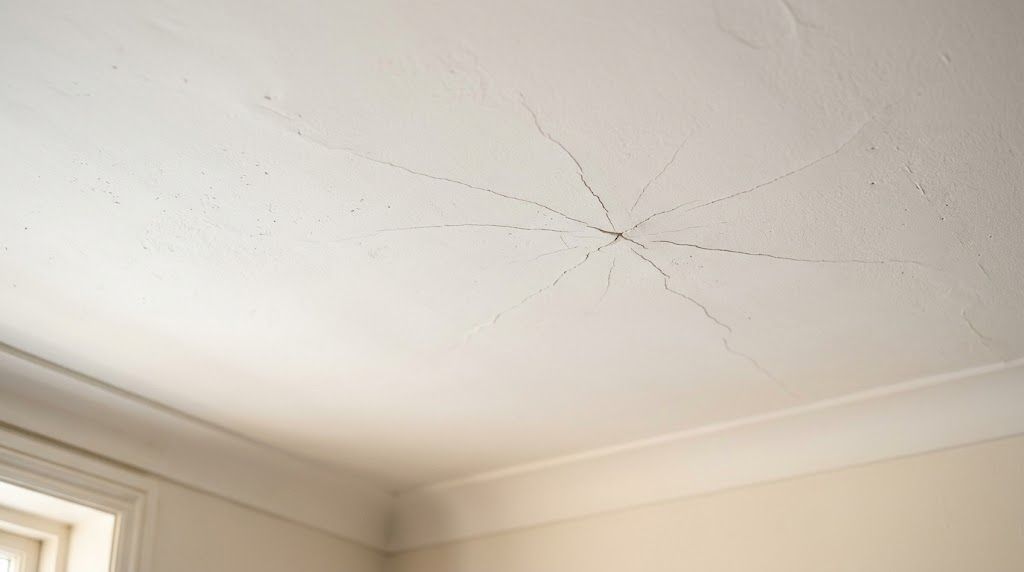
If moisture is part of the problem, the first priority is stopping the cause before anyone starts patching. Homeowners dealing with staining or musty drywall should also review practical guidance on drywall mold prevention and removal so they don't trap a bigger issue behind fresh compound and paint.
The good news is that drywall is a stable, established trade. The U.S. Bureau of Labor Statistics reports about 118,600 drywall installers and tapers were employed in 2024, with about 8,800 openings projected per year over the next decade, which means quality help exists in major metro areas if you sort carefully through your options (BLS occupational outlook for drywall installers and tapers).
Practical rule: If the damage affects a ceiling, follows a leak, or needs to disappear under paint, don't treat it like a casual handyman patch.
What usually goes wrong when people rush the hire
Homeowners often call the first available name and assume drywall is drywall. It isn't. There's a big difference between filling a hole and restoring a flat surface that won't flash, shadow, or show a ridge after priming and paint.
Common headaches include:
- Visible patch edges: The repair is technically complete, but the outline still shows in daylight.
- Poor texture blending: Orange peel, knockdown, or hand texture doesn't match the surrounding wall.
- Cracks returning: The seam was covered, but not reinforced and finished correctly.
- Mess left behind: Fine dust gets into trim lines, flooring, vents, and furniture.
A good contractor solves the whole problem. That includes prep, repair method, finish quality, cleanup, and coordination with painting if needed.
Where to Start Your Search for Portland Drywall Contractors
Typing drywall professionals near me into Google is fine as a first move. It's not enough to make the decision. Search results are crowded with directories, ads, and broad service pages, so the better approach is to build a short list from a few different sources and look for consistency.
Start with local referrals that already understand finish quality
The most useful referrals usually come from people who see finished interiors up close. Painters notice bad seams immediately. Remodel contractors know who can keep a project moving without repeated callbacks. Real estate agents and property managers know which crews can handle repairs cleanly when a sale, move-in, or turnover is on the calendar.
In Portland and nearby cities like Beaverton, Hillsboro, and Lake Oswego, ask questions that are specific to your situation:
- For ceiling cracks: Who handles overhead repairs that won't reopen after paint?
- For water damage: Who can remove damaged drywall, repair it, and leave it ready for primer?
- For remodeling: Who can bundle drywall with painting, insulation, or framing so the job doesn't stall between trades?
- For rentals or small commercial spaces: Who shows up on schedule and keeps the site clean?
If you want to narrow your search geographically, it also helps to review a contractor's local service footprint, such as this Portland drywall contractor page, and confirm they regularly work in your area rather than only listing it.
Use the website to screen for substance
A contractor's site shouldn't just say “we do drywall.” It should tell you what kind of drywall work they handle. Look for clear mentions of repair, installation, finishing, texture matching, interior painting, insulation, and metal stud framing if your project may need more than one trade.
You should also look for signs of real project understanding:
- Detailed service descriptions: Ceiling repair, crack repair, water-damage repair, remodel prep, and smooth-wall finishing are different jobs.
- Local relevance: Portland metro references should feel natural, not copied into a generic page.
- Project photos: Finished corners, smooth walls, and blended repairs tell you more than stock messaging.
- Clean communication: If the website is vague, the estimate often is too.
A business profile can also show whether a contractor pays attention to customer-facing details. For remodelers and interior trades, this guide for remodelers from Constructo Marketing is useful because it shows what a complete, well-maintained local profile should include.
A good shortlist is small. Three strong candidates are easier to compare than ten names pulled from a directory.
Your Vetting Checklist How to Identify a True Professional
Most homeowners don't lose money on drywall because they got an expensive quote. They lose money because they hired someone who couldn't deliver a finish that looked right once the room was back in service.
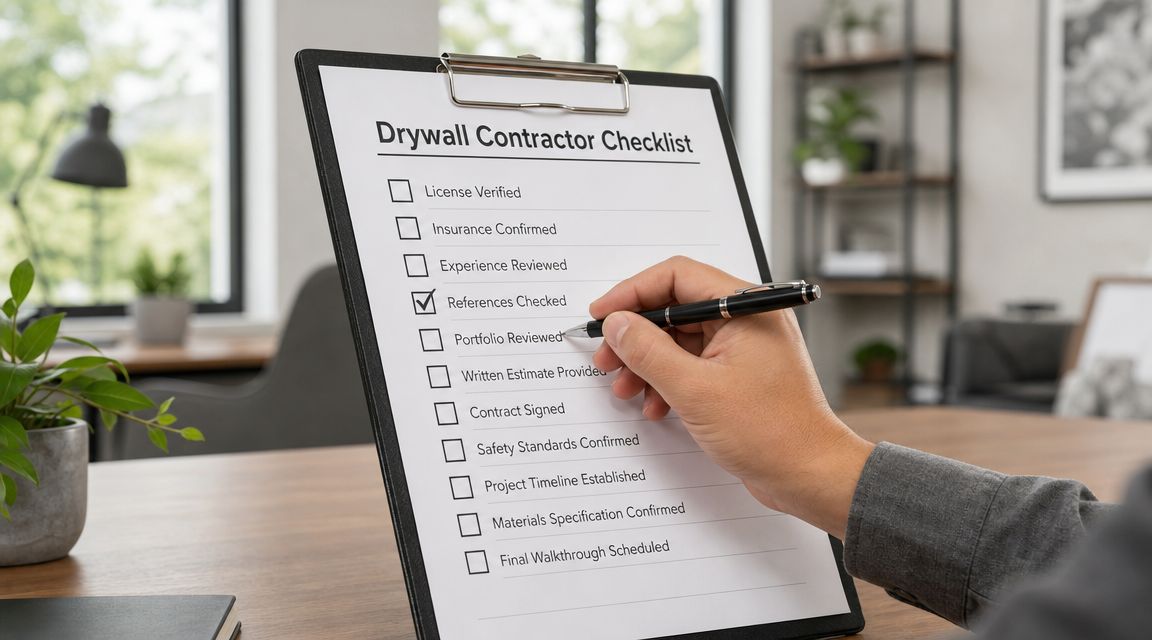
The internet makes this harder. Most search results for drywall professionals near me are directories, and they don't teach you how to judge finish quality. The Better Business Bureau notes that homeowners need to know whether a contractor can handle advanced work like Level 5 smooth finishes or complex texture matching, which is what separates a basic patch from a professional repair (BBB guidance on drywall contractor selection).
Look past the directory listing
A listing only tells you someone exists. It doesn't tell you how they work.
When you vet a drywall contractor in Oregon, check the basics first:
- License status: Ask for a valid Oregon CCB license and verify it.
- Insurance: Liability coverage matters if damage occurs during the job.
- Workers' compensation: If a crew member gets hurt on site, this should already be in place.
- Scope clarity: Ask what's included, what's excluded, and who handles paint touch-up or full repainting.
Then look at their recent work. You want close-up photos of corners, seams, ceiling lines, patch blending, and smooth-wall finishes. Wide room photos can hide a lot.
Ask for proof before work starts
References still matter, but the questions matter more.
Ask past clients things like:
- Did the contractor show up when scheduled?
- Did the repair still look good after primer and paint?
- Was dust controlled well enough for a lived-in home?
- Did the final invoice match the estimate unless the scope changed?
If a contractor avoids details and keeps saying a repair is “simple,” be careful. Simple jobs still require careful finishing.
A walkthrough can reveal a lot too. A real drywall pro will talk about seam placement, substrate condition, texture matching, edge feathering, and how the repair will look under light. Someone guessing will usually stay general.
Use the walkthrough to test expertise
These are good questions to ask during the visit:
- How will you blend this repair into the surrounding wall or ceiling?
- What finish level does this room need?
- Will this need primer across the whole repair area or wall section?
- How do you handle dust protection and daily cleanup?
- Who is my point of contact if the schedule changes?
A quick visual explanation of what professionals look for can help before you sign anything:
For homeowners who want one contractor to handle more than patching, CS1 Real Interiors provides drywall repair, drywall installation, interior painting, insulation, and metal stud framing for residential and small commercial interiors in the Portland area.
Ready for a Flawless Finish Get Your Free Estimate Now
A drywall problem rarely shows up at a convenient time. It is usually a ceiling stain before guests arrive, a wall cut open for plumbing, or a remodel that is ready for paint except for one rough room holding everything up.
A good estimate should do more than give you a price. It should tell you what is being repaired, what finish quality the room needs, how long the work should take, and how the crew will protect the rest of the house while the job is underway. That matters even more in Portland homes with older wall assemblies, patchwork repairs, or smooth surfaces that show every flaw in side light.
CS1 Real Interiors handles drywall repair, new drywall installation, interior painting, insulation, and interior framing for residential and small commercial projects in the Portland area.
If the repair is urgent, ask for a site visit soon. If the job is part of a remodel, get the estimate before other trades stack on top of it. That helps prevent schedule slips, surprise prep work, and the frustration of paying for a repair that still looks obvious after paint.
Decoding the Estimate Understanding Finishes and Costs
Drywall estimates confuse people for one simple reason. The words on the page often describe finish quality, not just labor. If two bids look similar but one includes a higher finish standard, more preparation, better texture matching, or broader cleanup, they are not the same job.
What finish level actually means
A drywall surface isn't finished when the board is on the wall. Quality depends on fastening, seam treatment, feathering, sanding, and how the final surface behaves once primer and paint go on. Lowe's guidance on hanging drywall emphasizes screws every 16 inches into studs, with screw heads slightly below the surface, plus multiple feathered coats of joint compound to prevent visible fasteners and seams (Lowe's drywall hanging guidance).
That matters when you compare bids because bad finishing often shows up later as:
- Fastener marks that telegraph through paint
- Raised seams that catch window light
- Patch flashing where repaired areas absorb finish differently
- Uneven transitions around corners, outlets, or trim
If your walls are textured, a standard finish may be enough before matching the existing pattern. If your home has smooth walls, tall ceilings, modern lighting, or large open rooms, finish quality becomes much more important.
Drywall Finish Levels Explained Level 4 vs. Level 5
| Feature | Level 4 Finish | Level 5 Finish |
|---|---|---|
| Surface standard | Smooth, well-finished surface suitable for many painted interiors | Higher-end smooth surface with added skim treatment for a more uniform appearance |
| Best use | Common choice where texture will be applied or lighting is less unforgiving | Better choice for smooth walls, modern interiors, and areas where light can reveal flaws |
| Appearance under paint | Can look very good when properly finished | Helps reduce the chance of visible joints, shadowing, and surface variation |
| Bid implications | Usually involves standard finishing steps | Requires added labor, more surface refinement, and tighter quality control |
| Who should ask for it | Homeowners with standard wall finishes or planned texture | Homeowners who want a premium smooth-wall result |
Smooth walls are less forgiving than textured walls. If the room gets strong side light, ask directly whether the estimate is priced for a Level 5 result.
Texture matching deserves its own question in every estimate. A contractor should spell out whether the job includes matching orange peel, knockdown, hand-applied texture, or a smooth finish transition. “Patch and blend” can mean very different things from one bid to the next.
If your project includes repairs plus repainting, review the contractor's drywall repair services and make sure the estimate explains where drywall scope ends and paint scope begins.
Questions that make estimates easier to compare
Use these during quote review:
- What finish level is included? Don't assume.
- Is texture matching included in the listed price? If so, where.
- Does the estimate include protection and cleanup? Dust control takes labor.
- Will the repair be isolated, or will a wider wall or ceiling area need blending?
- Who handles priming and painting after drywall is complete?
The more specific the estimate, the fewer surprises you'll have at the end.
What to Expect During Your Drywall Project
Once the contract is signed, most homeowner stress shifts from price to disruption. That's normal. You want to know how long workers will be in the house, how much dust to expect, and when the room will be usable again.
The schedule follows the material
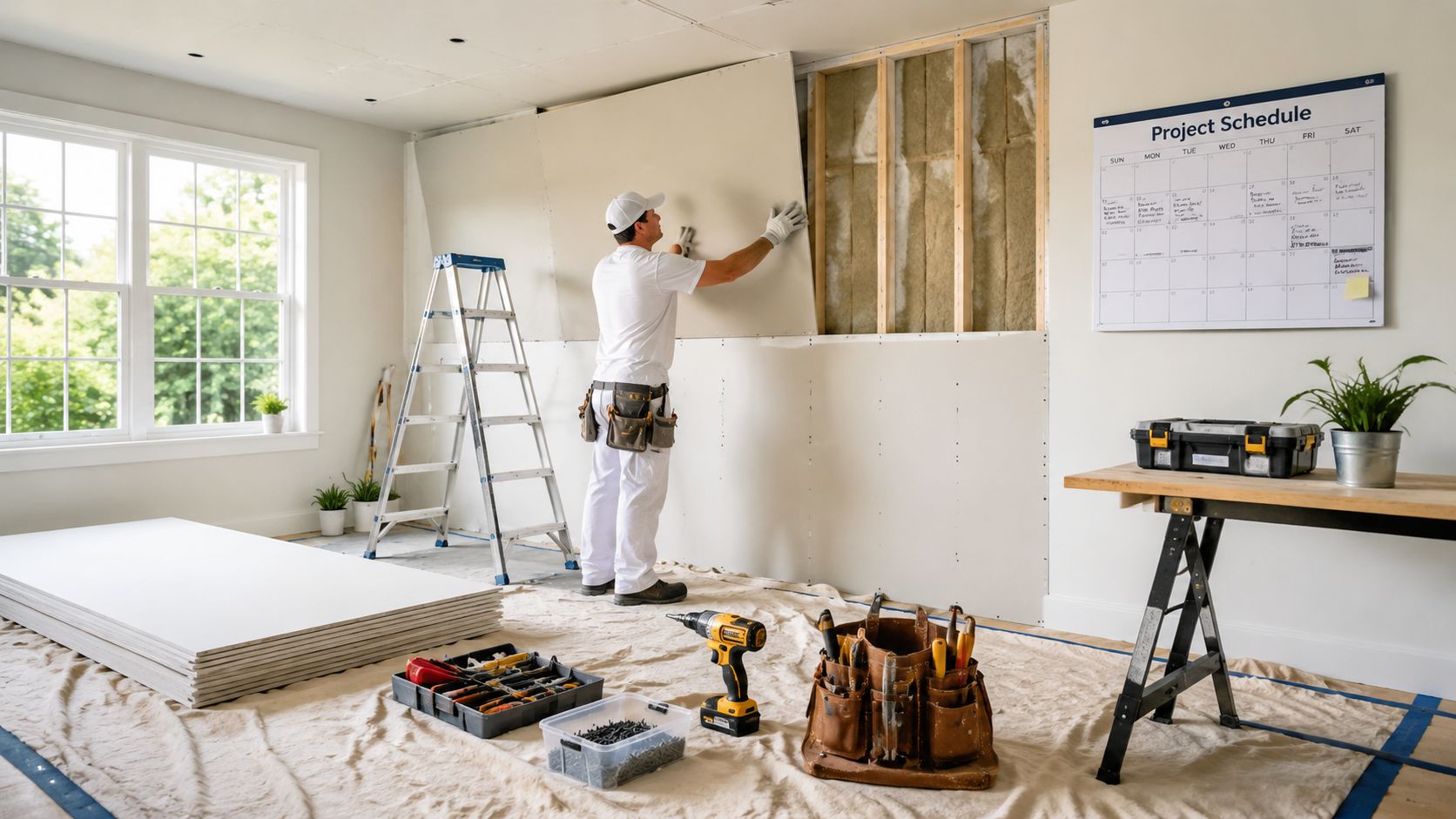
Drywall work has a sequence, and trying to compress it usually hurts the result. One contractor example estimates 1 to 2 days for prep, 2 to 3 days for hanging, 3 to 5 days for mudding and taping with drying breaks, and 1 to 2 days for sanding and cleanup, which shows why schedule depends on process and drying time, not just crew speed.
That doesn't mean every repair takes that long. A small wall repair may move faster. A ceiling repair after water damage may take longer if drying, stain treatment, texture matching, or repainting are involved.
A realistic drywall process usually looks like this:
- Protection and prep: Floors, furniture, and adjacent surfaces are covered.
- Removal and substrate check: Damaged material comes out, and the framing or backing is inspected as needed.
- Board installation or patching: New drywall is cut, fitted, and fastened.
- Tape and compound cycles: Multiple coats are applied with time between coats.
- Sanding and surface check: High spots, edges, and imperfections are corrected.
- Ready for primer or paint: The surface is cleaned and prepared for the next trade.
What a professional job site should look like
A clean site doesn't happen by accident. It comes from planning. In occupied homes around Portland, Beaverton, and Tigard, that means isolating work areas, controlling dust paths, and communicating clearly about noise and access.
You should expect answers to practical questions before the job starts:
- When will crews arrive and leave each day?
- Will the area be usable each evening?
- How will pets, children, or tenants be protected from the workspace?
- What happens if hidden damage appears after demolition?
Good drywall work should feel organized. You should know who to talk to, what happens next, and what the room will look like at the end of each day.
For property managers, restaurants, clinics, and other small commercial interiors, scheduling matters even more. Clean execution and dependable handoffs reduce downtime and reduce the chance of reopening a finished area for touch-ups.
Your Next Step to Perfect Walls
A drywall repair can look fine at first and still stand out the moment afternoon light hits the wall. That is usually where homeowners get frustrated. The patch is done, but the room still does not look finished.
The contractor you hire should be able to explain how the repair will disappear into the surrounding surface, what finish level the wall needs, and how the work area will be left each day. In Portland-area homes, that matters just as much as the patch itself, especially in older houses where texture, framing movement, or previous repairs can make a simple fix more involved.

For rentals and small commercial spaces, the standard is even higher in practice. You need a crew that shows up on schedule, keeps the site controlled, and finishes without creating extra coordination problems for painters, tenants, or reopening dates. A low estimate does not help much if the repair needs another visit or the space cannot return to normal use when promised.
When seeking drywall professionals near me, ask for specific answers. Ask how they handle blending. Ask whether the scope includes Level 4 or Level 5 finish where needed. Ask who is responsible for cleanup, primer, paint, and any related interior work. Clear answers usually tell you more than a listing or ad placement ever will.
If you need help with drywall repair, drywall installation, interior painting, insulation, or metal stud framing in the Portland metro area, contact CS1 Real Interiors and request a free estimate.


