



You usually notice drywall problems at the worst time. A ceiling crack shows up right before guests arrive. A plumbing leak leaves a soft, stained section over the hallway. A doorknob punches a hole in the wall just as you're getting ready to paint and list the house.
In Tigard, those problems often look simple at first and then get more frustrating once patching starts. Typically, the question isn't whether the wall can be repaired. It's how to repair it so it disappears after primer and paint. That's where finish quality, texture matching, and the right repair strategy matter.
Table of Contents
- Your Guide to Hiring a Drywall Contractor in Tigard
- Common Signs You Need Professional Drywall Repair
- Complete Drywall Services for a Flawless Finish
- Understanding Drywall Costs and Timelines in Tigard
- Your Checklist for Hiring a Tigard Drywall Contractor
- Get Your Free Drywall Estimate from CS1 Real Interiors
Your Guide to Hiring a Drywall Contractor in Tigard
When looking for a drywall contractor in Tigard, you're probably dealing with one of three situations. Something was damaged, something was built poorly, or you're trying to improve the look of a room before painting, remodeling, or selling.
A professional drywall contractor does more than patch holes. The job includes removing damaged material, checking what caused the problem, securing backing if needed, hanging board correctly, taping joints, controlling buildup, sanding without scarring the surface, and getting the wall ready for paint. In ceiling work, the standard is even higher because light exposes every ripple.
That matters in a large trade where homeowners have many options. The U.S. drywall and insulation installers industry is projected at $81.9 billion in 2026 and includes about 126,000 businesses nationwide, according to IBISWorld industry data. In a market that broad, local specialization matters. Tigard and nearby Beaverton homeowners usually need someone who understands repairs, texture transitions, remodel prep, and paint-ready finishing.
A patch can be structurally solid and still look bad. Most homeowners care about both.
When you're comparing contractors, pay attention to how they talk about finish quality. If the conversation stays focused on "filling the hole" and never gets to flatness, sheen, texture, or primer, that's a warning sign. For anyone interested in how local contractors build a stronger online presence and help homeowners find specialized services, this overview of mastering construction SEO is a useful outside resource.
In the Portland metro area, including Tigard, Beaverton, Hillsboro, and Lake Oswego, the best results usually come from contractors who can handle the full interior scope instead of stopping at patching. That includes drywall repair, installation, finishing, painting coordination, insulation work, and framing where needed.
Common Signs You Need Professional Drywall Repair
Some drywall issues are cosmetic. Others are signs that the problem underneath hasn't been solved. Knowing the difference can save you from painting over damage that comes right back.

Cracks that keep coming back
A small hairline crack above a door or at a wall corner doesn't always mean major structural movement. Homes shift, framing dries, and stress collects at weak points. But if you patch a crack and it reappears, the repair likely didn't address the joint properly.
Watch for these signs:
- Corner cracks near windows and doors: These often show up where framing movement transfers stress.
- Straight cracks on seams: These can point to joint failure, poor fastening, or tape problems.
- Ceiling cracks with shadow lines: These usually need a more careful repair because overhead light makes defects obvious.
A quick wipe of caulk or spackle may hide the line for a short time. It usually won't hold if the seam is moving or the tape has released.
Water damage and soft drywall
Water stains are one of the most common reasons homeowners call for help. The stain is only part of the issue. Drywall that feels soft, swollen, crumbling, or sagging often needs removal and replacement, not surface patching.
Practical rule: If the board has lost its shape or firmness, treat it as replacement work, not a cosmetic touch-up.
This comes up often in Tigard bathrooms, laundry rooms, kitchens, and ceilings below plumbing lines. The same pattern shows up across Portland-area homes after roof leaks and overflow incidents. Painting over the stain before the material is dry and stable usually creates more work later.
Holes, dents, and failed patches
Small nail holes are easy. Larger holes are where many DIY repairs start to look obvious. The common mistake is filling a deep opening without proper backing, then sanding a hump into the wall.
Call for professional repair when you see:
- Doorknob or impact holes: These often need cut-out repair, backing, tape, and finish work.
- Multiple damaged areas in one room: At that point, blending the whole wall may look better than isolated patches.
- Old patch outlines showing through paint: That usually means the previous finish wasn't feathered far enough.
Tape bubbles and surface ridges
If you can see a raised line at a joint, the tape may be loose or the finish may have been built incorrectly. Bubbles, ridges, and flashing under paint are all signs that the final appearance will suffer unless the seam is reopened and repaired correctly.
When homeowners in Tigard, Tualatin, or Beaverton say, "It looked fine until we painted," this is often the reason. Primer and paint don't hide finish defects. They reveal them.
Complete Drywall Services for a Flawless Finish
A wall can look acceptable at first glance, then show every patch line at sunset or under a dining room pendant. That is usually the point where homeowners realize the question is not just how to fix the damage. It is how far the finish needs to go so the repair does not keep showing up.
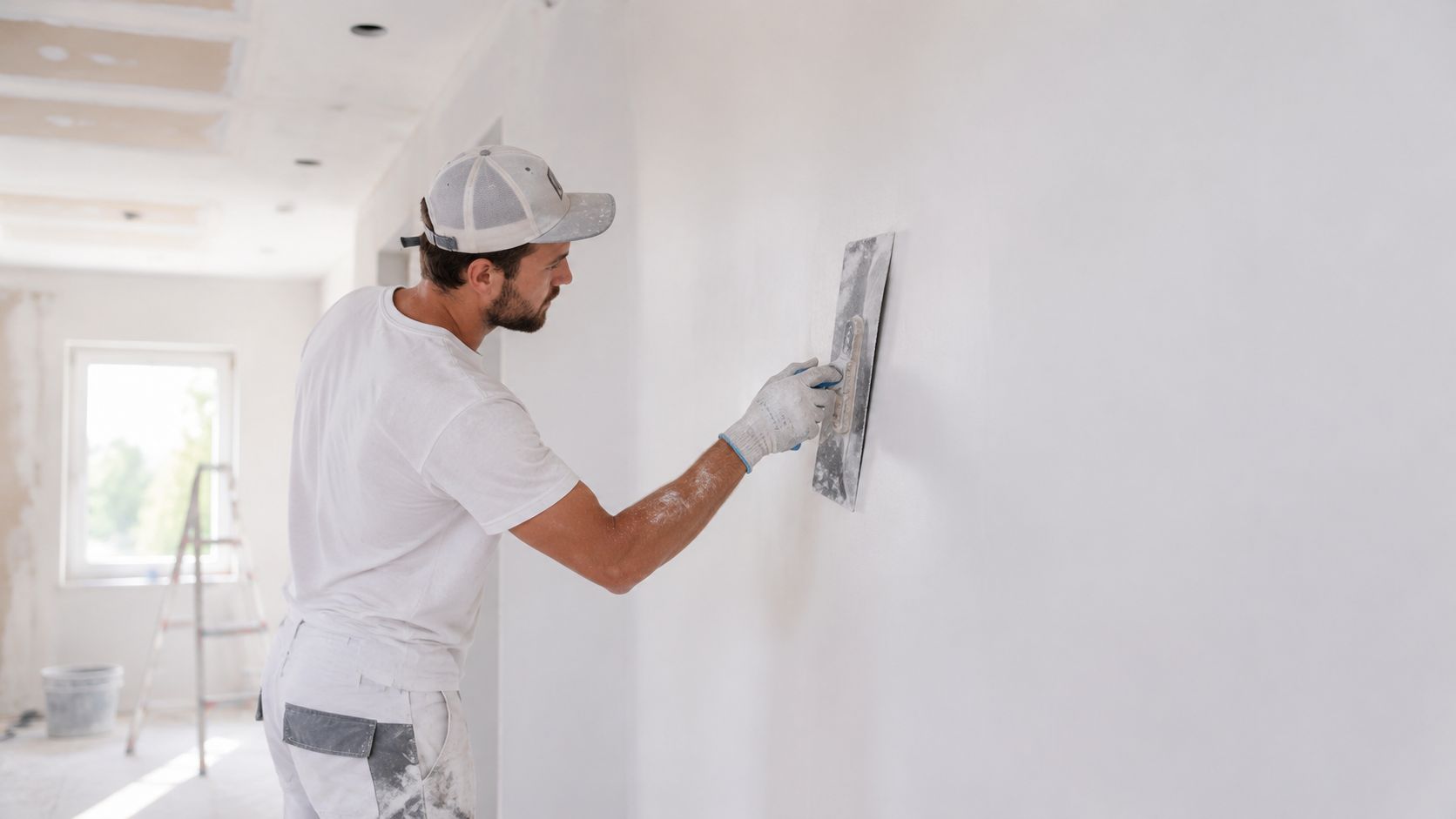
Repair, finish quality, and final appearance all have to match
Good drywall work includes more than patching the damaged spot. The board has to be sound, the joints have to be stable, the finish has to match the surrounding surface, and the texture has to make sense for the room. If one part is off, paint usually makes it more obvious.
That is why complete drywall service often includes a mix of tasks, depending on the condition of the room:
- Drywall repair: Holes, cracks, loose tape, ceiling damage, and sections affected by moisture
- Drywall installation: New walls and ceilings for remodels, additions, and reworked floor plans
- Texture matching: Orange peel, knockdown, hand-applied textures, or transitions into smooth walls
- Paint-ready finishing: Sanding, feathering, skim work, and surface prep for the chosen paint sheen
- Related interior scope: Interior painting, insulation, and metal stud framing when the project crosses into other trades
If you're comparing options for a damaged wall or ceiling, a dedicated drywall repair service is the right place to start.
How to choose blending, skim coating, or Level 5
Homeowners ask this all the time, especially before listing a house or updating a more modern interior. The right choice depends on three things. How visible the wall is, how critical the paint finish is, and how much of the existing surface is already imperfect.
Blending works best when the damage is limited and the surrounding wall already hides minor variation. A textured wall, an eggshell finish, or a low-traffic room often falls into this category. The goal is to make the repair disappear without resurfacing the whole area.
Skim coating is the better call when the wall has several patch areas, shallow waves, old repair outlines, or uneven texture left from past work. This approach gives the surface one consistent plane, which matters a lot on long hallway walls, living rooms, and large bedroom walls where your eye catches changes quickly.
Level 5 finishing makes sense when appearance is the priority and the room has lighting that exposes every flaw. Large windows, smooth-wall designs, flat or dark paint, and resale prep all push the decision in this direction. Level 5 does not correct framing problems or badly hung board, but it does reduce visible joint banding, surface variation, and flashing under paint.
The trade-off is straightforward. Blending costs less and works well in the right setting. Skim coating adds labor but often gives a cleaner, more uniform result. Level 5 asks for the most prep and finish work, yet it is often the right investment when the wall will be closely inspected.
This matters in listing photos too. Clean, even walls read better in person and in AI-driven virtual tours for real estate, where side light and camera movement can make surface defects easier to spot.
Choosing the right repair strategy before paint
The biggest mistake is choosing the cheapest repair method before deciding what the finished room needs to look like. A small patch can be enough in a utility space. The same patch may be the wrong choice in a front living room with smooth walls and direct afternoon light.
CS1 Real Interiors handles drywall repair, installation, finishing, interior painting, insulation, and metal stud framing for residential and small commercial interiors across Tigard and the Portland metro. The right recommendation depends on the wall condition, existing texture, lighting, and whether the goal is a basic repair, a whole-wall reset, or a higher-end finish for resale.
Understanding Drywall Costs and Timelines in Tigard
A homeowner cuts out a water-damaged ceiling spot, expects a quick patch, and then gets surprised by the estimate. The reason is simple. Drywall cost usually follows finish expectations more than the size of the damaged area.
A basic patch in a low-visibility space is one job. Making that same area disappear on a smooth wall with side light is a different job with more coats, more sanding control, and more time between steps. In Tigard homes, a key pricing question is usually this: should the contractor blend the repair, skim the broader surface, or take the wall or ceiling to Level 5 so it looks right after primer and paint?
What usually changes the price
The biggest cost drivers are labor and finish quality, not drywall board itself.
A few factors shift the estimate:
- Repair strategy: A local blend costs less than skim coating an entire wall. A Level 5 finish takes the most labor because the whole surface needs better uniformity.
- Wall vs. ceiling: Ceiling repairs take longer to set up, finish overhead, and hide cleanly.
- Existing surface: Smooth walls show more flaws than textured walls. Higher-sheen paint also exposes more.
- Condition behind the damage: Loose tape, water staining, cracked corners, or soft backing add prep and repair steps.
- Access and protection: Occupied rooms, stairwells, furniture moving, and dust control all add time.
- Dry time: Joint compound cannot be rushed without risking shrinkage, flashing, or visible edges later.
For resale work, I usually tell homeowners to price the finished appearance first, then the repair method that gets them there.
That avoids a common mistake. Paying for a small patch and then realizing the room needed a broader skim coat to look consistent under new paint usually costs more in the end.
How timelines actually work
Drywall schedules are often limited by drying, not by how long the crew is actively applying mud. Even a modest repair can require several visits if the goal is a clean, paint-ready surface.
A simple patch may be completed faster if the damage is isolated and the surrounding texture is easy to match. A smooth-wall repair, ceiling repair, or skim-coated area usually takes longer because each coat has to dry before the next step. Sand too early or stack coats too quickly, and the finished wall can show lap marks, hollow spots, or joint lines after paint.
Homeowners often ask why a one-day repair turns into a two- or three-day process. The answer is finish control. Good drywall work has a lot of waiting built into it.
Drywall Finish Levels and Common Uses
| Finish Level | Description | Common Application |
|---|---|---|
| Level 0 | Board is hung with no tape or finish applied | Temporary construction stage or spaces not ready for finishing |
| Level 1 | Joints are taped with joint compound applied lightly | Utility areas, service spaces, or concealed areas |
| Level 2 | Joints and fasteners receive additional compound | Garages, storage rooms, or surfaces receiving limited decoration |
| Level 3 | More complete joint finishing with better surface uniformity | Walls that will receive heavier texture |
| Level 4 | Standard finish for many painted residential interiors | Most bedrooms, hallways, and general living spaces |
| Level 5 | Level 4 plus a skim coat for maximum surface uniformity | Smooth-wall interiors, strong side lighting, upscale remodels, resale prep |
For many Tigard projects, the decision is not whether drywall can be repaired. The decision is which finish path gives the right result for the room. Blend the patch when the surface and lighting allow it. Skim coat when the repair area will still read through paint. Use Level 5 when the wall will be closely seen, strongly lit, or judged as part of a higher-end finish.
Your Checklist for Hiring a Tigard Drywall Contractor
The difference between a smooth job and a frustrating one usually shows up before work starts. Ask direct questions. A good contractor won't mind.

Drywall is skilled trade work, and the labor reflects that. In the U.S., drywall and ceiling tile installers had a median annual wage of $50,440 in May 2022, according to the Bureau of Labor Statistics occupational data. When you hire well, you're paying for judgment, production speed, cleaner finishing, and fewer callbacks.
What to verify before work starts
Use this list during the estimate process:
- License and insurance: Confirm the contractor is properly licensed and insured for Oregon work.
- Scope clarity: Make sure the estimate states whether it includes removal, patching, texture, sanding, priming, and paint prep.
- Crew standards: Ask who will be on site, how dust will be controlled, and how the space will be protected.
- Safety practices: For occupied homes and commercial spaces, OSHA-aware job habits matter.
- Recent work examples: Ask to see repairs, ceiling work, and smooth-finish projects similar to yours.
If you're in Tigard but also comparing contractors that work across the broader metro, it's useful to review a local service-area example like drywall services in Portland to see whether the company regularly works in nearby cities and project types.
Questions worth asking during the estimate
Some questions reveal more than a long sales pitch:
- How will you handle texture matching?
- Do you recommend blending this wall or refinishing more of the surface?
- Will this repair still look good under primer and final paint?
- What could make the crack or seam come back?
- How do you handle cleanup and dust control in occupied homes?
- What does the payment schedule look like?
A short visual overview can also help if you haven't hired this trade before:
A contractor who answers clearly, in plain language, is usually easier to work with once the job begins. If the estimate feels vague, the finish often will too.
Get Your Free Drywall Estimate from CS1 Real Interiors
If your wall or ceiling damage needs more than a quick patch, it helps to get a clear recommendation before spending money on the wrong repair approach. That's especially true in Tigard homes with smooth walls, visible natural light, water damage, or older repairs that already show through paint.
CS1 Real Interiors works with homeowners, builders, property managers, and small commercial clients across Tigard, Beaverton, Hillsboro, Lake Oswego, Portland, and nearby communities. The work includes drywall repair, drywall installation, finishing, interior painting, insulation, and metal stud framing, so projects don't stall when the scope expands beyond one trade.
If you're dealing with cracks, holes, ceiling damage, remodel prep, or resale improvements, the next step is simple. Request a free estimate, describe the damage, and get practical guidance on whether your project needs blending, skim coating, texture matching, or a higher finish level.
Use the free estimate form for your drywall or interior project to get started.
If you need a drywall contractor in Tigard or anywhere in the Portland metro, contact CS1 Real Interiors for a free estimate and professional help with drywall repair, installation, finishing, painting, insulation, or metal stud framing.


