



If you're planning drywall repair, a remodel, or interior finishing work in Portland, you're probably not just thinking about the finished wall color or texture. You're thinking about the mess. You want to know whether dust will drift into bedrooms, settle on shelves, get pulled through the HVAC system, or leave you cleaning for weeks after the project ends.
That concern is reasonable. Most homeowners don't judge a contractor's cleanup standards by whether a broom comes out after the day's work. They judge it by whether the house still feels livable during the work and whether the project leaves behind disruption in places that were never supposed to be part of the job.
A tidy site and a professionally clean site are not the same thing. Tidy means debris is stacked, tools are put away, and the room looks under control. Clean means the contractor is actively managing dust, traffic, waste, safety, and containment throughout the day. That's the standard experienced crews aim for on occupied homes and small commercial interiors across Portland, Beaverton, Hillsboro, Tigard, Lake Oswego, Gresham, and Vancouver, WA.
Table of Contents
- Why Job Site Cleanliness Is a Mark of Professionalism
- Preparing Your Home for a Clean Construction Zone
- Daily Routines That Keep Your Project on Track
- Ready for a Clean and Professional Remodel?
- Advanced Dust Control for a Livable Home
- Safety Regulations and Contractor Responsibilities
- Your Homeowner Checklist for Evaluating Job Site Cleanliness
- Demand a Higher Standard for Your Home
Why Job Site Cleanliness Is a Mark of Professionalism
Most homeowners have seen the difference right away. One crew arrives and starts unloading tools with no real plan. Cutoffs pile up in walkways. Dust spreads past the work room by the second day. Another crew protects the floors first, establishes where materials go, controls where workers enter and exit, and keeps the work area from expanding into the rest of the house.
That second approach usually tells you something important about the finish quality too. Crews who control the environment tend to control the work. In a workplace hygiene survey, 94% of workers reported feeling more productive in a clean workspace, and 77% said they produce higher-quality work according to workplace hygiene statistics shared here. On a drywall or painting project, that matters because organized conditions help crews move efficiently, protect materials, and stay focused on detail.
What homeowners actually notice
Homeowners in Portland and Beaverton rarely call to compliment a stack of neatly arranged scrap. They notice other things:
- Dust migration: Fine powder outside the work zone is usually the first sign containment was weak.
- Respect for finishes: Floors, trim, counters, and furniture tell you whether the crew planned ahead.
- Crew discipline: If tools are left scattered, the rest of the process is often loose too.
- Daily reset: A professional site looks controlled when the day's work concludes, not abandoned.
A clean site doesn't happen by personality. It comes from a system the crew follows even when the day gets busy.
A lot of homeowners also look for practical cleanup ideas before work begins. If you want a homeowner-friendly reference for the finishing side of cleanup, these flawless construction cleaning tips are useful because they highlight the kind of detail work people often forget until dust has already spread.
Tidy isn't the same as controlled
A room can look presentable and still be handled poorly. Drywall dust can settle on door casings, ride airflow into adjacent rooms, and cling to surfaces you won't notice until the sun hits them. That's why professional job site cleanliness says more about planning than appearances.
When a contractor takes cleanliness seriously, the work tends to feel calmer. The schedule runs better. The home stays safer. The handoff is smoother.
Preparing Your Home for a Clean Construction Zone
The first sign of a disciplined contractor usually appears before any drywall sheet goes up or any repair starts. Preparation sets the boundaries of the project. Without that, the work zone expands fast.
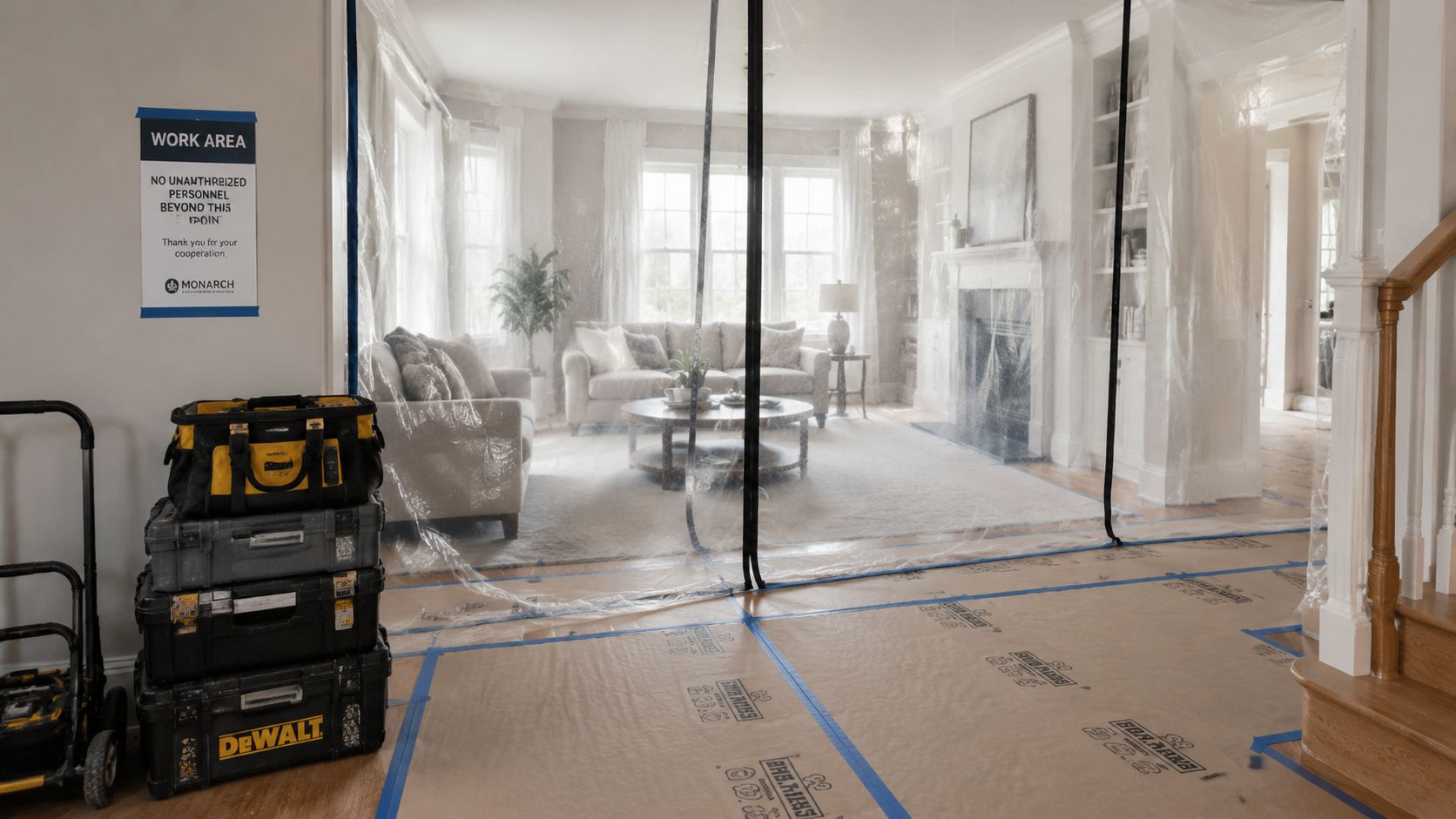
Expert consensus treats job site cleanliness as a risk-control system, with a formal plan, workplace layout, designated storage areas, and scheduled checks to prevent hazards before they occur, as outlined in this Safeopedia housekeeping guidance. In a home, that planning also protects finishes, controls dust paths, and keeps your daily routine from getting disrupted more than necessary.
What solid prep work looks like
Before demolition, patching, sanding, or interior painting starts, a professional crew should define the work area clearly.
- Floor protection goes down first. Hard floors, stairs, and traffic routes should be covered with durable protection suited to foot traffic and material movement.
- Non-work areas get isolated. Plastic barriers, taped openings, and controlled access points help keep debris and dust where they belong.
- Furniture and contents are addressed early. Items are removed, covered, or relocated before tools come inside.
- Storage and waste locations are chosen on purpose. Material stacks, tool stations, and debris collection points should never be improvised in the middle of active walkways.
Why this stage matters so much
Homeowners often think the primary mess starts when cutting and sanding begin. In practice, problems start earlier than that. If the crew doesn't set a route for carrying materials, they track debris through the house. If they don't define where waste goes, scraps accumulate in corners and hallways. If they don't isolate the room, every trip in and out becomes a chance to spread dust.
Practical rule: The cleaner job sites in occupied homes aren't cleaner by accident. They were protected before the first tool came out.
This is especially important in older Portland homes, remodeled bungalows in Beaverton, and occupied properties in Lake Oswego where finished surfaces, tighter hallways, and lived-in rooms leave less margin for error.
What homeowners should ask before work starts
Use these questions during the estimate phase:
- How will you protect floors and finished surfaces?
- How will you separate the work area from the rest of the house?
- Where will materials, tools, and debris be staged?
- How will your crew enter and exit the work area each day?
If the answers are vague, the cleanup probably will be too.
Daily Routines That Keep Your Project on Track
Once the project is active, job site cleanliness becomes a repeating routine, not a final chore. The crews that keep projects under control don't wait until quitting time to think about cleanup. They build it into the work itself.
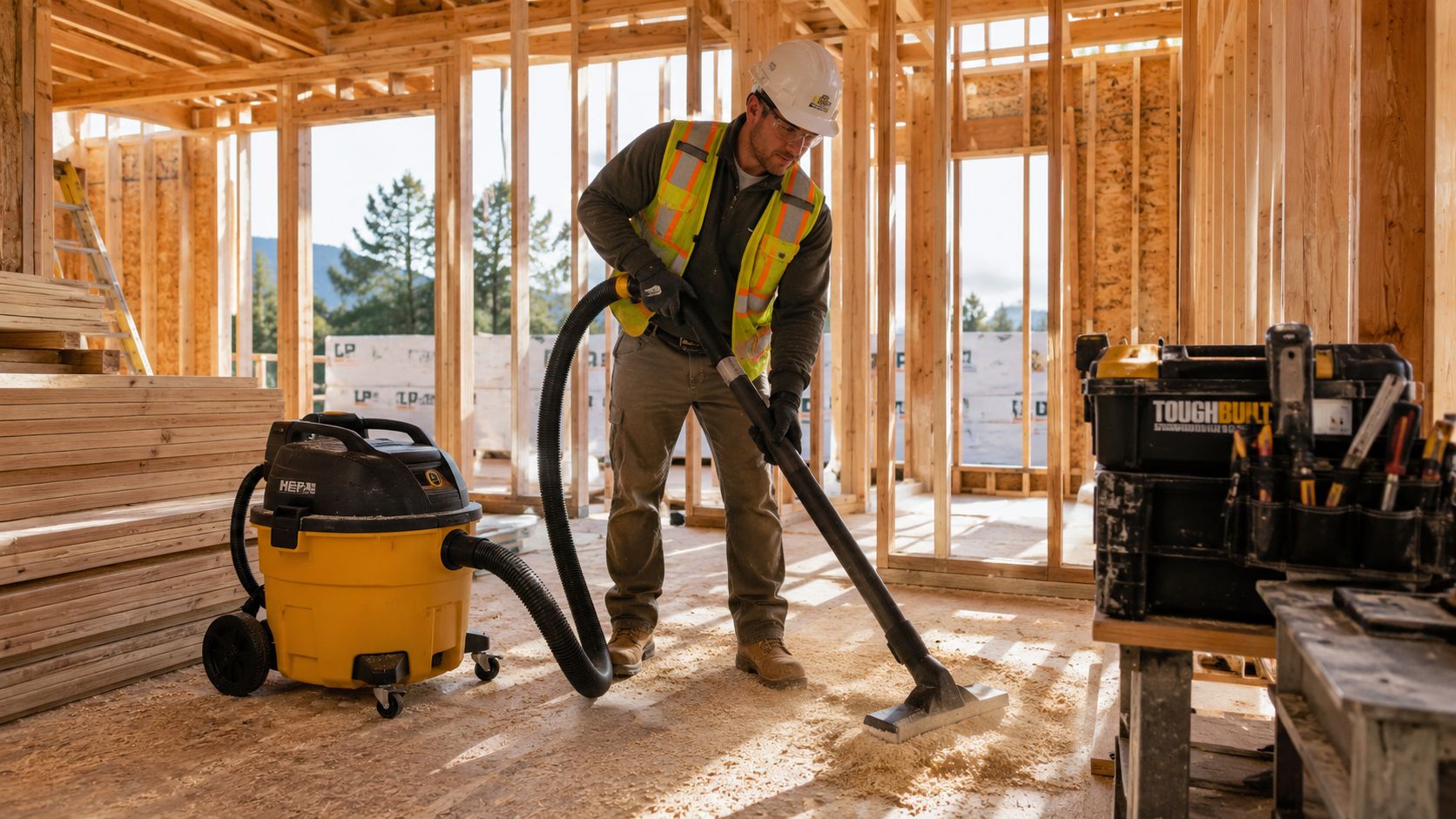
A strong program uses a documented housekeeping process with assigned responsibilities and routine inspections, and the common mistake is treating cleanup as an end-of-day task instead of a continuous one, as described in this housekeeping guidance from OCWR. That matches what is effective on drywall and finishing projects. Dust, scraps, wet material, cords, and tools need attention as they appear.
The routines that make the biggest difference
The best daily routines aren't complicated. They're consistent.
- Assigned cleaning responsibility: One person handles debris removal in one zone. Another maintains a material station. Someone is responsible for checking access paths.
- Immediate response to spills and clutter: Wet compound, packaging, cutoffs, and loose hardware are dealt with when they appear.
- Scheduled resets during the day: Crews pause to vacuum, consolidate tools, and clear traffic routes instead of letting the room drift into disorder.
- End-of-day organization: Materials are stacked safely, tools are put away, and the area is left stable for the next morning.
Why drywall work exposes weak cleanup habits
Drywall projects make poor housekeeping obvious. Cut pieces pile up quickly. Buckets, knives, cords, sanding poles, and scrap paper all compete for floor space. If patching, taping, texture work, and painting overlap, disorder spreads faster.
That matters whether you're scheduling drywall repair services after water damage or planning a larger interior remodel. The process has to stay controlled or the finish quality suffers along with the homeowner experience.
Crews don't produce clean walls in a chaotic room very often. The work area and the finished surface usually mirror each other.
Signs the routine is real and not for show
You can tell whether a contractor has a real system by watching what happens in the middle of the day, not just at pickup time.
| What you see | What it usually means |
|---|---|
| Clear walking paths stay clear | Someone owns that task |
| Trash moves out before it piles up | Waste handling was planned |
| Tools return to the same area | The crew follows a repeatable setup |
| Dust gets addressed during work | Cleanup isn't being postponed |
For homeowners in Hillsboro, Gresham, or Vancouver, WA, this daily discipline often makes the difference between a project that feels manageable and one that takes over the whole house.
Ready for a Clean and Professional Remodel?
If you've been putting off drywall repair, interior painting, or a remodel because you don't want the mess, that's the right time to ask harder questions about containment and cleanup. The quality of the finished room matters, but so does the condition of the rest of the home while the project is underway.
Request a free estimate and ask for a clear plan for protection, dust control, and daily housekeeping. You can reach the team through the CS1 Real Interiors estimate form to discuss drywall, painting, insulation, or metal stud framing work in Portland and nearby cities.
Advanced Dust Control for a Livable Home
Trip hazards matter, but most homeowners worry more about the dust they can't easily see. That's the essential dividing line between a site that looks neat and one that's professionally managed.
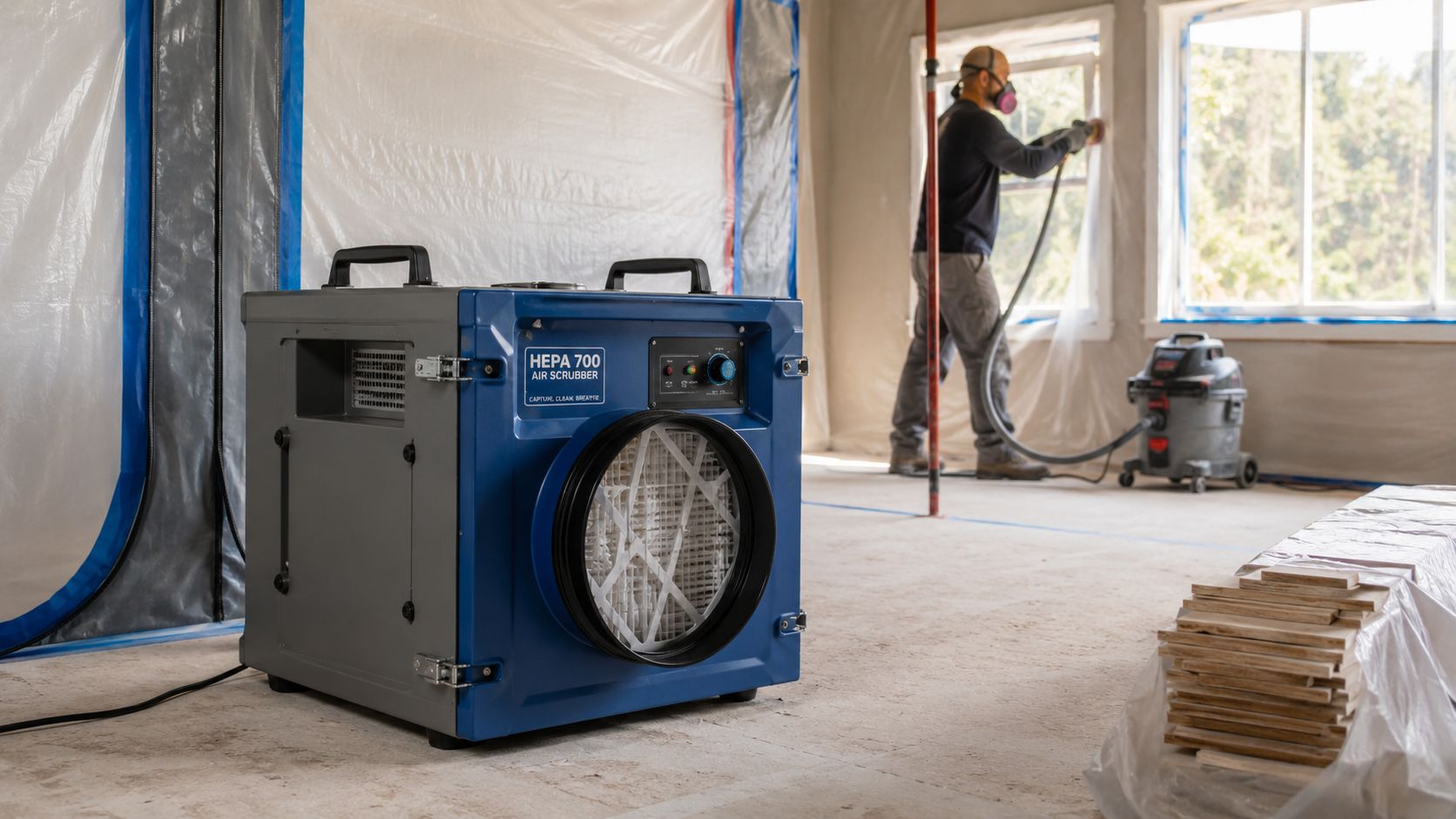
A key gap in most discussions of cleanliness is the difference between visual order and true containment. As noted in this Builders Mutual article on job site cleanliness, a clean-looking site can still be a poor indoor environment if dust control is weak. That's especially relevant during drywall sanding, ceiling repairs, texture removal, and interior finishing in occupied homes.
What real dust control includes
Sweeping alone won't solve a fine dust problem. In many interior projects, sweeping can stir particles back into the air and move them farther into the home.
A better approach uses layers:
- Containment barriers: Plastic walls and controlled openings isolate the work room from the rest of the house.
- Traffic control: Workers use a defined path in and out so dust doesn't spread through repeated foot traffic.
- Source cleanup: Dust is captured or removed where it is created, not after it has settled everywhere.
- Air management: The work area is treated like its own environment instead of an open part of the home.
Why occupied homes need more than visible cleanup
In homes around Tigard and Lake Oswego, people are often living in the house during the work. In clinics, rentals, and small commercial spaces, adjacent rooms may still be in use. In those situations, visible tidiness isn't enough.
Fine particulate can move through returns, around door gaps, and down shared hallways. That's why some projects need containment walls, zipper access, and filtered air movement to keep the active zone separated from occupied space.
If the contractor only talks about sweeping up debris, you're not hearing a dust-control plan. You're hearing a debris plan.
For spaces with overhead surfaces, ledges, and vents that collect settled dust outside the immediate work area, it also helps to understand what cleanup may still be needed after construction. This overview on how to get your high dusting done is a useful reminder that fine dust often lands above eye level, not just on floors.
What these systems look like in practice
This kind of setup is easier to understand when you see the work zone being managed as an enclosed area rather than an open room.
A contractor handling occupied interiors should be able to explain how the containment will be built, where the air will move, how the crew will enter and exit, and what happens at the end of each day. If those answers are fuzzy, the dust boundary probably will be too.
Safety Regulations and Contractor Responsibilities
Cleanliness on a job site isn't just a service issue. It's part of basic compliance and crew responsibility.
OSHA's construction housekeeping rule, 29 CFR 1926.25(a), requires that during construction, alteration, or repairs, scrap lumber with protruding nails and other debris be kept cleared from work areas, passageways, and stairs, and OSHA also requires waste removal from the immediate work area as work progresses under 1926.252(c), as summarized in this explanation of OSHA housekeeping requirements. That means cleanliness is not optional and not something a contractor gets to treat as a personality trait.
What this means for your project
For a homeowner, these rules show up in simple, visible ways:
- Walkways should stay open. No piles of scrap in passages or stairs.
- Waste should move out continuously. Debris shouldn't sit in active work zones all day.
- Hazards should be corrected quickly. Protruding nails, loose materials, and blocked exits need immediate attention.
- Cleanup should follow the pace of the work. Safety doesn't wait for the end-of-day sweep.
If you're interviewing contractors for a home in Portland, ask how they handle housekeeping during the day, not just after the job is complete. The answer will tell you a lot about supervision, crew habits, and whether the company treats safety as part of workmanship.
Questions worth asking before you hire
A practical interview checklist is simple:
- Who is responsible for housekeeping on site each day?
- How often are walkways and work areas checked?
- Where does debris go during the project?
- How do you handle hazards created mid-task, not just at the end of the shift?
A contractor who can't answer those questions clearly is asking you to trust a process that may not exist.
Your Homeowner Checklist for Evaluating Job Site Cleanliness
Homeowners don't need trade experience to tell whether a site is being managed well. You just need a short list of things to look for before the project starts and while it's underway.

Before you sign a contract
Use the estimate visit to evaluate planning, not just price.
- Ask about dust containment: Where will the barrier go, and how will the crew protect adjacent rooms?
- Ask about floor and surface protection: What gets covered, and what stays exposed?
- Ask about material staging: Where will drywall, mud, tools, and debris be kept?
- Ask about daily reset expectations: What will the space look like each evening?
A contractor who answers in specifics usually works in specifics.
While the project is active
You don't need to inspect every detail. Look for patterns.
| Checkpoint | What good looks like |
|---|---|
| Entry path | Protected and controlled, not dirty and widening each day |
| Work zone boundary | Clear separation between active area and living space |
| Tool storage | Organized, not scattered across the room |
| Debris handling | Waste collected steadily, not left to accumulate |
| Dust outside work zone | Minimal to none if containment is working |
Homeowners should judge job site cleanliness by what happens outside the work room as much as what happens inside it.
Red flags that shouldn't be ignored
Some problems aren't small. They usually point to a weak process.
- No defined boundary: If the project seems to spread room by room without control, the crew didn't set containment well.
- Tracked dust in clean areas: That usually means traffic control is weak.
- Debris left in stairs or hallways: That's a safety and professionalism problem.
- End-of-day chaos: If the site looks abandoned every evening, the next day usually starts behind.
For property managers, homeowners preparing to sell, and families living through a remodel in Beaverton, Hillsboro, or Tualatin, this checklist helps separate polished sales talk from actual field discipline.
Demand a Higher Standard for Your Home
A contractor doesn't show respect for your home by making the site look decent for a photo. Respect shows up in the daily routine, the containment plan, the protected floors, the controlled traffic path, and the way dust is managed before it spreads. That's the difference between a project that disrupts your life and one that stays contained.
For homeowners and small commercial clients, the standard should be simple. The work area should stay organized. The rest of the property should stay protected. Fine dust should be treated as an indoor environment issue, not just a cleanup task. One practical way contractors can also help clients understand that standard is by documenting conditions clearly during the project. If you're curious how video can support communication and remote walkthroughs, this overview on how to publish live video for your business offers useful context for sharing progress visually.
If you need drywall repair, drywall installation, interior painting, insulation, or metal stud framing in the Portland metro area, CS1 Real Interiors handles those interior scopes with a process-based approach to site protection and cleanliness.
If you want a contractor who takes job site cleanliness seriously from setup through final walkthrough, request a free estimate from CS1 Real Interiors. You can also learn more about CS1 Real Interiors if you're planning work in Portland, Beaverton, Hillsboro, Tigard, Lake Oswego, Gresham, or Vancouver, WA.


