



A lot of Portland homeowners end up looking for drywall help the same way. A ceiling stain shows up after a stretch of rain. A crack opens above a door. Someone patches a hole after moving furniture, paints over it, and the repair still flashes every time daylight hits the wall from the side.
That's usually the point where a small cosmetic issue stops feeling small. You don't just want the hole covered. You want the wall to look right again, stay stable, and be ready for paint without another round of sanding, patching, or touch-up work a month later.
For homeowners in Portland, Beaverton, Hillsboro, Tigard, Lake Oswego, Gresham, and Vancouver, WA, drywall problems usually come down to one question: what kind of repair or finish does this wall need? The right answer depends on the cause of the damage, the existing texture, the lighting in the room, and whether the project is a repair, remodel, or full interior upgrade.
Table of Contents
- Your Guide to Flawless Walls in Portland
- Common Drywall Problems We Solve in Portland
- A Guide to Our Professional Drywall Services
- Ready to Fix Your Walls? Get a Free Estimate
- Understanding Drywall Project Costs in Portland
- Our Professional Drywall Process Start to Finish
- How to Choose the Right Drywall Contractor in Portland
- Frequently Asked Questions About Drywall Services
Your Guide to Flawless Walls in Portland
Walls tell on every shortcut. That's especially true in older Portland homes, remodeled bungalows in Beaverton, and newer interiors in Hillsboro where large windows and smooth paint make every seam, wave, and patch stand out.
Calls for drywall services don't typically stem from excitement about drywall itself. Instead, they arise because something's wrong. A leak softened the ceiling. A remodel opened a wall. A previous repair left a bump that catches light every afternoon. In small commercial spaces, it's often a tenant improvement, a repair before repainting, or a fast turnaround needed between occupants.
The practical fix starts with identifying the underlying problem, not just the visible one.
Practical rule: If the drywall is stained, soft, crumbling, or sagging, the finish is not the first issue. The source of damage has to be corrected before a lasting repair can happen.
Portland-area drywall work also has a quality issue many homeowners don't see until the painter arrives. The board may be hung well enough, but the finish system often determines whether the wall looks flat and clean or obviously repaired. Taping, blending, texture matching, and final prep matter more than one might expect.
That's why a good drywall contractor doesn't treat every call the same. A ceiling patch after water damage is different from smoothing a remodel addition in Lake Oswego. A crack in a stairwell is different from getting a rental turn ready in Gresham. The work changes. The materials change. The finish target changes too.
Common Drywall Problems We Solve in Portland
Some drywall problems are obvious the minute you see them. Others hide under paint until a certain angle of light exposes every joint and patch. In Portland homes and small commercial interiors, the most common issues usually fall into a few predictable categories.
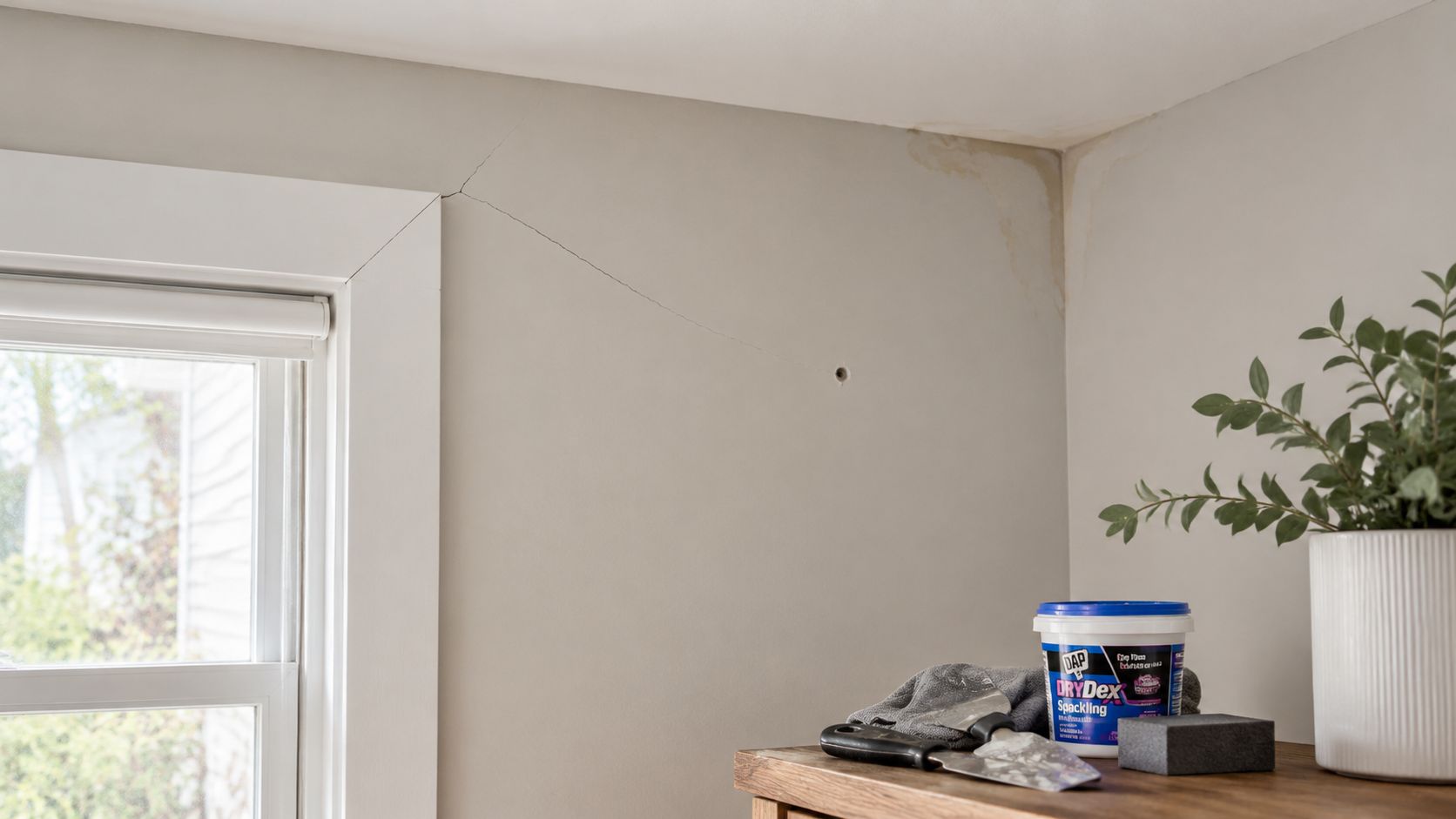
Water damage and soft drywall
Water damage is one of the most frequent reasons homeowners call. It may come from a roof issue, an upstairs plumbing leak, a bathroom exhaust problem, or a slow pipe leak inside the wall. By the time the stain shows, the drywall paper may already be weakened.
A proper repair usually means more than sealing a stain and painting over it. The damaged area has to be checked for softness, swelling, or loose tape. If the board has lost integrity, replacement is usually cleaner and more durable than trying to save it.
For homeowners trying to understand the warning signs before calling a contractor, this drywall repair guide for Ocala homeowners gives a useful overview of how water damage changes drywall and why cosmetic fixes alone don't hold up.
Cracks at corners doors and windows
Cracks often show up above doors, near window corners, along ceiling lines, or where additions meet older framing. Sometimes the cause is normal movement. Sometimes it points to a poor previous repair, weak tape bond, or a framing issue that keeps transferring stress back to the surface.
What matters is the pattern. A hairline crack in one area gets handled differently than recurring separation along a joint or corner bead. If a contractor only fills the line without stabilizing the area, the crack often comes back.
In practical Portland metro projects, the highest-risk quality failures are not the board installation itself but the finish system. An uneven substrate, poorly executed taping, or mismatched texture will telegraph under paint and can force costly rework, so contractors offering Level 5 or high-end smooth finishes typically package installation, taping, retexturing, and paint-ready prep together to control variability, as noted by Benson Drywall on Portland finish quality considerations.
Holes dents and bad patch jobs
The most straightforward calls are usually accidental holes, dents, anchor damage, and cutouts left from electrical or plumbing work. These can look simple, but they're where poor workmanship shows fastest.
A patch has to be flat, solid, and blended into the surrounding surface. If the texture isn't matched or the edges aren't feathered correctly, you'll still see the repair after painting. That's common in entry walls, stairwells, and living rooms with side lighting.
Typical problem areas include:
- Furniture and move-in damage: Corners, hallways, and stair landings take the worst hits.
- Old fastener pops: Nails or screws push through painted walls and ceilings.
- Remodel openings: Electricians, plumbers, and HVAC work often leave sections ready for professional patching.
- Commercial wear: Clinics, retail spaces, and offices often need fast, clean repairs between tenants or after fixture changes.
A Guide to Our Professional Drywall Services
Most homeowners don't need a long list of trade terms. They need to know which service fits the condition of their wall and what kind of finish will look right when the paint goes on.
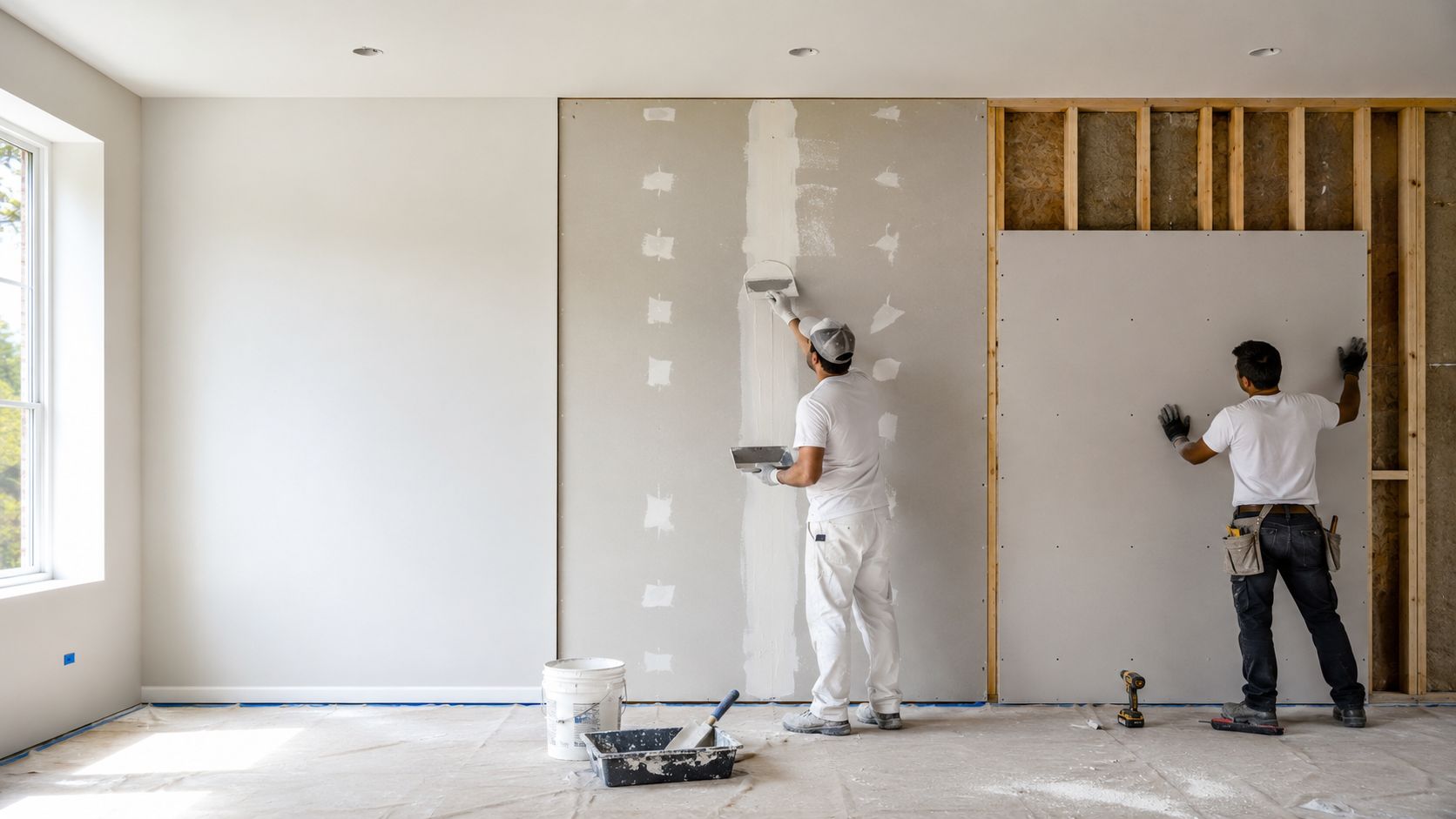
Drywall repair that disappears into the wall
A good repair doesn't announce itself. That means the damaged area gets cut back to sound material, backed properly if needed, taped where appropriate, coated in stages, and sanded to blend with the existing plane of the wall or ceiling.
Many DIY repairs fail in the following ways. The patch may be strong enough, but it sits proud, dips inward, or carries a visible edge. Once primer and paint go on, the repair often looks worse.
For homeowners who need patching, ceiling repair, crack repair, or water-damage restoration prep, drywall repair services in Portland are one practical option when the goal is a paint-ready result rather than a temporary cover-up.
Installation finishing and texture work
New drywall installation comes up during remodels, basement finishing, room reconfiguration, garage conversions, and small commercial build-outs. Hanging board is only the first stage. The final appearance depends on how joints are taped, how corners are treated, how surfaces are skimmed, and how the finish is prepared for paint.
The finish level matters most in rooms with modern lighting, large windows, and smooth paint. A standard finish can work well in many areas. A Level 5 approach is the better fit when the goal is a higher-end smooth look and less visible surface variation under critical light.
Practical service categories usually include:
- New drywall installation: For additions, remodels, and tenant improvements.
- Taping and finishing: Where the wall becomes uniform and paint-ready.
- Texture matching: Important when one repaired area has to disappear into an older surface.
- Interior painting coordination: Useful when you want one contractor to carry the wall from repair through final finish.
- Insulation and metal stud framing: Often bundled on remodel and commercial interior projects.
Smooth walls look simple. They aren't. The cleaner the final look, the less margin there is for waves, tape lines, or mismatched patch edges.
Ready to Fix Your Walls? Get a Free Estimate
If you're looking at a ceiling stain, a recurring crack, or a patch that never blended right, the next useful step is getting the area looked at in person. Photos help, but a site visit usually tells you more about the cause, the finish needed, and whether the problem is isolated or part of a larger remodel scope.
A free estimate gives you clarity on what work is required. That matters for homeowners preparing to paint, landlords turning over a unit, and builders trying to keep interior work moving on schedule across Portland, Lake Oswego, Gresham, Beaverton, and nearby cities.
Request a free estimate through the CS1 Real Interiors contact form. It's the fastest way to get professional help for drywall repair, drywall installation, interior painting, insulation, or metal stud framing.
If the job is small, you'll know that. If it needs a broader fix, you'll know that too. Either way, you avoid guessing.
Understanding Drywall Project Costs in Portland
Drywall pricing in Portland varies because the work itself varies. A simple open-room installation is priced differently than ceiling repair, texture blending, water-damage replacement, or a smooth-wall finish where every surface defect will show under paint.
What Portland homeowners usually pay
For local context, Angi's Portland drywall cost guide reports an average drywall installation cost of $2,204, with typical homeowner totals ranging from $1,029 to $3,380. The same Portland-specific source lists contractor pricing at $1 to $2.95 per square foot, estimates $400 to $750 for a 100-square-foot job, and $2,000 to $3,750 for a 500-square-foot job. It also notes that a residential building permit starts at $153 for major renovations that alter structure or footprint, and that Oregon licensing rules require contractors to carry at least $500,000 in liability insurance.
Those numbers are useful as a starting point, but square footage alone doesn't tell the whole story. Repair complexity, access, finish expectations, and how much blending is required often shape the final quote more than raw board area.
If you want a broader consumer-facing overview of pricing categories, this guide to drywall hanging and finishing prices can help frame the conversation before you compare written estimates.
Key Factors That Influence Your Drywall Project Cost
| Cost Driver | Description |
|---|---|
| Project type | New installation is priced differently than patching, ceiling repair, or replacing damaged sections. |
| Finish expectation | Smooth, high-visibility walls require more careful finishing than forgiving textured surfaces. |
| Texture matching | Blending into an older orange peel or hand texture adds labor because the repair has to disappear into surrounding walls. |
| Access and protection | Tight stairwells, occupied homes, furnished rooms, and ceiling work increase setup and protection needs. |
| Scope detail | Small repairs can be labor-intensive because mobilization, prep, and return visits still take time. |
| Related work | Painting, insulation, or framing can change the total scope and make bundled scheduling more efficient. |
A field benchmark from Oregon Interiors on Portland drywall pricing puts installation at about $1.50 to $3.00 per square foot, taping and finishing at $1.00 to $2.00 per square foot, texturing at $0.50 to $1.00 per square foot, and repair labor at roughly $50 to $100 per hour. That aligns with what homeowners often miss at first glance. Finishing labor is where many projects become more time-intensive than expected.
Our Professional Drywall Process Start to Finish
A clean drywall job starts before the first repair is cut or the first sheet is hung. The process matters because most frustrations homeowners have with contractors come from poor communication, weak prep, or messy execution, not just the wall itself.
What happens before the first sheet goes up
The first step is looking at the actual condition of the space. On a repair, that means checking whether the damage is active, cosmetic, or structural in origin. On a remodel, it means confirming framing condition, layout transitions, finish expectations, and how the new work will meet existing walls and ceilings.
Then the work area gets protected. Floors, adjacent finishes, and traffic paths need a plan before sanding starts. In occupied homes across Portland and nearby suburbs, this part makes a major difference in how disruptive the project feels.
The workflow usually looks like this:
Site review and estimate
The scope gets defined in plain language so the homeowner knows what is being repaired, replaced, or finished.Protection and setup
Dust control, floor protection, material staging, and access planning happen before production starts.Execution in stages
Drywall work moves from installation or patching into taping, coating, drying, sanding, and texture work.
This short video gives homeowners a visual sense of how professional drywall work comes together in sequence.
The finish work is where jobs are won or lost
Many people assume the hard part is hanging the board. In practice, the appearance of the finished wall depends heavily on the later passes. Joints have to disappear. Corners have to stay crisp. Repairs have to blend. Texture has to match.
That's also where scheduling matters. Compound needs proper drying between coats, and rushing this stage usually creates sanding problems, flashing, or visible transitions under paint.
The wall shouldn't look “new in one spot.” It should look consistent across the whole surface.
For homeowners comparing bids, cheap pricing often turns expensive later. A contractor who skips prep, over-sands edges, or under-builds finish coats may leave you with a wall that still needs correction before painting.
How to Choose the Right Drywall Contractor in Portland
Hiring the right drywall contractor isn't about finding the lowest number on a quote. It's about finding someone who can produce a finish that still looks right after primer, paint, daylight, and normal wear all hit the surface.
What to verify before you hire anyone
Start with the fundamentals. In Oregon, licensing and insurance aren't details to gloss over. The Portland cost reference cited earlier notes that Oregon licensing rules require contractors to carry at least $500,000 in liability insurance. That matters because drywall work happens inside finished homes, around furnishings, and often alongside other trades.
Ask direct questions, including:
- Are they licensed and insured in Oregon: You want a contractor who can document current coverage and operate professionally on residential or small commercial work.
- Can they show finish examples: Photos of patches alone aren't enough. Ask for examples of smooth walls, ceiling repairs, and texture-matching work.
- How do they handle dust and protection: This tells you a lot about how they work inside occupied homes.
- Is the estimate specific: A clear scope helps prevent disputes over what is included in repairs, finishing, and paint-ready prep.
For homeowners specifically looking in the city, Portland drywall contractor service coverage can also help confirm whether the contractor regularly works in your area and understands local project types, from older plaster-adjacent homes to modern remodel interiors.
One local option for these project types is CS1 Real Interiors, which handles drywall repair, drywall installation, interior painting, insulation, and metal stud framing for residential and small commercial interiors in the Portland metro.
Frequently Asked Questions About Drywall Services
How long does a typical drywall repair take
It depends on the size of the repair, how many finish coats are needed, and whether texture matching is involved. Small damage may move quickly, but drying time between coats still affects the schedule.
Can you match my existing wall texture
In many cases, yes. Texture matching is one of the most important parts of a repair because even a solid patch will stand out if the surrounding wall texture isn't blended correctly.
What should I do before the crew arrives
Clear fragile items, wall decor, and small furniture near the work area if you can. For larger items, ask in advance what should be moved and what can be protected in place.
Can drywall work be bundled with other interior services
Yes. Many projects are easier to coordinate when drywall is handled alongside interior painting, insulation, or metal stud framing, especially during remodels, tenant improvements, and turnover work.
If you're dealing with damaged walls, preparing for paint, or planning a remodel in Portland, Beaverton, Hillsboro, Tigard, Lake Oswego, Gresham, or Vancouver, WA, request a free estimate through the CS1 Real Interiors project form.
Need help with drywall repair, installation, texture matching, painting, insulation, or framing? Contact CS1 Real Interiors to request a free estimate and get professional help for your Portland-area interior project.


