



If you're searching for drywall installation near me, you're usually not browsing for fun. You've got a room torn open after a leak, a remodel that needs to move forward, or a wall that looked acceptable until fresh paint and daylight exposed every seam. That's common in Portland, Beaverton, Hillsboro, Tigard, Lake Oswego, Gresham, and Vancouver, WA, where older homes, frequent updates, and moisture-related repairs create a steady need for drywall work done correctly.
Homeowners often start with one simple question: who can hang and finish drywall properly, show up when scheduled, and leave a paint-ready result instead of a problem that has to be fixed later. That is the core challenge. Drywall looks simple from a distance, but clean joints, flat walls, matched texture, and durable repairs depend on method, patience, and trade-specific skill.
This guide is built for that decision. It covers what a professional drywall job includes, what drives pricing, how Level 4 and Level 5 finishes affect the final look, and what to watch for when you're dealing with cracks, holes, ceiling damage, or water-damaged walls. If you're comparing contractors in the metro area, it also helps to start with a local provider who understands the homes and project conditions in this market. You can see the areas served on our Portland drywall contractor page.
Table of Contents
- Your Guide to Flawless Walls in the Portland Area
- What a Professional Drywall Installation Includes
- Understanding Drywall Project Costs and Finish Levels
- Solving Common Drywall Problems in Portland Homes
- Why Portland & Vancouver WA Choose CS1 Real Interiors
- Your Drywall Project Questions Answered
Your Guide to Flawless Walls in the Portland Area
A good drywall job should disappear when it's done. You shouldn't notice joints, screw patterns, patched corners, or texture transitions. You should notice that the room feels finished.
That's why the phrase drywall installation near me can mean very different things depending on your project. In a Portland basement remodel, it may involve framing corrections, insulation, hanging board, taping, and smooth finishing. In a Lake Oswego repair after a plumbing leak, it may mean selective removal, drying verification, replacement, and texture blending so the repair doesn't stand out. In a Beaverton rental turnover, speed matters, but so does getting walls ready for paint without callback work.
What homeowners usually need help deciding
Most projects come down to a few practical decisions:
- Repair or replace: A small impact hole is one thing. Soft drywall after moisture exposure is another.
- Smooth wall or texture match: New work has to make sense next to existing finishes.
- Standard finish or premium finish: Lighting, paint sheen, and room use all matter.
- One trade or one contractor for multiple scopes: Many remodels move better when drywall, painting, insulation, and framing are coordinated.
Practical rule: If you can already see seams, patches, or uneven light reflection before paint, the finish isn't ready.
In Portland-area homes, visual quality gets judged hard under morning light, large windows, and updated fixtures. That's especially true in kitchens, hallways, stairwells, and open-plan living areas where wall surfaces are exposed from multiple angles. A reliable contractor should explain the process clearly, set realistic expectations, and tell you where shortcuts usually fail.
What works and what usually causes rework
What works is simple. Proper board layout, tight fastening, clean bead installation, correct joint treatment, enough drying time, and a finish level that matches the room.
What doesn't work is rushing compound, burying problems under texture, or treating drywall like a basic patch-and-paint task. Drywall is one of those trades where a “good enough” approach often looks worse after the room is cleaned up and painted.
What a Professional Drywall Installation Includes
A professional drywall installation is more than hanging sheets and covering joints. It's a sequence. Each stage affects the next one, and most visible problems start earlier than homeowners think.
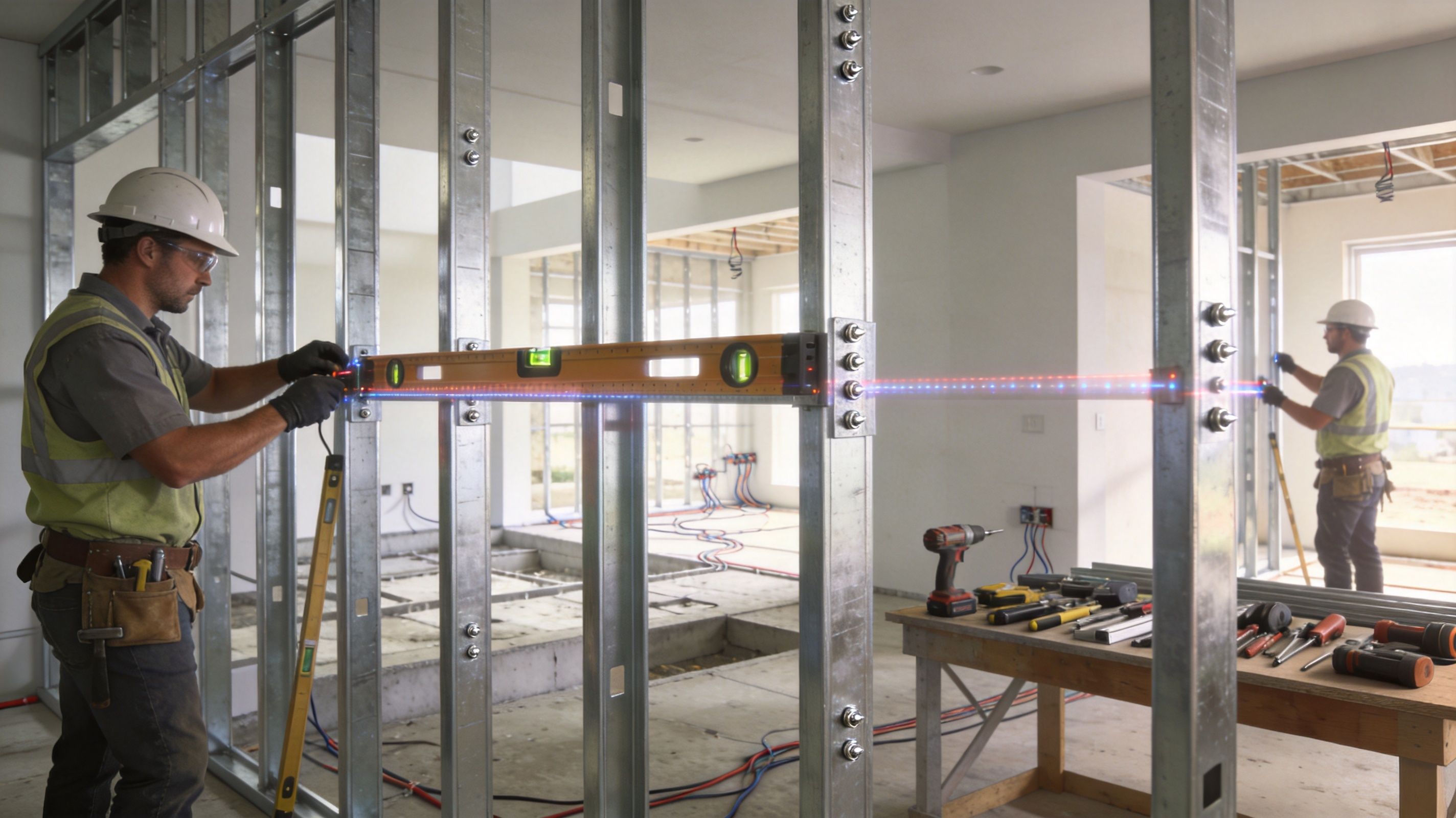
It starts before the first sheet goes up
Drywall follows structure. If framing is out, the wall won't finish flat. On remodels and tenant improvements in Hillsboro or Tigard, that often means checking stud alignment, correcting backing, and making sure corners, soffits, and ceiling transitions are ready before board gets installed.
A complete interior scope may include:
- Metal stud framing: Used where straightness, durability, and layout control matter.
- Insulation placement: Important before walls are closed, especially around shared walls, exterior walls, and remodel areas.
- Board selection and layout: The right sheet size and orientation reduce unnecessary joints.
- Fastening and edge control: Screw depth, spacing, and clean seams matter for a stable finish.
The drywall trade is skilled work, and the pay in the field reflects that. The Bureau of Labor Statistics reports a median annual wage of $58,140 for drywall installers, ceiling tile installers, and tapers in May 2024, while specialized tapers earned $64,700. The same source notes employment is projected to grow 4 percent from 2024 to 2034, with about 8,800 job openings each year on average, which points to steady demand for skilled finishing work in construction (Bureau of Labor Statistics drywall trade data).
The finishing stage is where homeowners see the difference between a crew that installs drywall and a crew that knows how to deliver a paint-ready interior.
Finishing is where quality shows
This is the part many low quotes underplay. Hanging drywall is only part of the job. The wall you live with is the finished surface, not the sheet.
A proper finish includes taping joints, coating fasteners, building corners correctly, sanding without gouging, and keeping the surface consistent across repairs and transitions. For standard professional work, multiple coats are part of the process. The finish needs to look flat under normal viewing conditions before primer goes on.
The video below gives a helpful visual of the installation environment and workflow.
Why specialists outperform generalists on finish work
Homeowners often ask whether a handyman can handle a drywall job. Sometimes a generalist can manage simple replacement work. But once the project involves long seams, ceiling transitions, texture matching, smooth wall finishing, or repainting under strong light, the finishing skill matters more than the board itself.
Here's what a specialist watches closely:
- Joint build-up: Too much compound creates humps. Too little leaves visible recesses.
- Sanding discipline: Aggressive sanding can fuzz paper and expose tape edges.
- Corner consistency: Outside corners and inside angles need to stay sharp and clean.
- Paint readiness: The wall has to receive primer and finish paint evenly.
For homeowners, the main takeaway is simple. If the contractor can't explain the hanging and finishing process clearly, the bid probably isn't detailed enough.
Understanding Drywall Project Costs and Finish Levels
Drywall pricing makes more sense when you tie it to finish expectations. A homeowner in Portland might get two bids for the same room and still be comparing two different jobs. One price may cover hanging, taping, and a standard paint-ready finish. The other may include higher surface prep, texture matching, tighter protection work, and a smoother final result under window light.
That difference matters because finish level drives labor more than board cost.
Why finish level affects price
The jump in price usually comes from time, not materials. Higher finish work takes more coating, more drying time between coats, more sanding control, and more inspection before primer. In older Portland homes, it can also mean extra effort to blend new drywall into walls and ceilings that are no longer perfectly straight or flat.
Finish quality also changes based on how the room will be used. A basic spare bedroom with flat paint is one thing. A main living area with large windows, smooth walls, and evening side light is another. If the room has strong natural light or a darker paint color, minor surface defects show up fast.
Joint compound has to be built in controlled layers. As noted in National Gypsum guidance on Level 4 and Level 5 finishing, drying and surface uniformity are real factors in how a wall performs visually. Rush that part, and you can end up with visible joints, flashing, shallow fills, or callbacks after paint.
Level 4 vs Level 5 Drywall Finish Comparison
A Level 4 finish is the standard choice for many homes. A Level 5 finish adds a skim coat across the full surface to reduce visual differences between the drywall face paper and the finished joint areas. That added step helps in rooms where light rakes across the wall, or where the owner wants a smoother, more uniform look.
| Feature | Level 4 Finish (Industry Standard) | Level 5 Finish (Premium Smooth Wall) |
|---|---|---|
| Basic process | Joints and fasteners are taped, coated, and sanded to a uniform finish | Includes full Level 4 process plus a skim coat over the entire surface |
| Best use | Standard rooms with typical paint and less demanding light | High-visibility rooms, smoother modern interiors, and spaces with critical lighting |
| Surface appearance | Clean and professional, but surface differences may show under certain light | More uniform surface appearance across the entire wall or ceiling |
| Paint performance | Suitable for many standard paint conditions | Helps gloss, semi-gloss, and enamel paints look more even |
| Labor impact | Lower labor demand than Level 5 | Higher labor demand because the entire surface gets additional treatment |
| Budget effect | Lower overall cost | Higher overall cost due to added finishing time and surface prep |
I usually tell homeowners to decide on the finish level before they compare prices. If one contractor is bidding Level 4 and another is pricing work closer to Level 5, the lower number is not a real apples-to-apples comparison.
A cheaper bid can be reasonable if the scope is clear. Problems start when the finish standard is vague and the wall quality gets decided after the job begins.
Average pricing can give you rough context, but it will not set a reliable budget for a Portland-area project. Access, ceiling height, furniture protection, demo needs, patch size, texture match, and paint readiness all affect the final number. Repairs in an occupied home also take a different approach than drywall work in open new construction.
The practical way to budget is to ask for a written scope with the finish level spelled out. That should tell you what surfaces are included, what the final appearance standard is, and whether the price includes protection, cleanup, texture work, and primer-ready prep. That is how you avoid surprise costs and get a wall finish that matches the room.
Solving Common Drywall Problems in Portland Homes
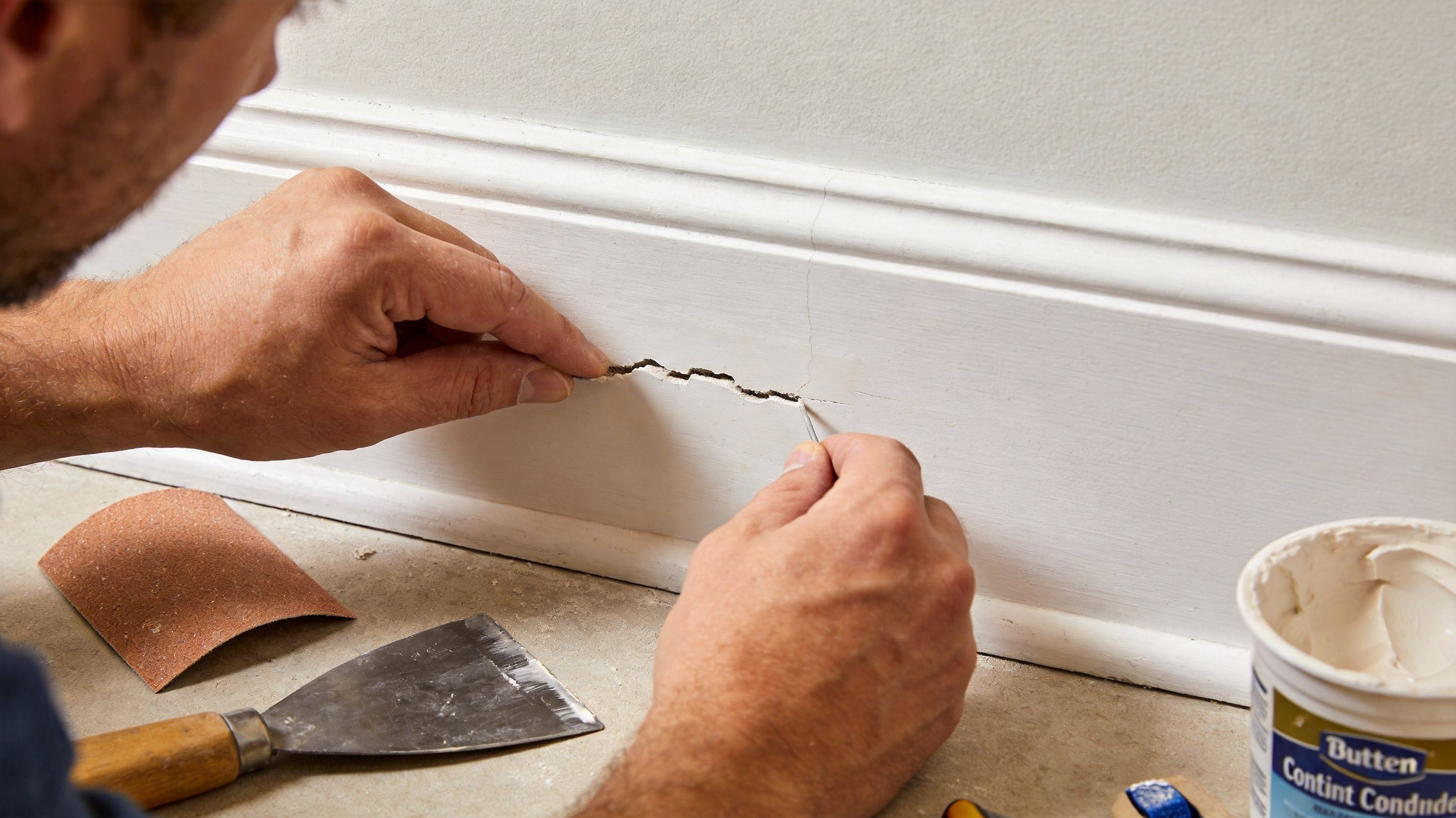
Most drywall problems in Portland homes fall into a few categories. Cracks from movement, holes from impact, water damage from leaks, and patches that stand out after painting. The right fix depends on what caused the problem, not just what's visible on the surface.
Cracks and nail pops need more than filler
Hairline cracks above doors and windows are common. So are seam cracks on ceilings or long walls. The wrong repair is to smear filler over the line, sand it, and paint. That usually comes back because the failed joint treatment underneath hasn't been addressed.
A durable repair often means opening the crack, securing the area as needed, re-taping, re-coating, and feathering the finish properly. Nail pops and screw pops also need to be reset and stabilized before finishing.
The quality issue here is real. Many drywall failures, including cracked joints and seams that show after painting, come from generalists who don't specialize in finishing. Specialized taping and finishing often account for over 60 percent of the wall's final visible quality, which is why technical finishing skill matters so much on repair work (BBB drywall contractor guidance).
Water damage should be cut out not covered over
In this region, water damage is one of the most common reasons people search for drywall help. Ceiling stains, soft corners, swollen seams, and bubbling tape usually point to moisture exposure. Once drywall has lost integrity, patching over the face doesn't solve the problem.
The right approach usually looks like this:
- Stop the source first: Roof leak, plumbing leak, window issue, or ventilation problem.
- Remove compromised material: Soft, stained, mold-affected, or swollen drywall needs to go.
- Check adjacent framing and insulation: Hidden moisture can remain behind the surface.
- Replace and finish to match: New board should blend with the existing wall or ceiling.
If the drywall feels soft, crumbles at the edge, or has tape lifting from the face, replacement is usually the cleaner and longer-lasting repair.
For homeowners and property managers dealing with make-ready work, quick cosmetic patching often turns into repaint and repair twice. If you need targeted help, our drywall repair services cover common issues like cracks, holes, ceiling damage, and water-damaged sections.
Texture matching separates repair from patchwork
Texture matching is where many otherwise decent repairs fail visually. A patch can be structurally sound and still look obvious because the surrounding texture wasn't studied, sampled, or blended correctly.
This comes up often in older Portland homes where one room may have smooth walls, another may have orange peel, and a ceiling may have a hand-applied pattern that doesn't match anything sold in a bucket today. The repair has to fit the room.
What usually gives away poor texture matching:
- Edges that flash in side light
- Texture density that changes across the patch
- A repair area that absorbs paint differently
- Ceiling spots that look newer than the field around them
A professional repair should disappear after paint, not announce where the damage was.
Why Portland & Vancouver WA Choose CS1 Real Interiors
Homeowners, builders, and property managers usually want the same things from a drywall contractor. Clear communication, clean work, realistic scheduling, and a finished surface that doesn't need excuses. That's especially important on occupied homes, remodels with multiple trades, and small commercial spaces that need to reopen on time.

One contractor for interior scope
Some projects run smoother when one company can handle more than one part of the interior package. That's especially true when drywall installation connects directly to insulation, metal stud framing, and interior painting.
CS1 Real Interiors provides drywall installation, drywall repair, interior painting, insulation, and metal stud framing for residential and small commercial work across Portland, Beaverton, Hillsboro, Tigard, Lake Oswego, Forest Grove, Cornelius, Tualatin, and Vancouver, WA. For homeowners, that can reduce coordination gaps between trades. For builders and business owners, it can simplify scheduling and accountability.
Clean walls matter. Clean job sites matter too. A contractor who protects floors, controls dust, and communicates clearly usually handles the finish work with the same discipline.
Who this works well for
Different clients need different levels of support. The work usually fits into one of these groups:
- Homeowners remodeling a room or addition: They need framing, insulation, hanging, finishing, and a paint-ready result that fits the existing home.
- Sellers preparing a home for market: They need visible defects corrected fast, especially cracks, patched openings, and rough wall areas that show under fresh paint.
- Property managers and investors: They need efficient repairs for turnovers without sacrificing finish quality in high-visibility rooms.
- Builders and commercial clients: They need dependable production, clean execution, and consistency across offices, clinics, restaurants, and retail spaces.
For local homeowners comparing options by location, our Beaverton drywall contractor page is a useful starting point if your project is on the west side.
What clients usually want most
Clients rarely ask for “drywall” in the abstract. They ask for outcomes.
“We need the leak repair to disappear before painting.”
“We need this remodel ready for cabinets and trim.”
“We need the texture to match the rest of the ceiling.”
“We need one contractor who can keep the interior work moving.”
That's why process matters as much as skill. The contractor has to show up, protect the space, coordinate the steps, and deliver the agreed finish level. Clean job sites and OSHA-compliant practices matter because they reflect how the work is managed, especially in occupied homes and active commercial interiors.
The strongest drywall jobs don't just look smooth on day one. They hold up because the crew took the time to do the invisible parts correctly.
Your Drywall Project Questions Answered
Good questions usually come up right before you hire someone. That's normal. You want to know whether the contractor takes smaller jobs, how the house will be protected, and what the estimate process looks like.
Frequently Asked Questions
| Question | Answer |
|---|---|
| Do you take on small drywall repair jobs? | Yes. Small repairs are common, especially for holes, stress cracks, ceiling spots, and water-damaged sections. The key is making sure the repair is finished to match the surrounding wall or ceiling. |
| Can you match existing texture? | Yes, when the existing texture is identified correctly and the repair area is blended with care. Some older textures take more testing and hand work than newer patterns. |
| Do you handle smooth wall finishes too? | Yes. Smooth wall work depends heavily on the finish standard and the lighting in the room. If you want a cleaner modern look, that should be discussed before the estimate is written. |
| What about dust control? | A professional crew should protect adjacent surfaces, isolate work areas when needed, and clean as the job progresses. Dust control matters most on sanding-heavy repairs and occupied homes. |
| Do you work on ceilings? | Yes. Ceiling patches, water-damage replacement, seam repairs, and texture matching are common parts of drywall service. Ceiling work often needs extra attention because light exposes flaws quickly. |
| Can one contractor handle drywall and painting? | In many projects, yes. Combining drywall and painting can simplify scheduling and reduce handoff issues between trades. |
| How long does an estimate take? | The visit itself is usually straightforward if access is clear and the scope is defined. More complex remodels or multi-room projects may require a more detailed review before pricing is finalized. |
| When should I hire a professional instead of trying to patch it myself? | Hire a professional when the damage involves ceilings, water exposure, long cracks, corner bead, visible texture, or any area that will be seen in strong light. Those are the repairs most likely to show if they're rushed. |
If your project involves multiple rooms, moisture damage, remodeling prep, or a finish that needs to look right under fresh paint, it helps to get a detailed scope before any work starts. That gives you a realistic plan for materials, finish level, and scheduling.
The fastest way to move forward is to ask for an estimate with photos and a short description of the problem. Include the city, the type of damage, and whether you need related work like painting, insulation, or framing.
Need help with drywall installation, repair, texture matching, or interior finishing in Portland or the surrounding area? Contact CS1 Real Interiors and request a free estimate through our online form. Whether you're fixing water damage, finishing a remodel, or getting a property ready for paint, professional help is one clear next step away.


