
Homeowners, builders, and property managers often face the same challenge when planning insulation upgrades: they get confused deciding what can be managed independently and what requires professional expertise. The scope of insulation installation determines not only energy efficiency but also safety, compliance, and long‑term durability.
From attic upgrades to basement wall sealing, understanding where DIY falls short and licensed insulation contractors are needed is the key to protecting comfort and investment.
Hence, our experts sat down, examined insulation installation protocols, building codes, and real‑world outcomes to provide precise, simplified guidance for anyone exploring commercial or home insulation installation services. Keep reading to find out when DIY is helpful and when professional assistance will be needed.
Why Insulation Installation Matters, When DIY Works, & Steps to Follow
Insulation structure is critical for energy efficiency, comfort, and property value.
For homeowners, it means lower utility bills and calmer living spaces. For builders and commercial space managers, it ensures projects meet performance standards and client expectations.
Homeowners, builders, and commercial property managers often weigh whether to tackle it themselves or hire professionals. DIY projects are most feasible when the space is open and accessible, the material is easy to handle, and the installer is comfortable with basic tools.
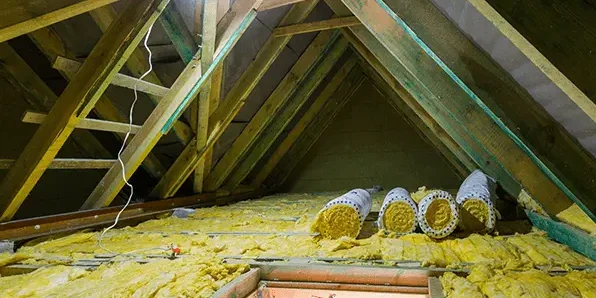
Out of the six major types of insulation identified by the U.S. Department of Energy, batts and rolls, loose‑fill, spray foam, rigid foam boards, radiant barriers, and structural insulated panels, only batts and rolls are widely considered DIY‑friendly. These are suited for open, accessible spaces such as unfinished attics or basements, where they can be fitted between studs, joists, and beams.
Below are some of the DIY steps that you can consider for installation:
#1. Check R‑Value Needs
R‑value measures resistance to heat flow; higher values mean better insulation. Review climate zone recommendations and inspect existing insulation labels, or calculate thickness to select the right rating, protecting energy efficiency and comfort, preventing under- or over‑insulating the property.
#2. Confirm Vapor Retarder Requirements
Some regions require vapor barriers to prevent moisture buildup that damages insulation and structural components. So, check local building codes to ensure compliance, and select insulation with or without a vapor retarder to maintain durability, safety, and long‑term energy efficiency.
#3. Gather Materials and Tools
Our experts firmly believe that having the correct products and equipment before starting the installation upgrade makes it smoother. Batts or rolls sized for joists fit properly without gaps, while a knife, tape measure, and safety gear allow precise cutting, safe handling, and ensure reliable results.
#4. Prepare the Work Area
Clear and inspect the attic or basement before installation. Eliminate debris and hazards to prevent accidents. Also, improve ventilation and dry conditions to reduce moisture risks. It helps insulation work correctly and last longer without any structural or air-quality issues.
#5. Install Batts or Rolls
Fit insulation between studs or joists without compressing to ensure maximum thermal resistance. Cut batts to length with a knife for precise placement and avoid gaps or overlaps to maintain efficiency. Seal edges where needed to stop air leaks, helping insulation perform consistently and safely.
Professional Insulation Installation Process
DIY is limited to batts and rolls; other types of insulation and complex property layouts often need a team of insulation specialists. Below are specifics of what you can expect from the professional insulation installation process:
#1. Thorough Site Inspection
Professionals check for potential hazards such as moisture, mold, outdated wiring, or poor ventilation. This determines whether spray foam is safe for walls and crawl spaces, or whether rigid boards can be an option for basements and foundations.
#2. Insulation Type Selection
Our team shares that, by assessing climate zone and R‑value needs, they know which insulation type can work. For instance, Portland, Lake Oswego, Hillsboro, and Tigard fall in Zone 4C (Marine). So, radiant barriers, which are suitable for attics in hot climates, are not considered; the remaining options are viable.
Let’s see how:
- Batts and rolls: Effective in walls, attics, and basements with open framing. Works well here when paired with vapor retarders to handle moisture from long rainy seasons.
- Loose‑fill: Ideal for attics and wall retrofits. In Portland’s damp climate, cellulose or fiberglass loose‑fill is installed, maintaining proper ventilation to prevent settling and mold.
- Spray foam insulation installation: Perfect for walls, crawl spaces, and rim joists. Closed‑cell spray foam is valuable in the Portland region as it resists moisture intrusion and adds structural strength.
- Rigid foam boards: Best for foundations, basement walls, and exterior sheathing. They can withstand water and lower thermal bridging, which is needed in zone 4 climate conditions.
- Structured Insulated Panels (SIPs): Excellent for new construction walls, roofs, and floors. Provide airtightness and high R‑values, perfect for energy efficiency in Portland’s climate conditions.
#3. Work Area Preparation
Contractors remove debris, ensure dry conditions, and set up proper ventilation, especially when they plan to use blown‑in loose‑fill or spray foam insulation.
#4. Accurate Installation
Batts are fitted firmly between studs or joists, loose‑fill is blown evenly into cavities, spray foam expands to seal cracks and gaps, wooden boards are cut to size and taped at seams, radiant barriers are installed with air gaps (if needed), and SIPs are made on‑site with fastening systems.
#5. Sealing & Finishing
Specialists seal edges, seams, and penetrations to eliminate air leaks. In wall projects, they replace drywall or sheathing after insulation, tape rigid board seams, and secure SIP joints to ensure airtight closure.
#6. Code Compliance Check
A final inspection is conducted to ensure fire safety clearances, vapor retarder requirements, and ventilation standards are met, regardless of insulation type or area.
Professionals deliver lasting comfort, lower energy bills, and peace of mind for homeowners, property managers, and builders, while strengthening credibility, preventing costly delays, and meeting high-end expectations for commercial space or home improvements.
Team Up With Insulation Installation Experts For Long-Lasting Results
DIY insulation installation may look cost‑saving, but it often falls short in sealing gaps, meeting code, and achieving consistent R‑values. Such missed steps leave homes or commercial spaces susceptible to air leaks, moisture, and elevated energy bills, making professional installation the more reliable option.
Our team at CS1 Real Interiors brings years of hands-on experience, clear communication, and a commitment to providing the best insulation installation services. They show up on time, respect your space, and deliver results that make a visible difference in comfort and efficiency. Whether you need attic insulation installation, minor upgrades, or a complete re-insulation, you can rely on us.
Give us a call to secure insulation for your house or commercial site without any delay.
FAQs
How much does insulation installation cost?
Installation costs range from $1,500 to $4,000, with most projects averaging $2,800 to $6,500, prices may vary based on type and labor. Fiberglass batts are the cheapest, while closed‑cell spray foam is the most expensive. Contact us to discuss the pricing and loan options.
What happens if I don’t insulate my house?
If you don’t insulate your house, our experts believe that heat escapes in winter and cool air leaks in summer, increasing energy bills. Uninsulated walls, attics, and basements also leave rooms leaky, uncomfortable, and vulnerable to moisture problems.
What time of year is insulation cheapest?
Installing insulation is cheapest in the fall, when demand slows after summer and before the winter heating season. Spring also offers competitive rates with flexible scheduling, but fall generally delivers the best deals for homeowners planning upgrades.
What insulation will mice not nest in?
Mice rarely nest in spray foam or foil‑faced insulation, since these materials are hard to chew and don’t provide a soft burrowing base. On the contrary, fiberglass batts and loose‑fill cellulose are more inviting and often become nesting spots if entry points aren’t sealed properly.